
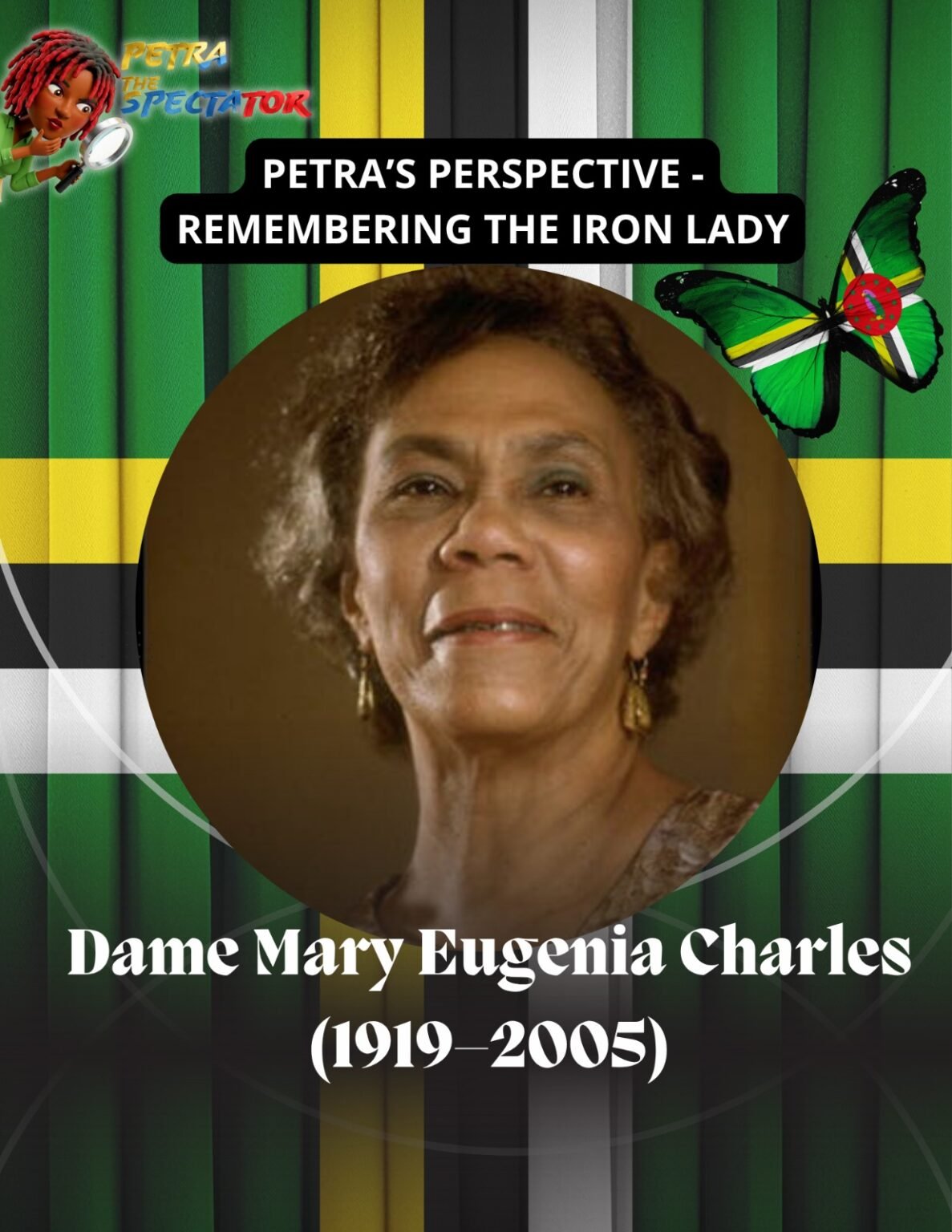
May 15th, 1919 — in the fishing village of Pointe Michel, Dominica, a girl was born who would one day alter the political imagination of the Caribbean.
Mary Eugenia Charles entered a society still shaped by colonial hierarchy and deeply conservative ideas about gender and power. Few could have imagined that this daughter of a successful businessman from the tiny Windward Island would become not only Dominica’s first female Prime Minister but also the first woman in the Caribbean to lead a government.
By the 1980s, Dame Eugenia Charles had become one of the most recognised political figures in the region, earning the nickname “The Iron Lady of the Caribbean” for her blunt style, fierce independence, and uncompromising political posture.
For many across the Caribbean, she represented something unfamiliar at the time: a woman commanding regional politics with absolute authority.
From Pointe Michel to Political Power
Charles grew up during a period of transition in Dominica as the island slowly evolved politically and economically under British colonial administration. Her father, John Baptiste Charles, was a prominent businessman and banker whose discipline and business success helped shape her worldview from an early age.
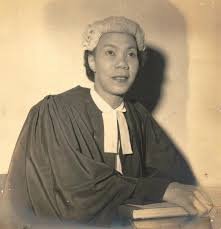
Educated first in Dominica and later abroad, Charles attended the University of Toronto before studying law at the London School of Economics. She was eventually called to the Bar at the Inner Temple in London in 1947, returning home as one of the few Caribbean women of her era to enter the legal profession.
At a time when Caribbean women rarely occupied public leadership spaces, Eugenia Charles stepped into a political environment dominated almost entirely by men.
From the 1960s, she had become increasingly active in political campaigning, particularly against restrictions on press freedom and what she viewed as growing threats to democratic expression in Dominica. Those battles helped forge her reputation as a fearless defender of individual liberties and political accountability.
Charles would go on to help found the Dominica Freedom Party (DFP), serving as its leader from the early 1970s until 1995. She was elected to Parliament in 1970, rising to Leader of the Her Majesty’s Opposition in 1975, steadily emerging as one of the island’s strongest political voices during a period of rising instability.
Though often characterised internationally as conservative, especially when compared with socialist-oriented Caribbean governments of the era, Charles also supported social welfare programmes aimed at strengthening national development. At the core of her politics were anti-corruption measures, democratic freedoms, personal responsibility, and disciplined governance.
By 1980, amid social unrest and political instability following Dominica’s independence from Britain in 1978, Charles and the DFP swept to power. Her party secured a landslide victory, 17 of 21 seats, on July 21, 1980.
History had been made. Dame Eugenia Charles became Prime Minister of Dominica and the first woman to lead a government anywhere in the Caribbean.
The Caribbean’s First Woman Prime Minister
Dame Eugenia Charles’ elevation to prime minister sent shockwaves through regional politics. In an era when women across much of the Caribbean were still battling for wider representation in public life, Charles now stood at the head of government in a newly independent Caribbean nation.
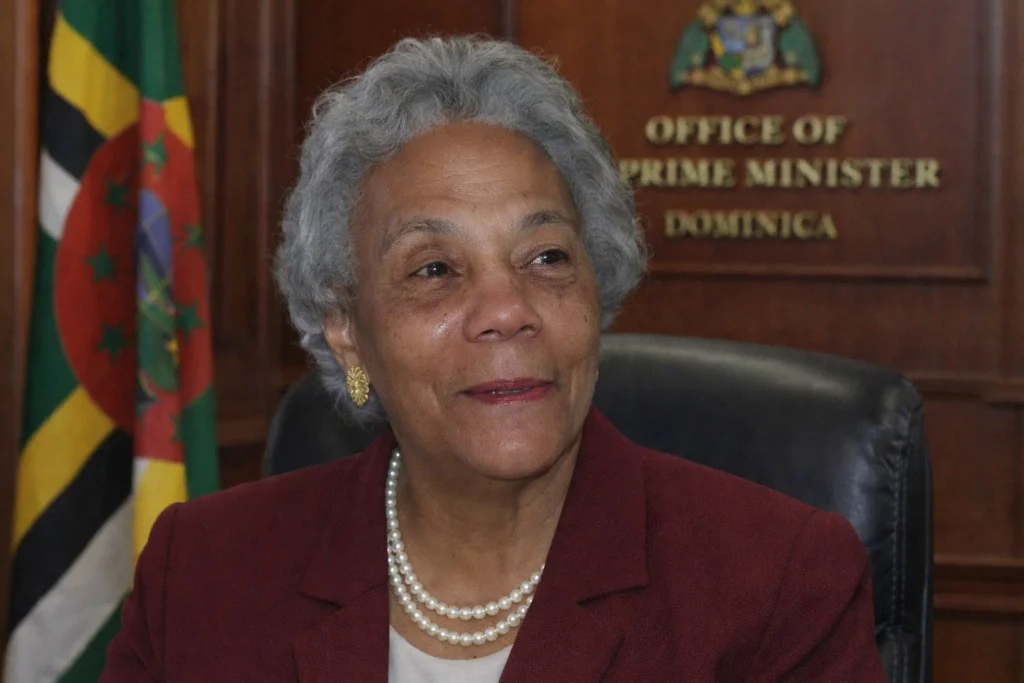
Her tenure would last 15 years.
The international media quickly became fascinated with her no-nonsense style. British newspapers frequently compared her to Prime Minister Margaret Thatcher, although Charles charted her own distinctly Caribbean political identity.
She was known for sharp public exchanges and disciplined governance. She refused to bend easily under political pressure. Admirers praised her honesty and strength. Critics often viewed her as severe, rigid, or confrontational.
But even opponents acknowledged her command.
Regional Turbulence and the Grenada Crisis
Charles governed during one of the most volatile political periods in Caribbean history.
The Cold War was heavily influencing regional politics. Leftist movements were emerging across parts of the Caribbean while the United States aggressively positioned itself against Soviet and Cuban influence in the hemisphere.
In 1983, following the assassination of Grenadian Prime Minister Maurice Bishop and the collapse of order in Grenada, Dame Eugenia Charles emerged as one of the most visible Caribbean leaders supporting intervention. As Chairperson of the Organisation of Eastern Caribbean States (OECS), she publicly backed the United States-led military intervention in Grenada.
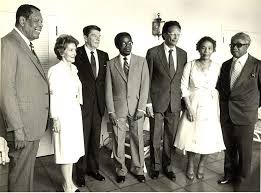
Images of Charles standing alongside US President Ronald Reagan during the crisis became internationally famous, elevating her profile far beyond the Caribbean.
Her stand on the regional integration movement can be determined from the following words taken from her address to the 8th Heads of Government Meeting in Castries, St. Lucia in 1987: “…I am of the firm opinion that CARICOM must continue to exist, but it must exist for the purpose of improving the quality of life of all our people. If it does not succeed in doing this, then we must abandon it. We must emphasize that we are not in CARICOM merely to show that there is “unity” among us in the English-speaking Caribbean – no, we are in CARICOM because the unity it aims at achieving will bring benefits to all our people…” (source: http://www.Caricom.org)
To supporters, she represented stability and democratic order during regional chaos. To critics, her support for the intervention aligned the Caribbean too closely with American geopolitical interests. Even decades later, the Grenada intervention remains one of the defining and most debated chapters of her political life.
Building Dominica
Beyond geopolitics, Charles focused heavily on infrastructure and administration inside Dominica.
Under her leadership, roads, utilities, and public sector systems expanded significantly. Her government worked to stabilise Dominica economically during difficult years marked by hurricanes, debt pressures and limited economic opportunities.
Her supporters credited her with bringing discipline and order to governance after years of instability.
But her administration was not without criticism. Opponents argued that her leadership style was not sufficiently responsive to social concerns affecting ordinary people. Others believed her economic philosophy leaned too heavily toward austerity during difficult times.
Still, her political durability was remarkable.
In the rough-and-tumble arena of Caribbean politics, Dame Eugenia Charles remained dominant for a decade and a half.
A Woman in a Man’s Political World
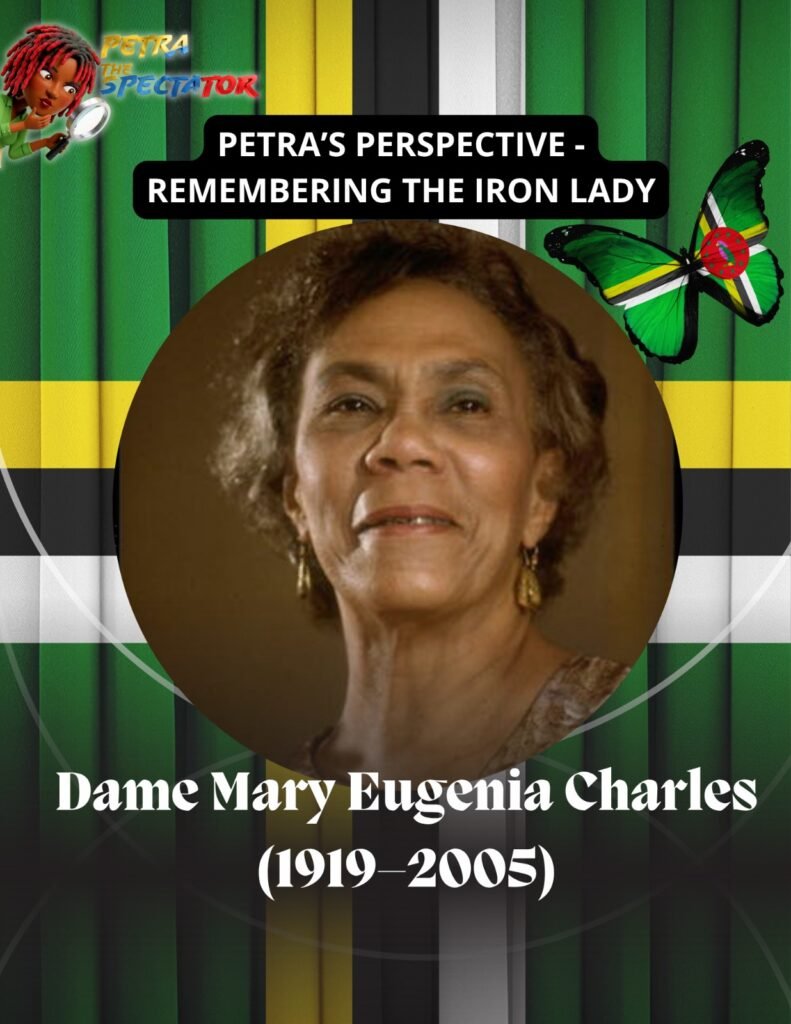
Perhaps one of Charles’ greatest historical impacts was symbolic.
She governed at a time when Caribbean politics was overwhelmingly male and intensely patriarchal. Women in public life faced relentless scrutiny, and female leaders were often judged by harsher standards than their male counterparts.
Charles did not attempt to soften herself politically to fit expectations. She spoke directly. She projected authority and rarely apologised for her positions. In doing so, she helped carve political space for future generations of Caribbean women leaders.
Today, the region has seen numerous women rise to the highest offices of government, but Eugenia Charles broke that barrier first.
Final Years and Legacy
After retiring from politics in 1995, Dame Eugenia Charles largely stepped away from frontline public life. Shortly after her retirement, the DFP lost the general elections, signalling the close of a defining political era in Dominica.
In 1991, she was awarded Dame Commander of the Order of the British Empire (DBE), cementing her international recognition. In February 2003, the Heads of Government of the Caribbean Community conferred upon her the Order of the Caribbean Community.
On September 6th, 2005, Dame Eugenia Charles died at the age of 86.
Her passing marked the end of one of the Caribbean’s most formidable political chapters.
But her legacy continues to echo through regional politics, particularly in discussions surrounding leadership, governance, sovereignty and the role of women in public office.
For some, she remains a democratic guardian who brought stability to Dominica during turbulent years.
For others, she remains a controversial figure whose politics reflected the tensions of the Cold War Caribbean.
For history, however, one fact is undeniable: Dame Eugenia Charles transformed what Caribbean leadership looked like. Once she entered the room, regional politics elevated.