
I listened to all five tracks on the Black Pineapple Riddim more than once over the last few days, and after sitting with it, I also shared a few thoughts with a colleague deeply rooted in musicality and the Wadadli sound.
Those exchanges were just as interesting as the listening itself, because when music arrives carrying the weight of identity, influence, and evolution, the conversation around it becomes part of the experience.
Overall, I fell for the riddim.
The Black Pineapple Riddim is a solid musical offering. It is polished, enjoyable to listen to, and carries the kind of groove that makes you sway before you quite realise you’re moving. More importantly, it has partner-dancing potential, which in Caribbean music is no small compliment. It moves. It breathes. It invites you in.
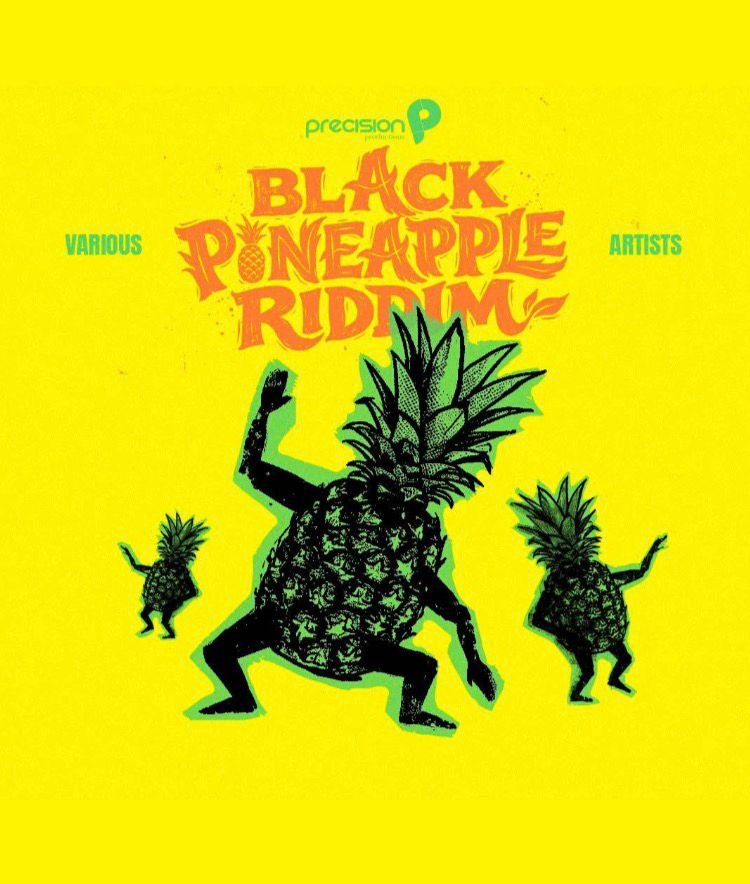
On repeated listens, what stood out even more clearly is that this is very much a fusion project. It lives in multiple spaces at once.
You can hear the intentional blending of rhythms, textures, and influences. It pulls from what many young people are hearing today, moving across playlists, parties, roadside speakers, and late-night sessions.
At several points, the riddim guitar and the snare quietly anchor the production and let you know exactly where its roots are. There are traces of calypso, and by extension soca, woven into the structure. Those elements hold the cultural line and keep the production grounded in Antigua and Barbuda and the wider Caribbean, even as the riddim reaches outward.
The conversation becomes especially interesting around the rhythm section.
The bassline itself does not feel traditionally Caribbean in the way we might instinctively expect. It is not carrying that familiar rolling bass movement that immediately signals jam-band soca or road march energy, even when we are grooving. Instead, it leans into a more international texture, borrowing from the low-end feel often heard in modern dancehall and Afrobeats. That gives the riddim a contemporary edge and wider commercial appeal.
Then comes the kick, which quietly ties everything together. It supports the guitar, snare, and bass textures in a way that makes the entire production feel cohesive. That balance gives the riddim real marketplace potential and could easily extend its shelf life beyond a single season.
My standout favourite, Arlen Seaton’s “Neighbah.” There is something immediately catchy about it, but what stayed with me most is the refrain, “ah comin’.” It lands like a hook, but also like a declaration. Memorable, rhythmic, and easy to throw back. The kind of line that can live beyond the song itself. The lyrics took me back to the storytelling craft of two of our legendary calypsonians, King Obstinate and Destroyer Snr. There is something in the phrasing that feels familiar: witty, observing (nosey), we Antigua-Barbuda-style. For me, it is the track that lingers longest after the riddim ends.
Tian Winter sits beautifully on the riddim, though one could argue all melodies find a comfortable home in Tian’s voice. Nikki Nooks was also especially enjoyable and felt naturally suited to the groove. DimitrB’s lyrics sit well on the riddim and should resonate with a youthful audience thanks to its theme and hook.

And on reflection, I found myself returning to Drastic’s “Shalom” differently, too. What first felt like the track I connected with least now feels more interesting with repeat listening. His melodic approach is distinct. The phrasing feels less expected, more experimental, and stylistically different from the others. There is a looseness to it that gives a subtle modern edge. Once again, it feels connected to what younger listeners are hearing and responding to.
And maybe that is where the Black Pineapple Riddim is most successful. It does not feel like it is trying to recreate the Antiguan sound exactly as we inherited it. Instead, it feels more like a conversation between generations.
The sound has shifted. The rhythm has travelled, while still pulling at its roots.
Oungku and Onyan would likely recognise pieces of themselves in it, even as the riddim box continues to evolve in new directions. And thankfully so, because as long as the music keeps moving, our dancing spirit will continue to soar.
Good read.
Seaton’s track is all what you said.