

By Petra Williams
November 9, 2026 – It is easy to stand on principle when someone else must manage the consequences.
In the days since the October 28 United Nations vote calling for an end to the United States’ economic, commercial and financial embargo against Cuba, that thought has stayed with me. The resolution passed by 130 votes to 17, with 25 abstentions. It put the General Assembly’s position on record while leaving the embargo in place.
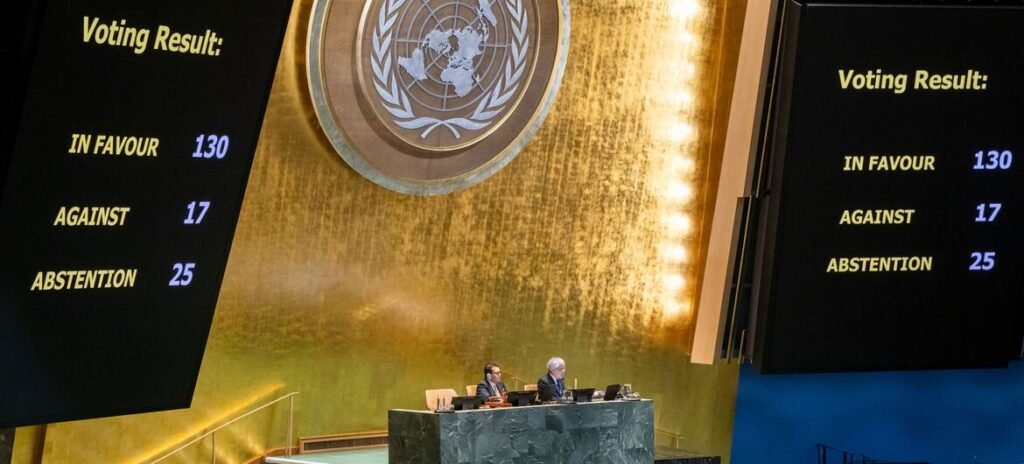
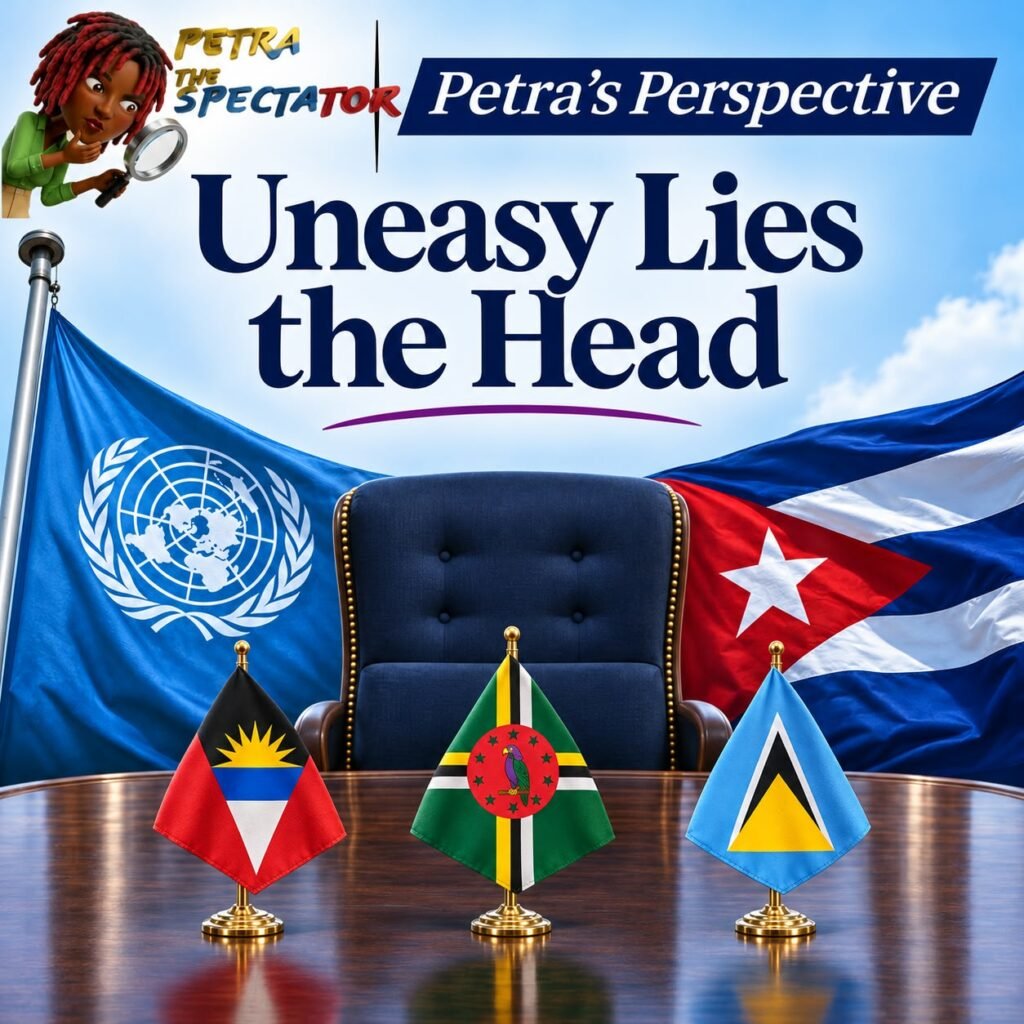
I keep returning to three countries for which no vote was recorded: Antigua and Barbuda, Dominica and Saint Lucia. Jamaica, Guyana and Haiti formally abstained, while Trinidad and Tobago voted against the resolution. The record tells us how those votes fell. Speculation remains about why the three countries did not participate.
With some distance from the vote, I find myself less drawn to the familiar accusations of betrayal, cowardice or ingratitude and more inclined to consider what those entrusted with leading small Caribbean states have to weigh.
Uneasy lies the head.
For us, Cuba’s contribution lives among us. We see it in the professionals who returned home with qualifications their families might otherwise have struggled to afford, in the medical care people received and in the opportunities Cuba extended when our own resources fell short. For decades, Antigua and Barbuda has benefited from cooperation with Cuba in education, healthcare, sports and technical support.
That history carries an obligation of gratitude. It also gives our concern for the Cuban people a deeply personal foundation. Their welfare matters to us, as does their right to determine their own future.
Caribbean leaders must weigh that concern alongside their responsibility for the welfare of citizens at home. They do so in a region where the decisions of a vastly more powerful neighbour can reach into our businesses and households with very little warning.
For Antigua and Barbuda, tourism is our liquid gold. The money visitors spend keeps hotels, restaurants, taxi operators and tour guides working, and it circulates well beyond the businesses that deal directly with visitors. The United States is our largest single source market. According to the Antigua and Barbuda Tourism Authority, it accounted for 46 percent of stayover arrivals in the first quarter of 2026. That is nearly one in every two stayover visitors.
Cast your mind back to January 3, 2026. During the US military operation in Venezuela, the Federal Aviation Administration temporarily restricted US carriers from flying through parts of Caribbean airspace. American Airlines, Delta and JetBlue services at V.C. Bird International Airport were among those affected. Flights resumed the following day, but even a brief interruption in the middle of the winter season left visitors rearranging their travel and local businesses adjusting to disrupted arrivals and departures.
I think of the taxi operator expecting a fare, the vendor counting on visitors, and the family waiting to collect someone at the airport. That January morning gave us a glimpse of how quickly a decision in Washington can make itself felt here. As I consider what might have weighed on our government ahead of the October vote, our reliance on US air access belongs in the picture.
For many of us, the United States is also where relatives live, where our children study and where families seek specialist care. We have built business and personal relationships there over generations. From January 1, 2026, US policy partially suspended visa issuance to nationals of Antigua and Barbuda and Dominica across visitor, student and exchange categories, as well as immigrant visas, subject to specified exceptions. The State Department distinguished people who already held valid visas when the measures took effect.
Those measures were already in place before the October vote. They show how quickly opportunities can narrow for people whose plans depend on access to the United States. A leader weighing the risk of further restrictions has to think about the student waiting to take up a place at university, the family hoping to reunite and the patient whose treatment requires travel.
And there lies the discomfort. How does a leader protect citizens at home while honouring a longstanding friendship and a principle the country has repeatedly defended? How much room is there to exercise independent judgement when the consequences of a decision may be felt so far beyond the meeting room?
In the lead-up to the vote, Cuba’s foreign minister alleged that Washington was using threats involving visas, tariffs and other measures to influence governments. His allegations tell us something about the atmosphere in which the vote took place. What weighed on the three Caribbean governments remains a question for those governments.
Those pressures help me understand why a government might have been cautious. I still believe citizens are entitled to know where their government stands on the embargo, how its absence fits with longstanding solidarity with Cuba and what considerations guided it. Diplomacy requires discretion, but public confidence requires some clarity.
Our national interest also includes defending the principles that give small states some protection in an unequal world. Sovereignty, respect for international law and the freedom to maintain relationships without coercion matter precisely when they are hardest to defend. If those principles become negotiable whenever pressure rises, our vulnerability grows.
The same candour should extend to Cuba. We can acknowledge the need for reform there and oppose an embargo that deepens hardship for the Cuban people. Friendship should leave room for honesty.
Uneasy lies the head that must weigh friendship, principle, and the welfare of a nation. We should recognise the burden as we examine the choice.