

How long have you been going to Jolly Beach?
My childhood memories take me back to playing on the sands of Jolly Beach, long before beach access became the subject of heated public debate. There were the occasional beach limes courtesy of my Uncle Papi’s glass-bottom boat, and then there were the visits with my dad whose primary vehicle carried taxi plates, when we would drive right down to the area where taxis dropped off visitors, near what we later came to know as Castaways.
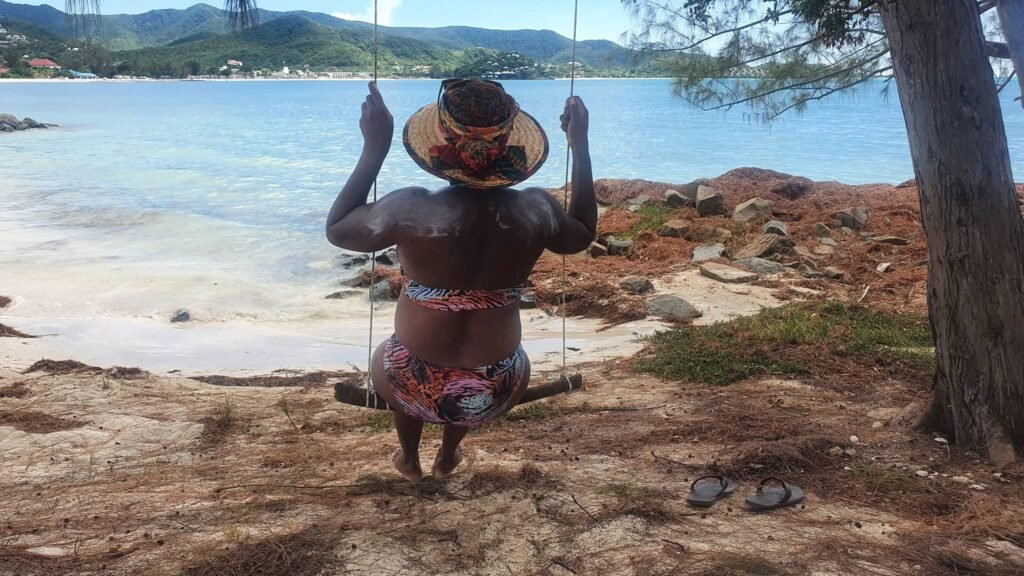
Then came my adulting years, when a beach lime required a little more planning, especially when the crew had a small grill, a cooler and enough picnic goodies to make an afternoon of it. We would sometimes negotiate our way past the security entrance to drive down to the far end, beyond the houses, and settle in for a good lime.
And when those negotiations failed, whether because the security guard was ‘too nuff’ (sensible people would want me to say doing his job) or nobody had the patience to sweet-talk anybody, we simply parked in the area still used as public parking today, gathered whatever we could carry, and walked to the beach. We enjoyed ourselves just the same!
Of course, it is entirely possible that access to Jolly Beach was different before my childhood memories, before residential and commercial developments transformed the area. I can only speak to what I remember and what I have experienced over the decades.
So why am I raising this now?
I confess that I have been silently observing the ongoing Jolly Beach access saga, listening to the competing arguments and watching the exchanges across social media. And throughout it all, two questions have remained with me.
The first concerns the calls to restore parking in the former Castaways area. My recollection is that the parking area near Castaways was not generally available to the wider public for decades. It primarily accommodated homeowners’ golf carts and for their beach access use, and the dropping off and picking up of visitors and goods for the enterprises on located nearby. John Public beachgoers were directed to the unpaved, grass-covered parking area, still in use today as the public parking area. We would walk from there to the beach.
So, would restoring parking in the former Castaways area actually restore a traditional public privilege, or would it be seeking access to an arrangement that was never generally available to the wider public? That distinction is important.
The second concerns the current arrangements. With construction underway, traffic has been redirected, and the public now shares a designated their usual parking area with homeowners.
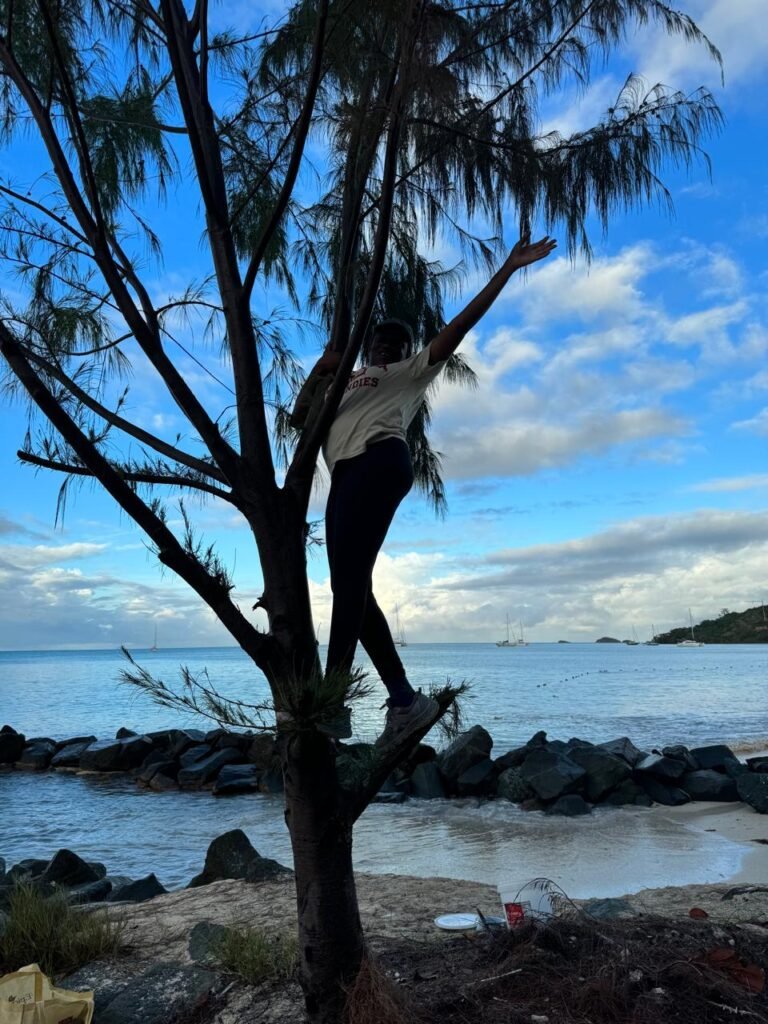
The current redirection of the walking route to the beach provides a considerably shorter, though narrower, route. As construction proceeds, the route is understandably fenced off where safety and ongoing work require it. My concern is whether, once construction is complete, the pathway will be widened to allow people to move comfortably, particularly those of us arriving with coolers, beach chairs, picnic baskets, and other essentials for a good Antiguan beach lime.
I am not advocating unrestricted vehicular access all the way to the sand. I am asking whether the permanent arrangements will provide a safe, convenient, and practical pedestrian route for everyone, including families with small children, elderly beachgoers, and people with mobility challenges.
And this brings me to what I believe has become lost in the shouting.
What exactly do we mean when we speak about beach access?
Are we discussing the right to enter and enjoy the beach, the location of public parking, vehicular access to particular points, or the convenience and safety of access?
These are related concerns, but they are not necessarily the same issue.
As I understand the present arrangements, public access to Jolly Beach has remained open, although construction has altered the routes and some parking facilities. That is an important distinction. It does not, however, mean that every concern about convenience, accessibility or the eventual permanent arrangements has been satisfactorily addressed.
Nor should the fact that access remains open prevent legitimate questions about how it will function when construction is completed.
Our beaches are among the greatest treasures of Antigua and Barbuda, not simply because of their beauty or tourism value, but because they are woven into the everyday experiences and memories of our people.
Jolly Beach is part of my childhood, my family experiences, and countless good limes with friends. I suspect many Antiguans and Barbudans have similar stories stretching across generations. And that is precisely why the discussion deserves more than shouting matches, accusations, and competing narratives across social media. We need meaningful information, clear explanations and an honest distinction between what existed before, what has changed during construction and what the permanent arrangements will be.
Development and public enjoyment of our beaches should not be treated as mutually exclusive ambitions. The challenge is to ensure that both can coexist, with reasonable accommodation for the people whose connection to these spaces long predates the latest development.
So, rather than joining the shouting, I am putting my ‘two sense’ on the table and inviting some informed answers.
Preserving public beach access is not simply about where we park our vehicles. It is about ensuring that generations to come can continue making their own memories on the sands of Jolly Beach and all other beaches, just as so many of us have done.
And preferably without having to sweet-talk a security guard to get there!