
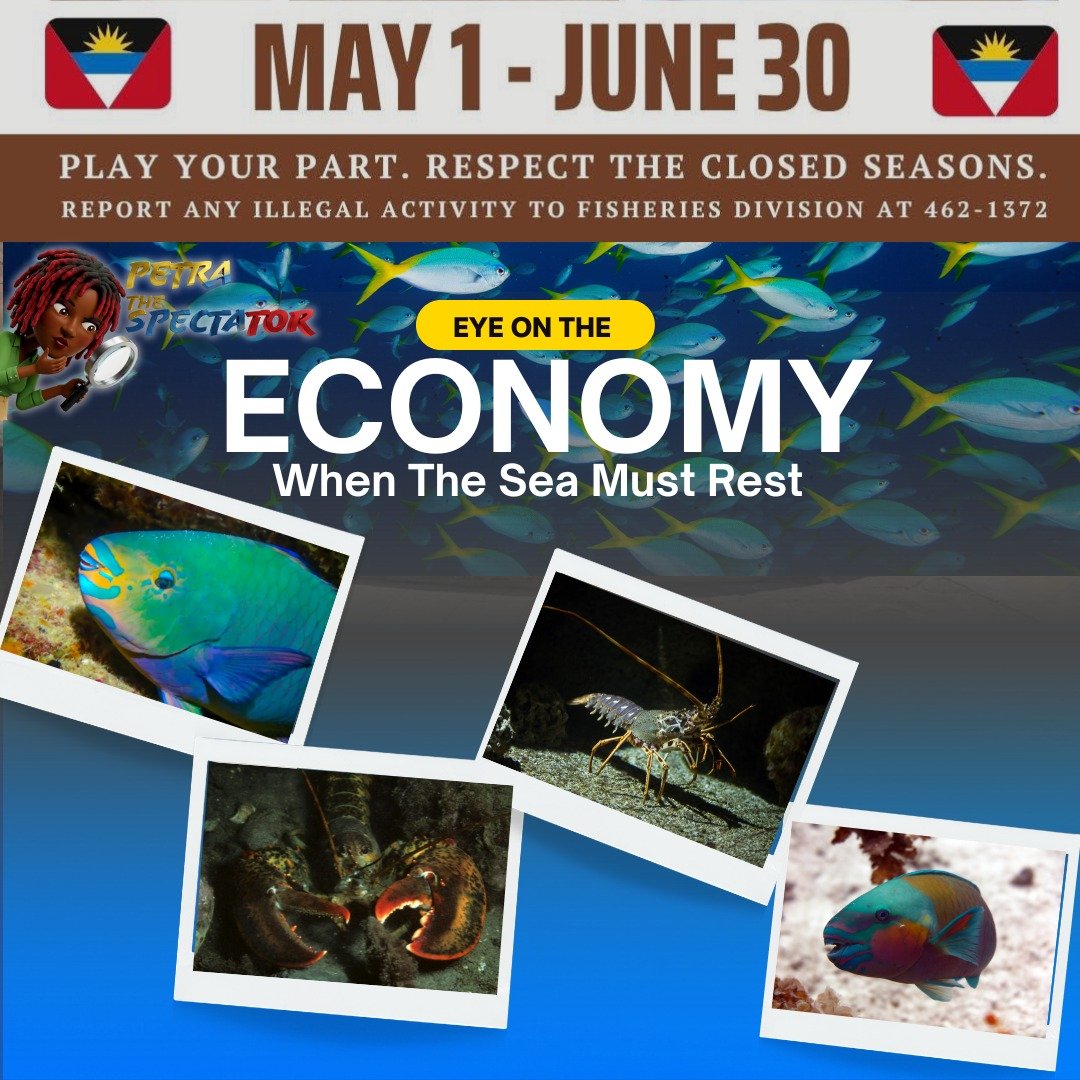
The science, survival, and shared responsibility behind Antigua and Barbuda’s annual closed seasons
by Petra Williams
From May 1 to June 30 each year, the menu quietly changes across Antigua and Barbuda. Lobster disappears, and Parrotfish, known to us as Chub, slips off the plate.
For some, it’s an inconvenience. For others, it’s a mystery.
But beneath the surface, quite literally, this close period is doing heavy lifting for the future of the country’s marine life, its fishing economy, and even its coastline.
That reality came into sharp focus during a recent edition of Morning with SlyJ on WTP Media, where marine ecologist Ruleo Camacho joined host James “SlyJ” Simon and guest Petra Williams to unpack the science, the stakes, and the shared responsibility behind the annual closed season.
The Biology Clock We Don’t See
Unlike humans, marine species do not reproduce year-round. Their reproductive cycles are tightly choreographed, triggered by environmental signals like tides, moon phases, and temperature.
That narrow window is when most spawning occurs. Camacho explains the rationale for the closed season rule, “The goal of a closed season is to stop us from impacting the population at the exact moment it’s trying to reproduce, so that we can have more fish in the future.”
It is, in essence, a pause button, not forever, but long enough to let nature do its work.
Why Parrotfish Matter More Than the Plate
As the discussions continued, it was evident from the audience response that Parrotfish mattered to many plates, except mine.
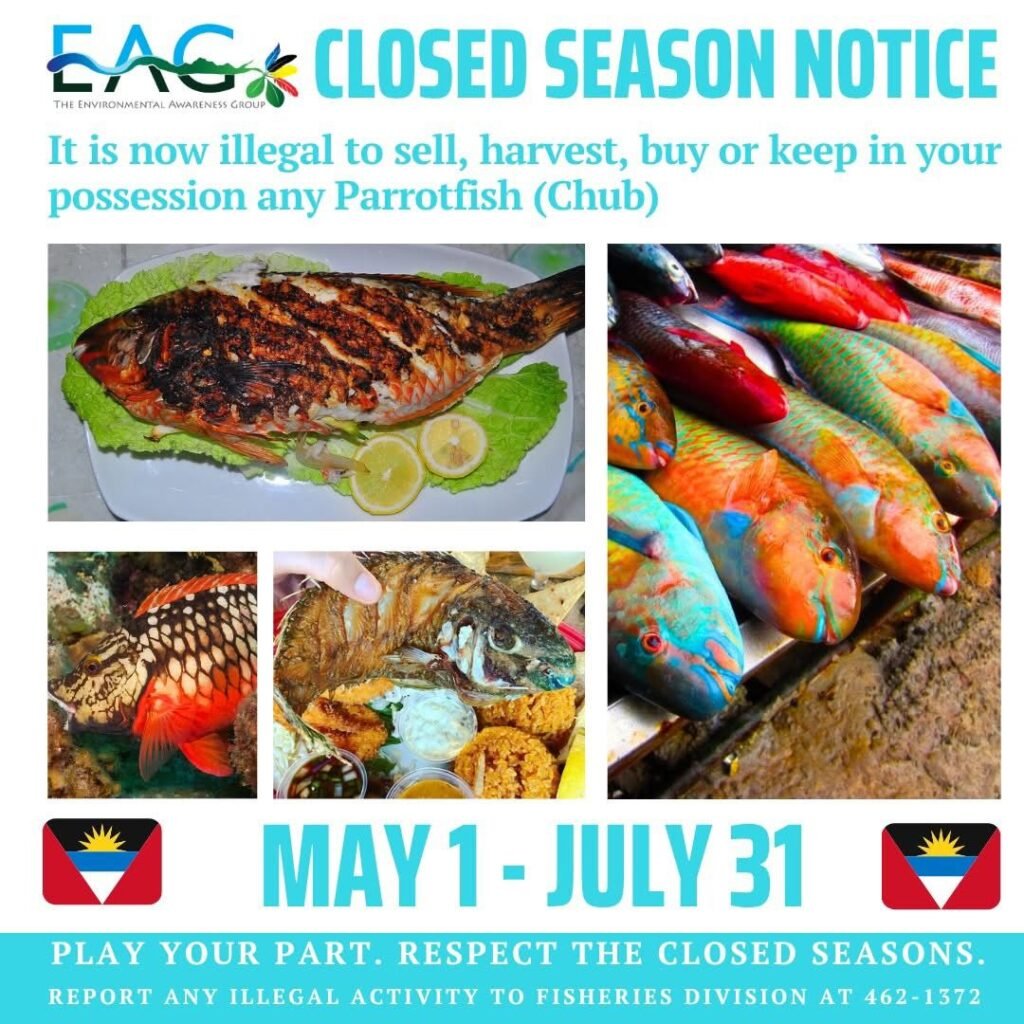
Beyond our plates, they are indispensable. Think of them as the ocean’s landscapers.
The fish we know as Chub feed on algae that compete with coral. Without them, algae spreads aggressively, choking reefs and preventing coral growth. Ruleo emphasized that the presence of Parrotfish helps keep reefs balanced, alive and capable of supporting a wide range of marine species.
They provide habitat for fish stocks for the fisherfolk livelihood and support recreational fishing.
Healthy coral reefs are a postcard beauty and integral to our ecotourism product.
Healthy coal reefs reduce coastal erosion and wave energy. One key point from Ruleo as we head into our annual hurricane season was, “Healthy reefs reduce wave energy,” so when storms come, the coastline is less affected.
Remove parrotfish from that equation, and the ripple effect is immediate and long-term: fewer reefs, fewer fish, and more vulnerable coastlines.
Lobster: A Numbers Game
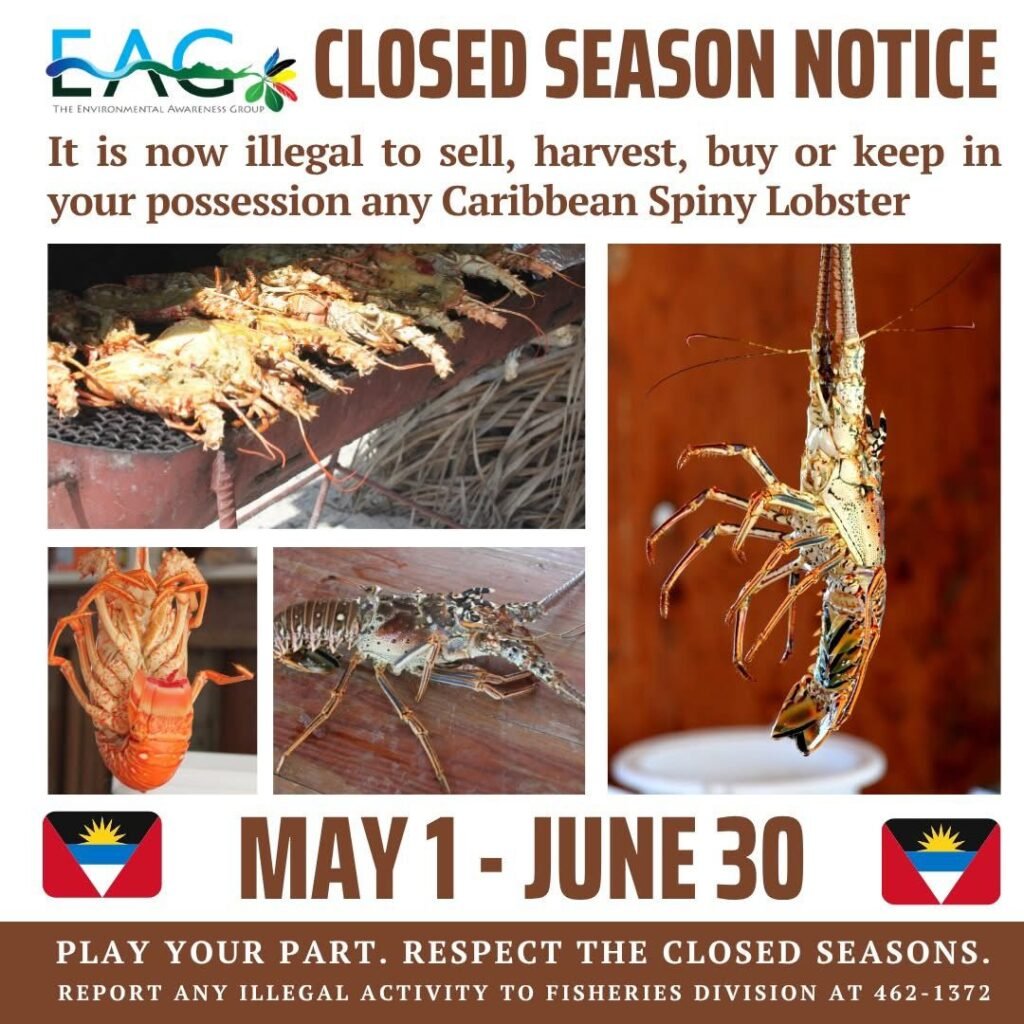
Lobsters operate on a similar biological schedule. Their reproductive success depends heavily on population size. The more individuals present during spawning, the greater the chances of successful reproduction.
That is why the closed season is absolute. No size exceptions. No grey areas. “It’s not about what size you catch,” Camacho emphasizes. “During the closed season, they are completely off limits.”
His logic was straightforward: protect the breeding stock now, or face scarcity later.
The Freezer Myth: Why Stockpiling Undermines the System
One of the most persistent questions is whether people can store lobster or parrotfish for personal use ahead of the closed season. The answer is no. The law prohibits not just catching and selling, but also possession during the closed period.
Ruleo cited two reasons: enforcement practicality and biological impact. There is no reliable way to track what was caught before versus during the closed season, and stockpiling removes individuals from the population right before peak reproduction. Breaking it down, he provided an example. “Imagine a bank offering 50 percent interest for two months. You would want as much money in your account as possible during that time. The same principle applies to marine life. The “interest period” is reproduction. The “capital” is the number of fish and lobsters in the water. Remove too much before that window, and the returns collapse.”
The Fisherfolk Reality: Short-Term Sacrifice, Long-Term Survival
Some listeners shared concern that closed seasons appear to cut directly into the livelihoods of fisherfolk.
Ruleo, himself a licensed fisher, shared that many experienced fishers understand the stakes; protecting species now ensures income in the future. He agreed that the tension often comes from demand: restaurants want lobster, customers ask for chub, therefore, vendors make demands of the fishermen.
He reminded listeners that the law extends beyond fishers to include sellers, buyers, and everyday consumers in our collective interest. Conservation is a collective discipline.
A Simple Choice, A Long Shadow
At its core, the closed season presents a deceptively simple decision: Do you want to eat lobster this year, or do you want to keep eating lobster for the next ten years?
Antigua and Barbuda, we still have a choice. Two months of restraint, ten months of access, to guarantee decades of sustainability.
The closed season is not just a fisheries rule. It is a national strategy disguised as a calendar date. It protects marine ecosystems, food security, tourism, and coastal resilience.
We all share the responsibility not just of who catches, but also who consumes. In the end, the future of the sea is not decided on the water alone. It is decided at the table.
Petra Williams is sitting in as a guest on Mornings with Sly, Monday to Friday from 7:00–9:30 AM on WTP Media. Tune in to share in the conversations on current affairs and entertainment to start your day. Feel free to send your questions, feedback, or topics you would like discussed to peachpw@gmail.com.