
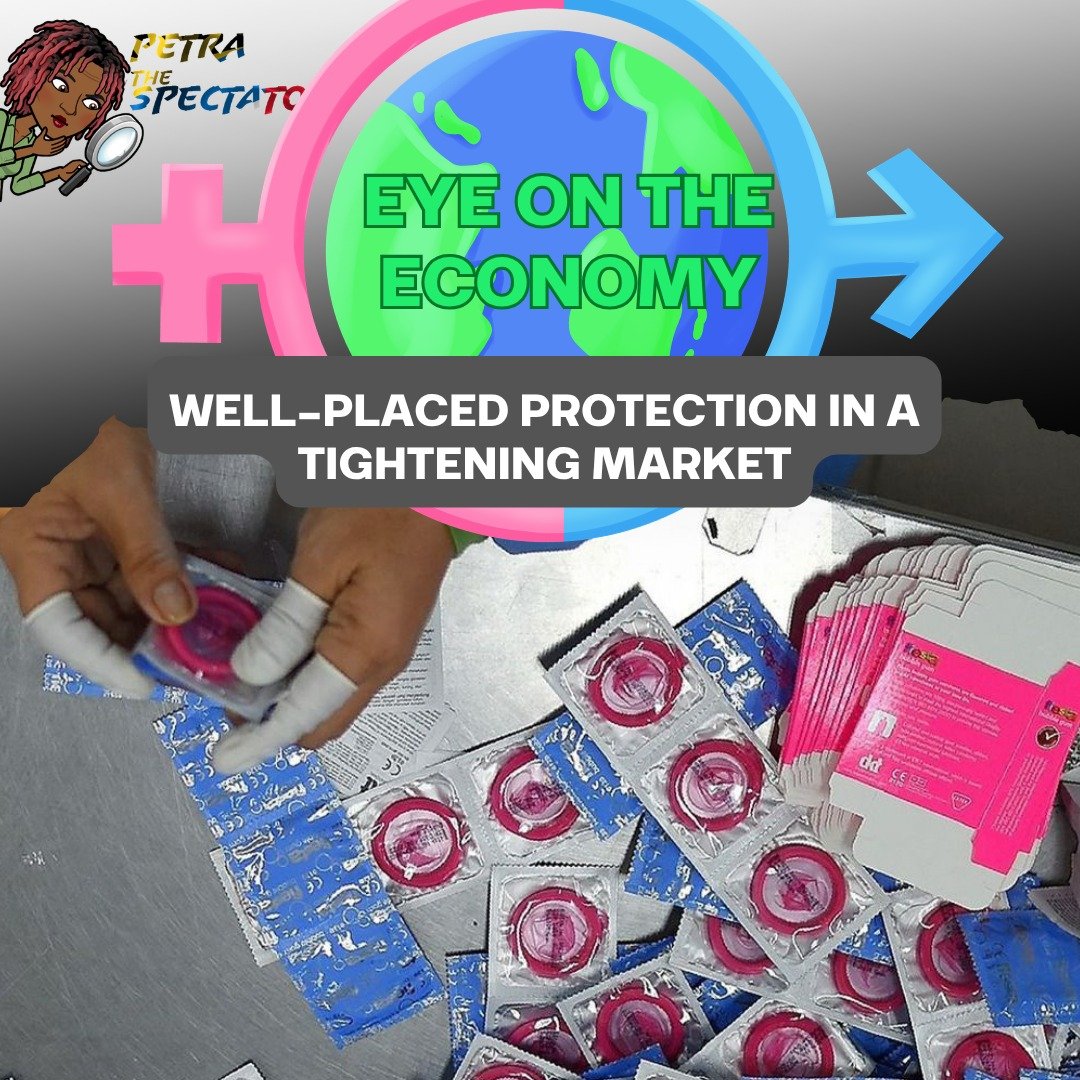
There are days when economics arrives dressed in charts and forecasts.
And then there are days like this, when it can show up on a shelf between baby lotion and diapers.
Yesterday, in a very serious meeting about a very small space, we tackled a question that would make even the most seasoned economist pause: Where do you put condoms in a tight retail layout?
This was not a casual discussion; it was full-on microeconomics in motion. Scarcity of space, competing goods, consumer behavior, social norms, and the syllabus in day-to-day reality.
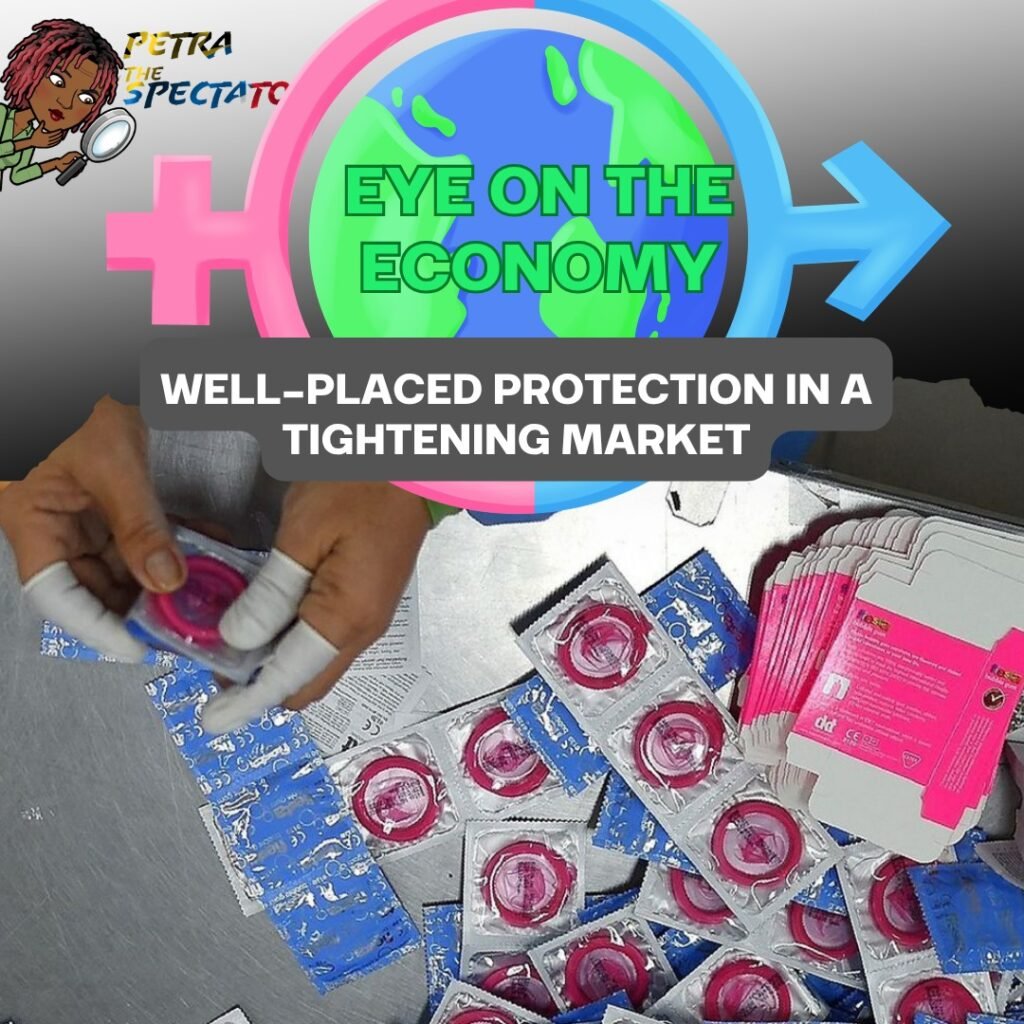
After careful consideration, we landed on what can only be described as a masterstroke of silent communication, placing them next to the baby products. A quiet, unblinking reminder of life’s most reliable cause-and-effect relationship. Quite a campaign without the need for a marketing budget. Efficient and elegant, perhaps even a bit naughty, we moved on with more items to sort before us.
Then today, the global economy decided to join the meeting. Condom prices may jump by 20 to 30 percent depending on how long the disruption lasts. Karex, the world’s largest condom manufacturer, produces over 5 billion units a year, like it’s baking bread, signalled the price movement.
Karex Chief Executive Officer Goh Miah Kiat told Reuters News yesterday (Tuesday) “The situation is definitely very fragile, prices are expensive, we have no choice but to transfer the costs right now to the customers.” He indicated that global supply chains have been affected by the war since the end of February. He pointed to the chokehold on the Strait of Hormuz that has cut off the supply of some materials used in condom production.
From its base in Malaysia, it supplies over 130 countries. With this project price jump impacted most people’s business due to external factors of global conflict causing supply chain disruptions, economic impact is making cameo appearances where you least expect them, condom prices.
And just like that, yesterday’s little shelf discussion became a global case study. A significant price increase for this commodity could affect access. And the baby aisle might start seeing a different kind of growth trend.
Suddenly, that placement feels less like convenience and more like foresight, almost prophetic.
It’s the kind of alignment that makes you wonder if somewhere, deep in the machinery of the global economy, someone saw our meeting notes and said, yes, let’s make this interesting. On one side, a team is trying to maximize limited shelf space, while on the other, a multinational is navigating limited raw material supply: same story, different scale.

And right in the middle of it all? A shelf quietly whispering, decisions have consequences, and apparently, price tags too.
In the grand scheme of things, it is a small story. But it is a perfect reminder that economics is never just numbers. It is behaviour, access, and timing. It can also be a very well-placed product sitting next to a very persuasive reminder.
You really can’t make this up.
What This Means
In case the shelf didn’t say it loudly enough, global shocks rarely stay in their lane. Even something as personal as protection now finds itself tangled in supply chains, conflict, and rising costs.
When prices climb by 20 to 30 percent, behaviour shifts. Some delay, some substitute, and some take chances, none of which are neutral decisions.
In that context, access becomes policy, even on a shelf. What once looked like smart placement quietly evolves into a form of public health intervention. And yes, the baby aisle may get busier, not by design, but by economics. In the end, a small decision in a small space now sits squarely within a very big conversation.
Choose wisely, the market is watching.