
by Petra Williams
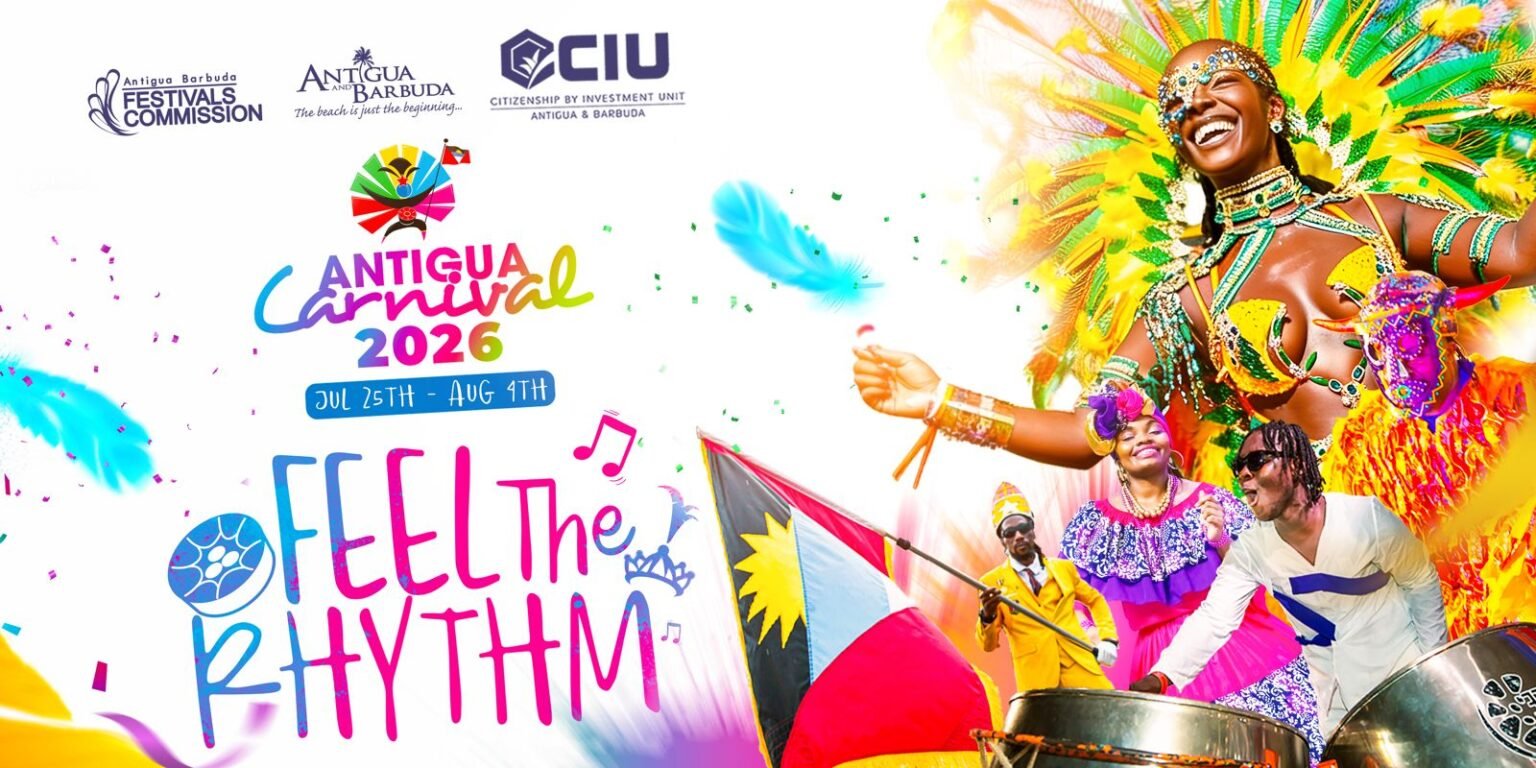
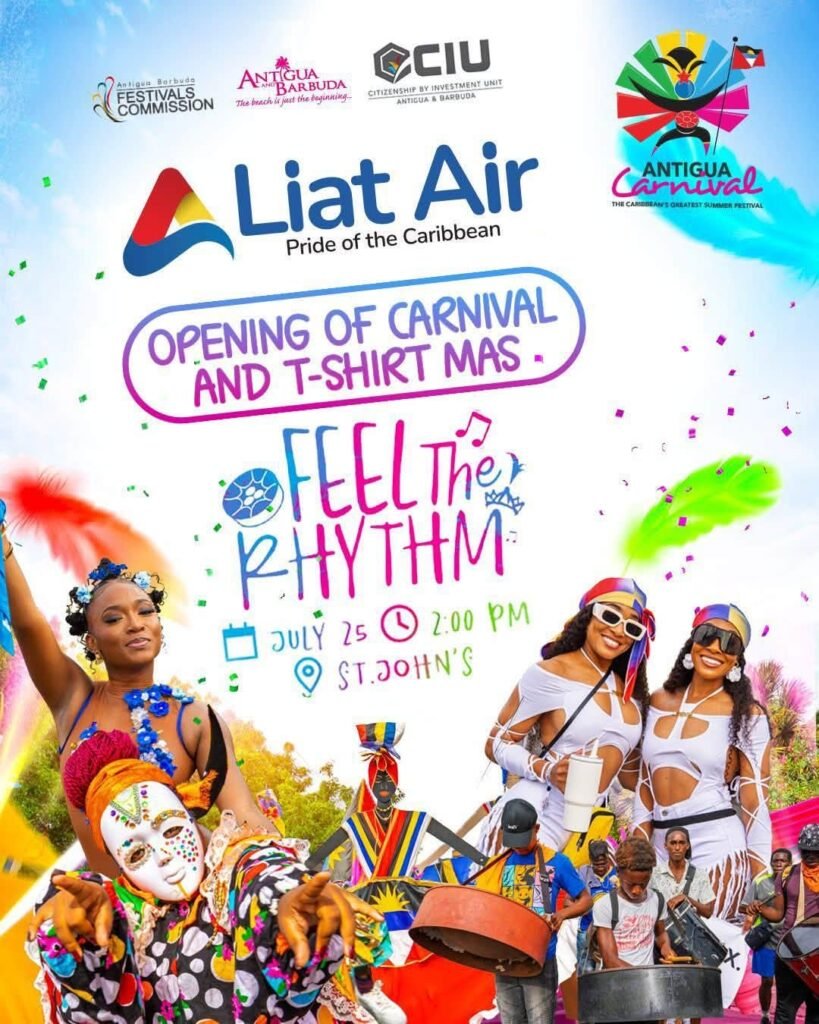
July 25, 2026 – Today’s official opening ceremony at Parliament Drive, featuring the ceremonial ribbon cutting, recognition of Carnival Grand Marshalls Destroyer Snr and King Young Destroyer, and the traditional T-Shirt Mas Parade, marks the formal start of Antigua Carnival 2026. But for many Antiguans and Barbudans, Carnival has already been alive for weeks.
Soca Tent, Calypso Tent, Panorama rehearsals, mas camps opening, scores of new songs released for the season, and a never-ending fete season have all fuelled Carnival Fever. For those who chose to be active stakeholders, as artists, organizers, sponsors, investors, patrons, and spectators, Carnival definitely ‘done start already’.
In the formal proceedings, long before today’s ribbon-cutting, we celebrated several of the traditions that are the bedrock of our festival heritage. The Teenage Pageant, Queen of Carnival, Junior Calypso Monarch, and, more recently, the Junior Party Monarch competitions have all taken their place on the Carnival stage.
Their movement outside the traditional twelve-day Carnival schedule reflects the ongoing evolution of our festival. It creates space for the expanding fete culture and for the international attention now attached to Antigua Carnival, a development the Antigua and Barbuda Festivals Commission has consciously embraced as part of the product’s growth.
Carnival itself has evolved in other ways.
That evolution is not only about scheduling. It is also about how Antigua Carnival is packaged, promoted, and experienced.
Mas on the Road remains deeply rooted in local participation, but there has been increasing emphasis on positioning Carnival Monday and Tuesday as an exportable tourism product. The visitor experience has become central to the marketing of Antigua Carnival, attracting international influencers, content creators, and visitors eager to experience our streets.
Those commercial opportunities have grown, but they have also sharpened an important question: how much can Carnival change before the people who built it feel pushed to the margins?

At the same time, however, that evolution has come at a cost. The once expansive landscape of mas bands has steadily narrowed, and for many Antiguans and Barbudans, today’s Carnival can feel increasingly shaped for visitors’ cameras rather than for the lived experience of the communities that built it.
That balance between growth and ownership remains one of the defining conversations about the future of Antigua Carnival.
However, there is much to celebrate as the official festivities begin.
The Antigua Recreation Grounds now features a reimagined Carnival City, with upgrades to the stage, sound production, patron areas, and vendor facilities. These upgrades bring the festival experience closer to international standards and improved comfort for the thousands expected to pass through the venue.
Equally encouraging has been the quality of the traditional competitions.

Both the Teenage Pageant and the Queen of Carnival were exceptionally well produced, reminding audiences that Antigua Carnival continues to honour its own identity while embracing innovation. They were celebrations not simply of beauty and talent, but of Carnival lineage, community pride and the cultural confidence of a new generation.
The Junior Calypso Monarch and Junior Party Monarch competitions delivered perhaps an even more significant message. The performances were of such high quality that they should permanently silence suggestions that the future of these art forms is in jeopardy. The talent is there. The creativity is there. The confidence is there.
What was missing was the audience. It was disappointing that these young performers showcased their gifts before relatively small crowds, with limited representation from policymakers, corporate Antigua and even the wider community. If we genuinely believe that our cultural traditions deserve protection, then supporting the next generation must be intentional, both in commercial support and in our physical presence.
This is an area deserving serious reflection. Greater efforts are needed to place these junior competitions before larger audiences and to encourage attendance by schools, businesses, government officials and the wider public. Investment in our cultural future should be visible, not merely spoken about.

As today’s parade winds through the streets and the sounds of Carnival officially fill the air once again, perhaps the greatest reminder is this: The Festivals Commission can organise the events, the Government can provide support, sponsors can invest, and visitors can celebrate. But none of them owns Antigua Carnival; We do.
The long-term success of this festival and the preservation of the culture that gave birth to it ultimately rests not with “them”, but with us: every ticket purchased, every official Carnival event attended, every delegate, artist, band, and competitor applauded, every tradition preserved. That is how Carnival will survive and thrive.
So, as Antigua and Barbuda officially opens Carnival 2026 today, may we celebrate not only what has been organised for us, but also, what has been entrusted to us.
After all, ah fu we subben. We Are Carnival.