
By Petra Williams
September 28, 2026 – I have no proof, but I am fairly confident that shortly after I came out of my mother’s womb, I was introduced to Sparrow’s Jean and Dinah. Through it, I learned the fundamentals of calypso as a vehicle for social and political commentary, a record of history, and a classroom for lessons in economics and finance. Of course, that same song would return later, at Baby Quash’s feet, to teach me an additional lesson—the fine art of the double entendre.
Sparrow’s music was always there. You learned it by osmosis, it seems, and it stuck.
During my formative years, while helping to sell ice in Mama’s yard in the heart of Booby Alley, I learned from one of her regular customers that “you and the Slinger barn the same day.” I wasn’t quite sure how to take that at first. I was already in trouble for humming Benna on Sundays and facing possible banishment to Chris’s yard—by myself.
Then Uncle Papi compounded the matter by strengthening the whistling abilities that my mother taught me. Thankfully, it was “Education” that I was caught pelting out melodiously, once again in Baby Quash’s yard. That resulted in another lecture about girls and what they should not do, before she eventually started singing along.
We spent years sitting in the living room in front of the big black-and-white television, watching Trinidad’s Dimanche Gras. The doors and windows would be wide open. The younger cousins sat beside me on the floor, the older cousins occupied the chairs next to Mama, and the neighbours peered through the windows and doorway because everybody wanted to see the competition on Mama’s television. And, of course, among the favourites was King Sparrow.
Those nights were special. We could stay up late and sing benna afterward, until Ash Wednesday, at least openly.
The fierce nationalist in me, even in those earliest days, learned to embrace our Benna music as quickly and completely as everything else. But there was somehow always room for Sparrow. His songs taught everything and made it feel light and entertaining, even when the subject was serious. The language was easy on the ears, the melodies irresistible, and the stories stayed with you long after the music ended.
Then there was his mastery of the double entendre. Those lessons were a masterclass all by themselves. Sparrow, and the calypsonians who followed in that tradition, gave us the liberty to be witty and just a little wutless right in front of the adults, often without attracting the punitive response that would normally follow. It was heaven.
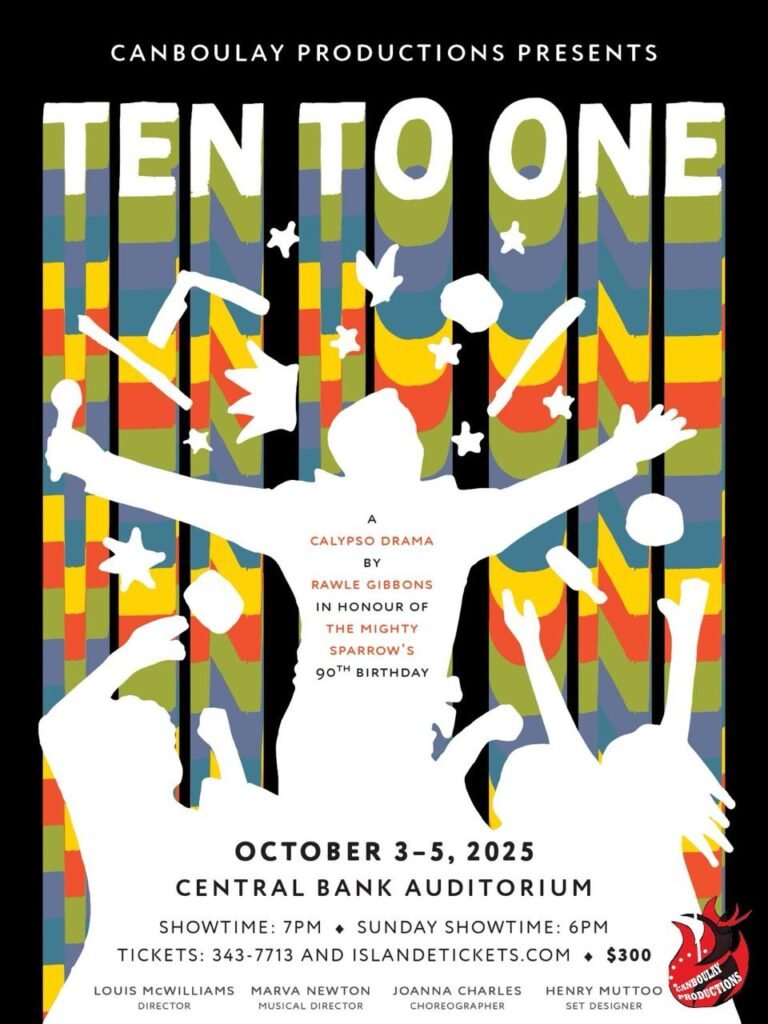
Almost one year ago, on October 5, 2025, I sat in the Central Bank Auditorium in Trinidad and Tobago watching Rawle Gibbons’ Ten to One, produced by Canboulay Productions. Set largely around Tantie’s Bar in 1950s and 1960s Port of Spain, the production used Sparrow’s music to take us through the society, politics and personalities of the period. It was joyful, reflective and politically charged, a celebration not merely of the performer, but of the genius behind the music.
For me, it was also an “aha” moment. Songs I had absorbed as a child, sung because the melodies were infectious and the lyrics made us laugh, returned carrying their full historical and political weight. What had once seemed like entertainment revealed itself again as documentation.
Sparrow had been recording the Caribbean all along.
He recorded the departure of the Americans, the shifting fortunes of women left behind, the hypocrisies of politicians, the struggles of ordinary people, the anxieties of independence, the tensions of race and class, and the countless ways Caribbean people loved, survived, schemed and laughed at themselves.
Watching Ten to One, I understood even more clearly that these calypsos were not simply songs. They were living records: our newspapers set to music, our history made memorable through rhythm, wit and melody.
I promised that if Ten to One ever ran again in Trinidad, my mother would be there beside me. She had been part of my first Sparrow classroom, after all.
Long before the false reports and premature obituaries, Sparrow had already demonstrated that even his own mortality was fair game for calypso.
In the 1974 recording of Sparrow Dead, produced at the height of his celebrated clashes with Lord Kitchener, Sparrow poked fun at himself, his rival and the rumours of his demise. Their musical rivalry helped energise the art form as calypso strengthened its footing in post-Independence Trinidad and Tobago and extended its reach across the Caribbean and beyond.
Yesterday, September 27, 2026, Slinger Francisco, the Mighty Sparrow, died peacefully in New York at the age of 91. This time, the reports are true: Sparrow dead!
But how does a man like Sparrow really die when generations of Caribbean people can hear the opening bars of a song and immediately be transported to a yard, a Carnival tent, a living room crowded with family, or a time when the whole neighbourhood gathered around the one big television?
Sparrow did not merely sing about Caribbean life. He documented it. He teased it, challenged it, exposed it, and sometimes sweetened its bitterest truths with humour.
His music carried politics, history, sex, race, class, colonialism, relationships, economics and everyday bacchanal, all wrapped in melodies we could dance to. For many of us, Sparrow was part of our education long before we understood that we were being taught.
I share a birthday with the Slinger. I’ll carry that little fact with even greater pride.
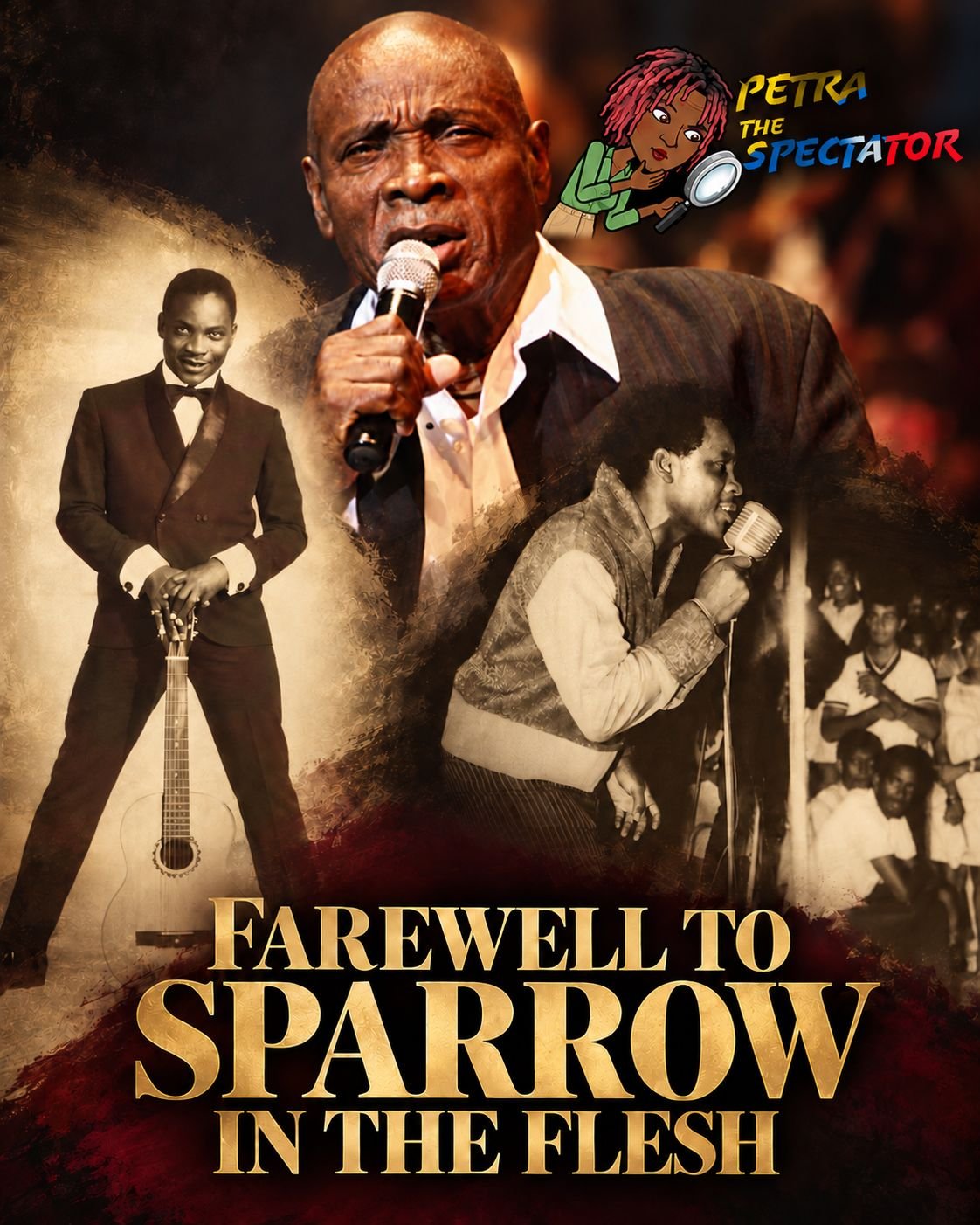
Farewell to Sparrow in the flesh. The man has departed, but the teacher, the storyteller, and the Calypso King remain: in the lessons, the laughter, and the music he left behind.
Petra the Spectator – excellent
Excellent piece Petra. I wish my husband was still here to read this about his favorite calypsonian- The Mighty Sparrow.
thank you for your feedback and for reading of course