

Two Time Capsules, One National Story
Nations are not built in a single moment. They are built in stages, often separated by decades, sometimes by generations, but always connected by purpose. January 16 is one such thread in the story of Antigua and Barbuda.
On January 16, 1939, thirty-nine men and women came together to form the Antigua Trades and Labour Union (AT&LU). On January 16, 2017, Antigua and Barbuda successfully completed its first kidney transplant at the Mount St John Medical Centre.
At first glance, these moments seem worlds apart. One belongs to labour struggle and political awakening, the other to modern medicine and specialist healthcare. Yet they are, in truth, chapters of the same national journey.
1939: The Right to Live with Dignity
The formation of the AT&LU was born out of hardship. The Moyne Commission’s 1938 visit exposed deep poverty, injustice, and exploitation across the Caribbean. Sir Walter Citrine’s words to Antiguans and Barbudans captured the moment precisely: a downtrodden people must bind together or be broken individually.
The 39ers understood something fundamental. Survival was not enough. Dignity required organisation, representation, and power. From the election of Reginald Stevens as President and Randall Lockhart as Legal Representative, to the writers, organisers, educators, and women’s rights advocates among them, the AT&LU became more than a union. It became an engine of national transformation.
The decision to move into politics in 1943 was not accidental. It was strategic. Workers’ rights could not be secured without political authority. Through the political arm that became the ALP, and later rebranded as the nationally inclusive ABLP, the labour movement shaped housing, education, access to healthcare, wages, and social mobility for decades.
The AT&LU did not simply fight for jobs. It fought for a better quality of life for the people.
Visit the link for more on the formation of the trade union (https://petrathespectator.com/time-capsule/antigua-trades-and-labour-union-founded/)
2017: The Right to Live Well
Seventy-eight years later, that same struggle took a new form. On January 16, 2017, Antigua and Barbuda crossed a threshold that many small states never reach. An eight-hour, two-part kidney transplant was successfully completed at the then-named Mount St John Medical Centre, now the Sir Lester Bird Medical Centre, by a largely local team supported by regional and international expertise.
It was a medical achievement, yes, but it was also a social one.
Antiguan and Barbudan-born Dr Ian Thomas, who coordinated the programme, spoke plainly about what it meant: confidence in local capability, proof that Antiguan professionals were equal to the task, and, most importantly, access for people of ordinary means.
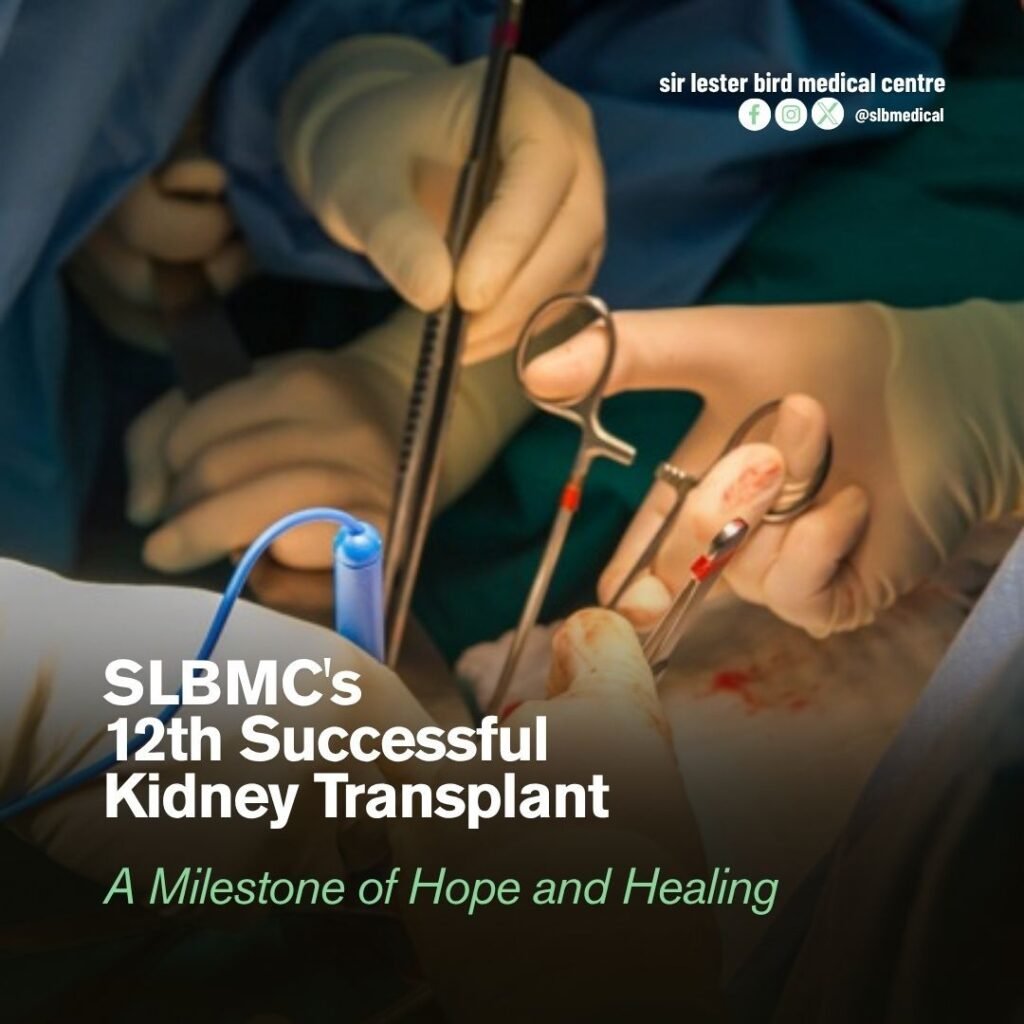
This was not elite medicine for the wealthy. It was life-saving care for citizens who would otherwise face dialysis, overseas treatment, or premature death. Having the transplant at home mattered: affordability, familiar doctors, and immediate access. Comfort. Dignity.
Just as the labour movement fought to end the indignity of exploitation, the transplant programme challenged the idea that advanced healthcare was beyond the reach of small nations.
Visit the link for more on Antigua and Barbuda’s first successful kidney transplant (https://petrathespectator.com/first-successfully-kidney-transplant/).
The Common Thread
In 1939, the question was: Can working people live with dignity? In 2017, the question was: Can ordinary citizens access life-saving care at home? The answers were the same: only when a nation builds the systems to make it possible. Both moments required collective will and institution-building and demanded leadership willing to push beyond perceived limits.
The work to ensure that Antiguans and Barbudans retain the right to live with dignity and to continuously improve their standard of living remains unfinished. The AT&LU’s mission, captured in its creed: “We believe in the empowerment of our people, in the principles of good governance, the elimination of poverty, the provision of full employment, equitable distribution of wealth, and equality of opportunity and justice,” continues to guide the philosophy of nation-building across unions, political movements, and governing administrations. It is this outlook that drives the commitment to initiatives such as the kidney transplant programme, even in uncertain economic times.
Progress is real, but fragile.
The Relevance of these Time Capsule Features Today
January 16 reminds us that national development is not only about flags, airports, or GDP figures. It is about whether people can work safely, live decently, and receive care with dignity.
At a time when global uncertainty is reshaping economies, healthcare systems, and labour markets, these two January 16 milestones remind us that national resilience is built long before crisis arrives.
The labour movement taught Antigua and Barbuda how to organise, advocate, and insist on fairness in the face of imbalance. The kidney transplant programme demonstrates what becomes possible when that same philosophy is applied to modern governance: investing in people, building local capacity, and reducing dependence on external systems.
Today, as nations confront rising healthcare costs, workforce insecurity, and widening inequality, the lessons are clear. Solid and innovative leadership is vital; strong institutions matter; local expertise is important; and collective responsibility is key.
These Time Capsules are about not only what was achieved but also what must be protected, strengthened, and carried forward. They remind us that progress is never automatic and that dignity, once secured, must be continuously defended.
The historical significance of these two Time Capsules is to remind us that from the union hall to the operating theatre, the struggle remains the same: to turn collective effort into collective well-being; one long march toward a better life.
And the work, as always, continues.