
Technology, culture, climate, and the Global South converge as Beijing enters its 15th Five-Year Plan
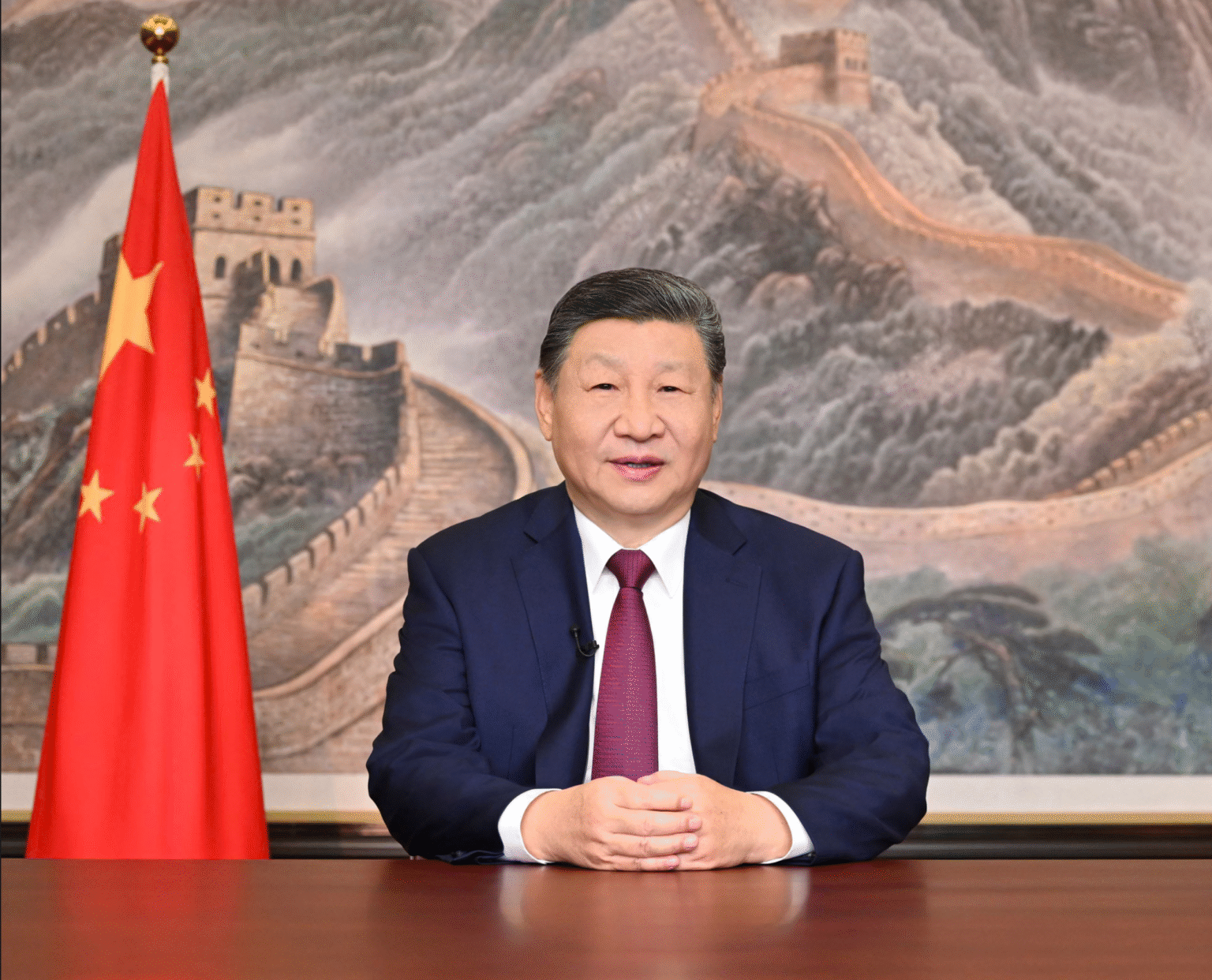
As fireworks faded across Asia on New Year’s Eve, Chinese President Xi Jinping delivered a message that was far more than ceremonial well-wishing. It was a strategic roadmap for where China believes it now stands in the world and where it intends to go next. “The year 2025 marks the completion of China’s 14th Five-Year Plan for economic and social development,” Xi said, situating the moment not as an ending, but as a pivot point. “Over the past five years, we have pressed ahead with enterprise and fortitude… and made solid advances on the new journey of Chinese modernization.”
For small states, developing economies, and regions like the Caribbean, increasingly woven into China’s global orbit, this speech warrants full attention.
A $140 Trillion Economy With Its Eyes Forward
Xi opened with an unmistakable message: China is not stumbling into 2026, it is marching.
“Our economic output has crossed thresholds one after another, and it is expected to reach RMB 140 trillion this year,” he declared. That places China firmly among the world’s dominant economic engines, even as economic growth in many Western economies slows.
Beyond numerical presentation, Xi wrapped growth in legitimacy and national morale.
“Our economic strength, scientific and technological abilities, defence capabilities, and composite national strength all reached new heights… Our people enjoy a growing sense of gain, happiness, and security.” For countries watching from the Global South, the message was implicit: China sees itself not just as growing, but as stable, cohesive, and self-directed.
Technology as Sovereignty
One of the most striking sections of the address was how Xi linked innovation to power.
“We integrated science and technology deeply with industries… Many large AI models have been competing in a race to the top, and breakthroughs have been achieved in the research and development of our own chips.” In a world where technology has become geopolitics, Xi was signaling that China is no longer content to rely on Western platforms, Western chips, or Western supply chains.
From humanoid robots performing kung fu to drones filling the sky with light, the symbolism was deliberate, “Inventions and innovations have boosted new quality productive forces and added colorful dimensions to our lives.”
For Caribbean states investing in digital infrastructure, surveillance systems, ports, and renewable energy, China is presenting itself as a full-spectrum technology provider, not merely a construction partner to which we have become accustomed.
Culture as Global Soft Power: What the Caribbean Should Be Studying
President Xi made it unmistakably clear that China’s rise is not only being powered by factories, AI labs, or aircraft carriers. It is also being driven by a deliberately curated, protected, and monetised culture. “There was a surging public interest in cultural relics, museums, and intangible cultural heritage,” Xi said, pointing to a nation that has turned history into living, breathing economic and diplomatic capital.
“Cultural IPs such as Wukong and Nezha became global hits.” These are not just cartoon characters or folklore figures. They are national intellectual property, transformed into blockbuster films, merchandise, gaming franchises, theme parks, and global brands. China has done what few countries manage to do well: it has made its ancient stories commercially modern without stripping them of meaning.
Equally telling was Xi’s emphasis on youth. “The younger generation came to deem classic Chinese culture as the finest form of aesthetic expression.” This should resonate deeply across the Caribbean. Too often in small island states, culture is treated as something to be preserved in museums rather than activated in markets. China has shown another model. Heritage is not locked away. It is digitised, dramatised, gamified, and globalised.
Xi linked this cultural surge to a booming creative and tourism economy. “The cultural and tourism sectors thrived… Tradition is now embracing modernity, and the Chinese culture is shining in even greater splendor.” This is a blueprint the Caribbean cannot afford to ignore. From Carnival, calypso, steelpan, and creole languages to emancipation history, sugar plantation heritage, and Indigenous survival stories, the region sits on a vault of cultural gold.
What China has demonstrated is that culture, when strategically managed, becomes foreign exchange, employment, youth engagement, and geopolitical influence all at once. In the Caribbean, governments often talk about the creative industries. China is showing what it looks like when a state actually builds them into national development planning. Culture, in Xi’s telling, is not decoration. It is infrastructure. As Beijing now deploys culture with the same seriousness as ports, satellites, and railways, Caribbean leaders would be wise to ask a hard question: Are we still performing our heritage for applause, or are we finally ready to own it, package it, and project it to the world?
Social Policy and the Politics of Stability
Xi zeroed in on social cohesion, a subtle reminder that China’s internal stability is a strategic asset. He stated, “No issue of the people is too small; we care for every leaf and tend every branch in the garden of people’s well-being.” He cited protections for gig workers, subsidies for families, and upgrades for the elderly. “When the happy hum of daily life fills every home, the big family of our nation will go from strength to strength.” In a turbulent world, Beijing wants to project that its system delivers order, continuity, and predictability.
China’s Global Vision
Perhaps the most geopolitically significant section was Xi’s articulation of China’s role in a fractured world. “The world today is undergoing both changes and turbulence… China always stands on the right side of history, and is ready to work with all countries to advance world peace and development and build a community with a shared future for humanity.” He highlighted China’s new climate commitments, its Global Development, Security, Civilization, and Governance Initiatives, and its growing role in global institutions.
This is China positioning itself as the architect of a post-Western global order. For the Caribbean, this matters. Infrastructure, climate finance, tourism, education, and even sports development are now increasingly tied to this alternative diplomatic ecosystem.
Taiwan, Hong Kong, and the Language of Inevitability
Xi left no ambiguity on sovereignty. “We should unswervingly implement the policy of One Country, Two Systems… The reunification of our motherland, a trend of the times, is unstoppable!” The phrasing was not aggressive. It was inevitable. That distinction matters in geopolitics.
Power, Parties, and the Architecture of Governance
President Xi closed the political circle by stating plainly where authority in China resides.
“Only a strong Communist Party of China can make our country strong.”
In Beijing, that truth is openly acknowledged and formally embedded in the state. In the Caribbean, by contrast, it is often masked by the rituals of elections, parliaments, and rotating leaders. Yet the underlying reality is not so different. It is political parties, not just individual politicians, that actually govern nations. Xi framed this power not as entitlement, but as responsibility. “We launched the study and education program on fully implementing the central Party leadership’s eight-point decision on improving Party and government conduct… We exercised strict governance of the Party through credible measures.”
Anti-corruption, discipline, and governance reform were framed as both moral and political imperatives. This is where China’s system, despite its very different structure, touches the same pressure points that Caribbean democracies wrestle with daily. Parties control nominations, policy priorities, and access to state power. If those internal systems rot, no election cycle can compensate.
Xi was explicit that legitimacy must be continuously earned. “We must stay true to our original aspiration and founding mission… and prove ourselves worthy of the people’s expectation in the new era.” This philosophy travels easily across political systems. Whether in a one-party state or a multi-party democracy, governance is only as strong as the organisations that select leaders, enforce standards, and manage power.
In the Caribbean, election cycles can create the illusion that power resets every few years. In reality, it is political parties, their cultures, their financing, and their discipline that determine whether a country experiences continuity, reform, or stagnation. China does not pretend otherwise. Xi’s message was that a party that governs must also be governed. And that is a lesson small states would do well to study closely.
Why This Matters to Antigua, Barbuda, and the Caribbean
As China enters its 15th Five-Year Plan, it is not retreating from the world. It is deepening its reach. Xi was explicit: “We should take solid steps to promote high-quality development, further deepen reform and opening up across the board… and write a new chapter in the story of China’s miracle.”
For small island economies navigating climate risk, infrastructure gaps, and shifting global alliances, this means Beijing remains a central player in the development equation.
President Xi closed with poetry and power: “The dream lofty, the journey long. Bold strides will get us there… May our great motherland stand in magnificence!” China, in Xi’s telling, is not merely entering another year. It is entering another era. And the world, including the Caribbean, will be navigating in its gravitational field.