
November 27, 2025 – St. Vincent and the Grenadines is at the polls today, not in the calm rhythm of democratic routine, but in the charged atmosphere of a country wrestling with memory, rivalry, and the unfinished business of a previous election. Few contests in the region have carried such emotional weight or been so decisively shaped by the shadows of an earlier electoral night.
To understand what is unfolding across the 15 constituencies today, one must revisit the drama of 2020. The election that split the nation in half and set the stage for everything now at stake.
This election did not begin in 2025. It started in 2020, on the night when the popular vote and the parliamentary map parted ways.
The Fracture of 2020: A Result That Never Settled
In 2020, the electorate delivered two different verdicts: the Unity Labour Party (ULP) won 9 of 15 seats and remained in government, while the New Democratic Party (NDP) received 50.3 percent of the valid votes (32,900) compared to the ULP’s 49.6 percent (32,419). The numbers were significant because it was the first time since 1994 that the NDP won the popular vote, and the first since 1998 that the party with the most votes did not win the most seats.
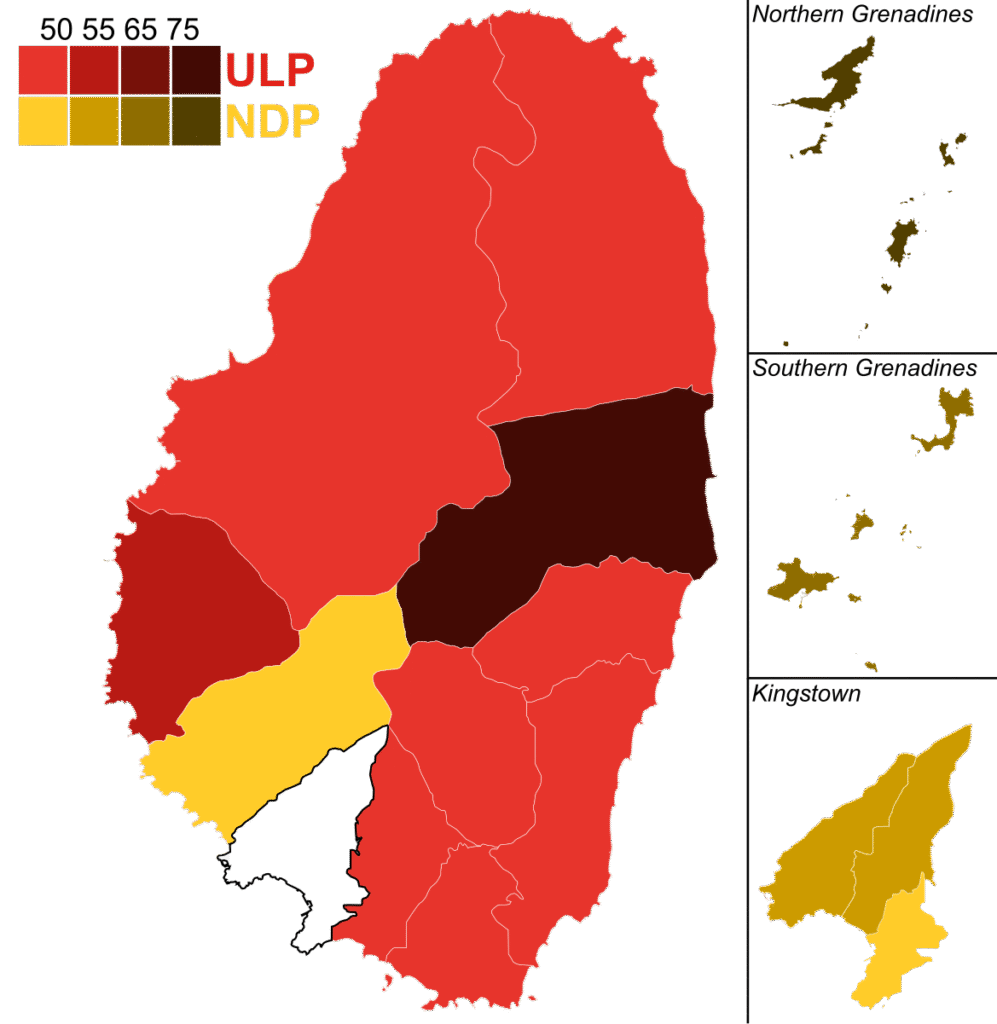
The results revealed a distinct electoral geography in St. Vincent & the Grenadines: traditional ULP strongholds across the Windward corridor and several rural communities remained largely stable, while the NDP dominated the more urban Kingstown area: East, Central, and West Kingstown, along with key neighborhoods like South Leeward, reflecting increasing urban dissatisfaction and shifting demographic trends.
Local commentary then highlighted the strong performance of several NDP women candidates and subtle demographic shifts within the electorate. It was also noted that significant infrastructure achievements, including the international airport -long touted as a ULP legacy project- did not guarantee political support, pointing to emerging voter fatigue and an appetite for change among sections of the population.
For NDP fraternity, 2020 felt like a stolen opportunity, a win on paper that did not translate into power. For ULP supporters, the result reaffirmed their party’s mastery of constituency ground game and rural loyalty. That dual truth hardened identities, sharpened divisions, and ensured this 2025 election would be fought with everything both sides possessed.
Today’s vote is considered a resolution to an argument five years in the making.
One Vote, One Seat, One Government: A Lesson That Changed Politics
No single detail from 2020 haunts the nation more than North Leeward, where the ULP’s victory margin was one vote. The breathtaking one-vote margin in North Leeward underscored just how volatile and decisive marginal constituencies have become. A solitary ballot flipped a seat, tipped the balance of power, and cemented a government.
That experience has rewired political behaviour. Every rally, every motorcade, every voter-list dispute this cycle has been driven by the knowledge that one vote can change a seat, one seat can change a government, and one government can change a generation.
Today’s turnout wars, constituency blitzes, and the expected intense micro-targeting are the direct descendants of that single-vote shock.
Ralph Gonsalves: The Last Dance of a Political Titan
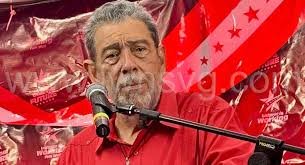
Adding emotional voltage to this year’s election is the presence of Dr. Ralph Gonsalves, self-dubbed the 5-Star General, the region’s longest-serving head of government after an unmatched streak of victories. Representing North Central Windward since 1994, Gonsalves has dominated Vincentian politics for more than two decades, building a political empire defined by ideological conviction, grassroots loyalty, and sheer tactical brilliance.
He has signaled that this will be his final run. But there is nothing soft about this exit.
In the closing days of the campaign, Gonsalves launched a dramatic late-hour attempt to block two key NDP candidates, Opposition Leader Dr. Godwin Friday and East Kingstown candidate Fitz Bramble, from contesting the election on the grounds of alleged “voluntary allegiance to a foreign power” through Canadian citizenship. Though both men had run in previous cycles without challenge, the ULP pressed the matter, framing it as a constitutional issue. Returning officers ultimately accepted both nominations, prompting ULP Party leader Friday to dismiss the move as “a dirty trick” intended to destabilize the race.
The prime minister insists the matter is not over. The issue now hangs as a potential post-election legal battle, foreshadowing courtroom confrontations if the results prove close or contested.
Whether this act will be remembered as principled constitutional defense or strategic political aggression, the voters will decide.
Kishore Shallow: The Disruptor in North Leeward
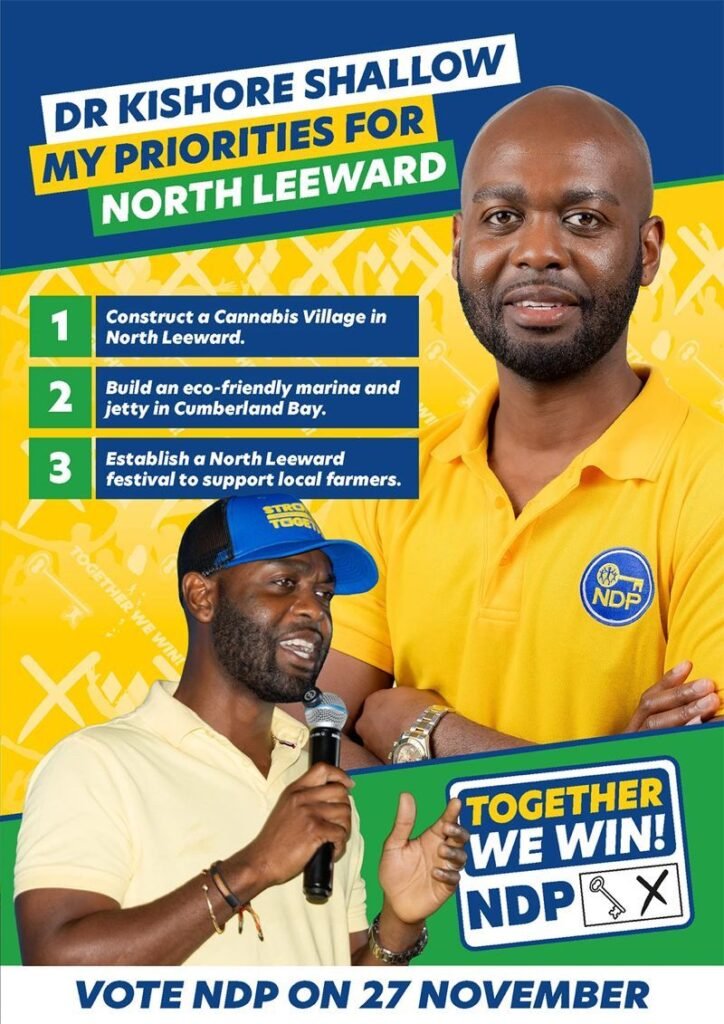
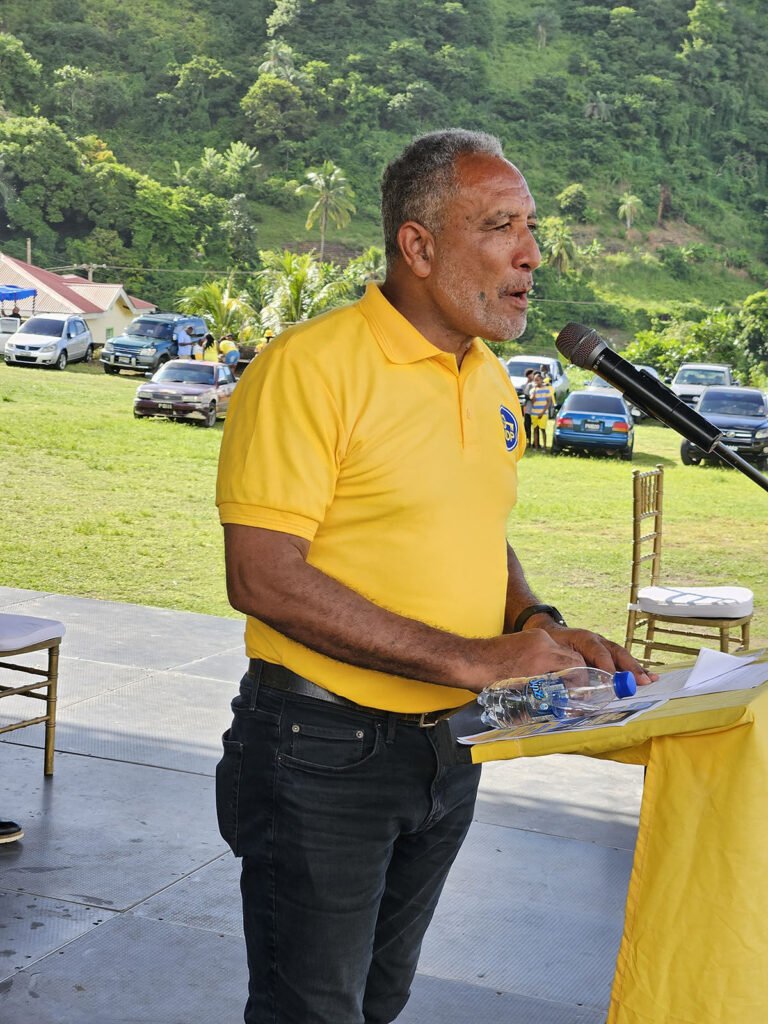
If Gonsalves represents the might of the old order, Dr. Kishore Shallow represents its most credible challenger. The Cricket West Indies President is contesting North Leeward, the same seat that decided the last election by a single vote, transforming it into a symbolic battlefield for national transformation.
Shallow enters politics with rare assets: widespread name recognition, a corporate leadership reputation, and strong youth appeal. Polling has positioned him as the most popular figure behind Dr. Friday, with some Vincentians already speaking of him as a future Prime Minister. His re-election as CWI President strengthened his “winning team” persona, positioning him as proof that competent leadership is possible.
His candidacy has rattled the ULP. Reports indicate that Gonsalves privately urged him not to run against his son, Carlos James, signaling the scale of the perceived threat. Public clashes between Shallow and the government, particularly around accusations of politicising cricket or copying his VPL model, have only amplified his national profile.
In a constituency where one vote decided the last election, Shallow brings enough personal capital to redraw political expectations.
A Nation, Voting as One, But Thinking in Two
The 2020 results exposed a profound political geography: urban constituencies leaned heavily toward the NDP, reflecting frustrations over governance, opportunities, and generational change, while rural constituencies remained loyal to the ULP, rooted in long-term social programmes, personal relationships, and political memory.
These divisions have not softened. They have calcified.
Today’s election is being decided along the fault lines of class, geography, generation, and political culture, a country voting together but experiencing politics very differently.
The Marginals: Where the Nation Will Turn

While every seat matters, a handful may determine the outcome: North Leeward, South Leeward, East St George, Central Kingstown, and North Windward. The margins in these seats may again be in the double digits, and the national result may hinge on a handful of communities, households, or literally a single ballot.
The unresolved trauma of 2020 has created a new, unexpected priority among Vincentians: they want clarity. A result that feels final, not forensic. A government that enters office with legitimacy, not litigation. And a political transition, whether continuity or change, that closes the 2020 chapter rather than reliving it.
I offer that, as Vincentians cast their ballots today, they do so in a country suspended between eras, the legacy of one political titan, the rise of a new generation, and the ever-present memory of a single vote that once changed everything. Whatever happens tonight, the result will not simply be choosing a government. It will decide how St. Vincent and the Grenadines closes the most emotionally charged electoral chapter in its modern history.
I am glad that Ralph GONE, not for hire but, according to the dictionary “gonecystopyosis” meaning
“suppuration of a seminal vesicle.”