
Emergency fuel measures, airline disruptions, and structural reforms signal a new phase in Cuba’s struggle to stabilize its economy under mounting external pressure.
Cuba’s deepening energy crisis has entered a more disruptive phase. This week, the government introduced nationwide emergency fuel-saving measures and warned international airlines that aviation fuel would no longer be available at key airports, forcing carriers to arrange refuelling stops in neighbouring countries or suspend flights altogether. The decision marks a visible escalation in the island’s fuel emergency, with shortages no longer confined to power plants and public transport systems but now affecting international connectivity, tourism flows, and the broader economy.
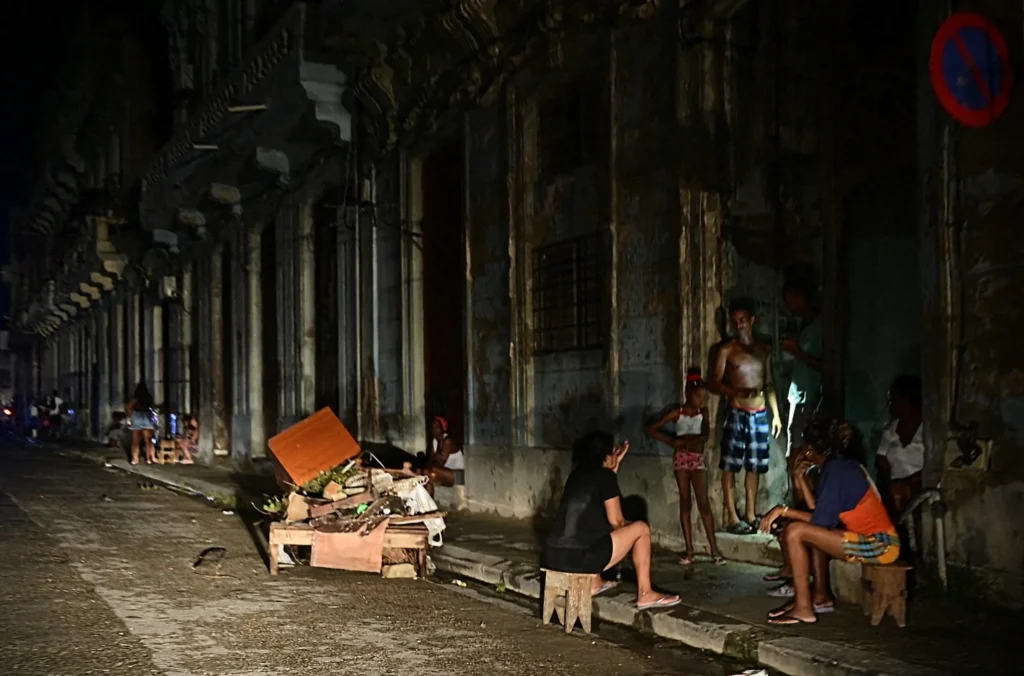
The aviation disruption reflects a wider structural problem. U.S. sanctions targeting oil shipments to Cuba, compounded by pressure on tankers, insurers, and intermediaries, have sharply constrained the island’s ability to import fuel, leaving authorities scrambling to stretch existing reserves. The impact is visible nationwide: reduced public transportation schedules, shorter industrial workweeks, rolling electricity outages, and conservation directives across public institutions. What began as intermittent supply constraints has evolved into a national energy management crisis affecting nearly every sector of daily life.
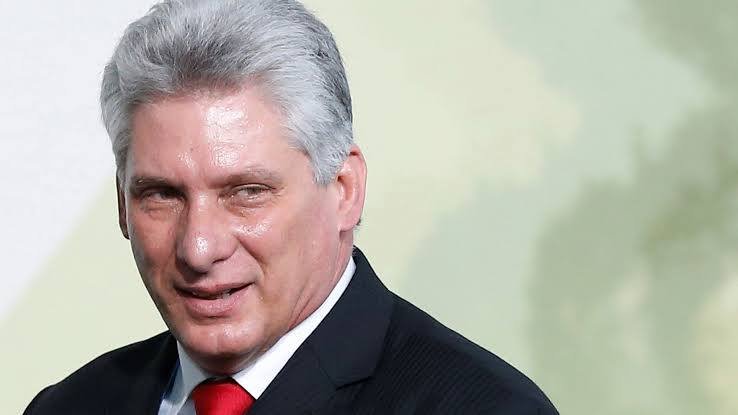
President Miguel Díaz-Canel, speaking in Havana on February 5, framed the moment as part of a long-running confrontation shaped by decades of economic pressure. “We are not a threat to the United States,” he said, but emphasized that a revolution unable to defend itself would struggle to survive. Díaz-Canel described Cuba’s response as one of “creative resistance,” rooted in a national preparedness doctrine known as the “War of the Entire People,” a constitutional framework designed to mobilize economic, civil, and defence systems during periods of external pressure. Officials stress that the initiative does not signal an imminent military conflict but represents contingency planning intended to strengthen national resilience amid intensified economic restrictions.
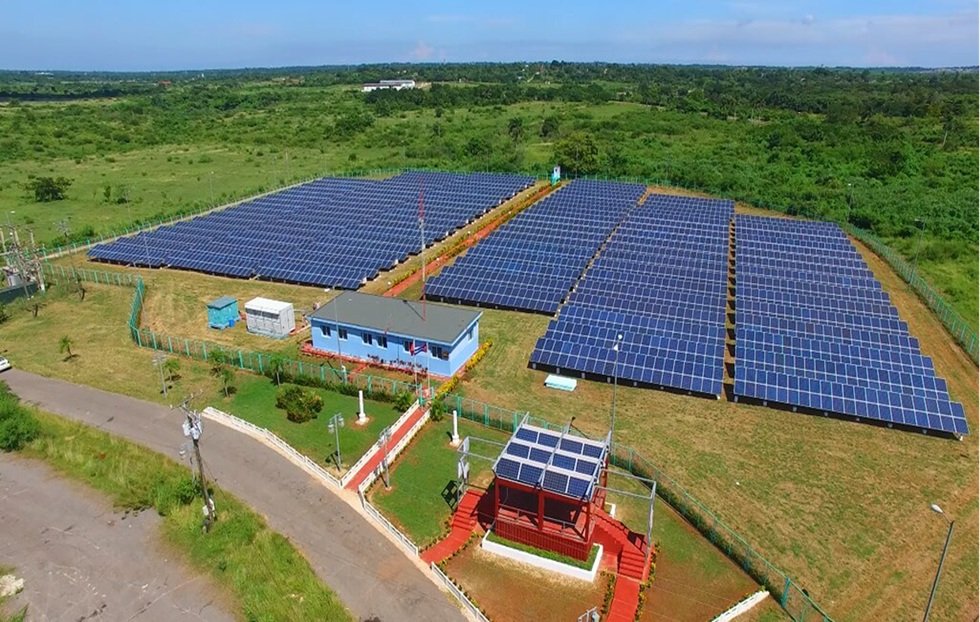
Central to this response is a renewed push toward energy self-sufficiency. Cuban authorities report that investments in solar installations have expanded renewable generation capacity over the past year, increasing the share of electricity generated from renewable sources as thousands of decentralized solar systems are installed in homes, hospitals, and schools. Alongside these projects, the government is working to expand domestic crude production and refining capacity to reduce dependence on imported fuel that can be disrupted by sanctions or shipping restrictions. In official policy framing, the renewable transition is no longer treated primarily as a climate initiative; it is an economic survival strategy designed to insulate the country from external supply shocks.
Economic Reform as Crisis Strategy
Beyond the immediate energy response, Havana is using the crisis as a catalyst for broader economic restructuring. President Díaz-Canel has outlined plans to decentralise economic decision-making, granting greater autonomy to municipalities, provincial governments, and state-owned enterprises. Enterprises are encouraged to generate foreign-exchange earnings, expand exports, and, where possible, independently secure supplies rather than relying solely on centrally allocated resources. The government is also reviewing the relationship between state and non-state sectors, signalling that private enterprises and foreign investment could play a larger role in strengthening domestic production and reducing import dependence.
These measures represent a shift in economic management rather than a departure from the country’s ideological framework. Cuban officials stress that decentralisation, expanded enterprise autonomy, and greater reliance on local production are intended to improve efficiency while preserving the broader structure of the socialist system. Priority reforms include strengthening municipal economies, encouraging the use of locally produced goods to replace imports in the national food basket, and granting provincial authorities greater flexibility in managing economic assets within their jurisdictions. In this approach, resilience is expected to emerge from diversified production systems rather than centralized distribution alone.
Cuba’s evolving reform approach also reflects a broader pattern seen in other socialist economies, particularly China, where market-oriented mechanisms have been introduced alongside continued state leadership of the economy. Like China’s long-standing approach of combining planning with enterprise autonomy, Havana’s reforms aim to preserve strategic state oversight while giving local governments and enterprises greater flexibility to respond to real production conditions. The contrast, however, is significant: China’s transformation unfolded gradually over decades and was supported by large inflows of foreign investment, the expansion of export industries, and deep integration into global markets. Cuba’s adjustments are unfolding under far more constrained circumstances, with sanctions limiting access to capital, markets, and trade finance. As a result, while the structural logic resembles China’s Socialism with Chinese characteristics reform experience, Cuba’s version is pressure-driven, aimed first at stabilizing production, strengthening local resilience, and reducing external dependence before pursuing long-term growth.
International observers increasingly compare current economic pressures to the severe contraction Cuba experienced during the 1990s “Special Period,” when the collapse of the Soviet Union eliminated the island’s principal source of subsidized energy and trade. Cuban officials reject this comparison, arguing that while the present crisis is severe, the country now possesses broader international partnerships, renewable energy infrastructure, and institutional experience that did not exist three decades ago. Nonetheless, the rapid deterioration in fuel availability has intensified global scrutiny of whether the country can stabilise its economy amid heightened geopolitical pressure.
The consequences of the current moment, therefore, extend beyond Cuba’s immediate energy emergency. In practical terms, the austerity measures now being implemented demonstrate that the energy confrontation has moved decisively into everyday operational reality. Fuel shortages are influencing aviation, manufacturing, transportation, and tourism simultaneously, creating a cascading effect across economic sectors. Whether the combination of conservation policies, renewable expansion, and structural economic reforms can stabilise the situation will shape Cuba’s near-term recovery trajectory.
Why This Matters
For small, import-dependent economies, Cuba’s experience will serve as a critical test case in how nations adapt when access to global energy supply chains becomes increasingly politicised. The island’s ability, or inability, to stabilize production, diversify energy sources, and restructure its economy under sustained external pressure will offer lessons that extend well beyond its borders. These lessons will serve as case studies on how vulnerable states may navigate an era in which fuel access, shipping, finance, and infrastructure are no longer purely commercial systems but instruments of geopolitical leverage.