

Sunday 4 January 2026 – Antigua and Barbuda’s vital air bridge to the United States was abruptly severed on Saturday after U.S. military action in Venezuela triggered temporary airspace restrictions across parts of the eastern Caribbean, forcing major airlines to cancel and delay flights at the height of the New Year travel rush.
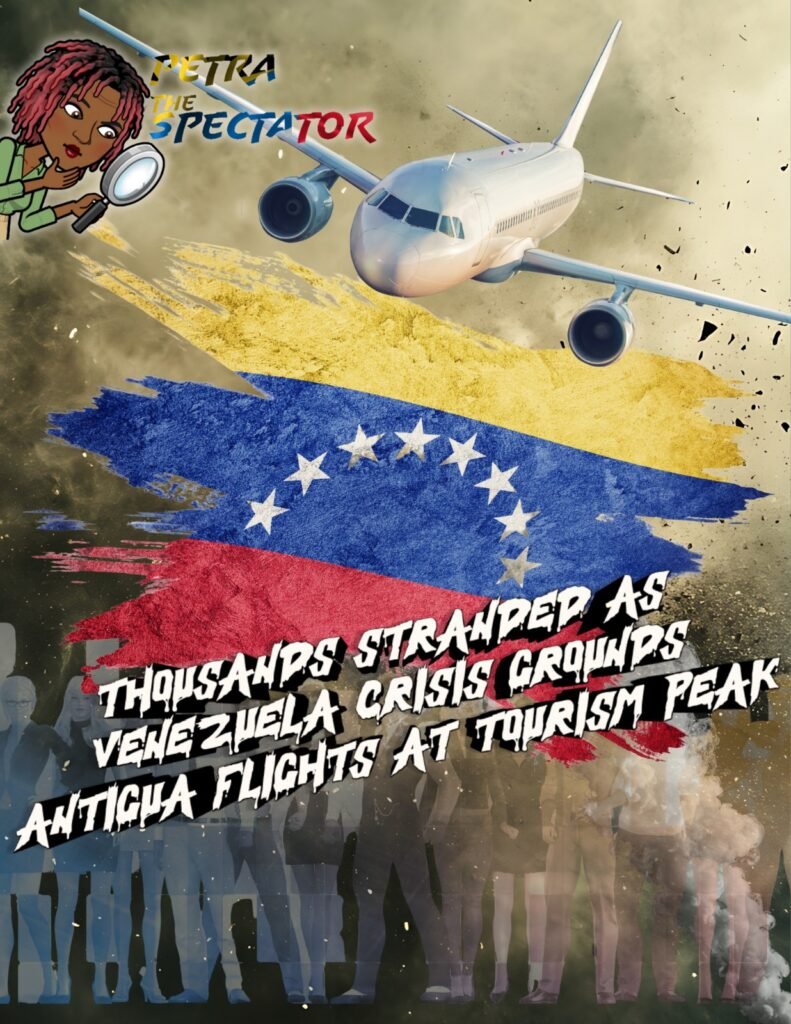
American Airlines, Delta Air Lines, United Airlines, and other U.S. carriers began restoring service on Sunday after U.S. Transportation Secretary Sean Duffy confirmed that the restrictions had been lifted, allowing airlines to resume most scheduled operations. While travel to and from Antigua is now returning to normal, the disruption inflicted widespread damage on tourism, business activity, and household finances across the country.
Importantly, the shutdown was limited to U.S. airspace. Only flights to and from the United States were affected. Long-haul services from Europe and Canada, as well as regional Caribbean flights, continued operating throughout the day, keeping Antigua connected to the wider world. However, the United States remains Antigua’s single largest tourism and diaspora market, and its sudden closure created a severe economic bottleneck.
According to information released by the Antigua and Barbuda Airport Authority, Antigua lost its core U.S. services from New York, Miami, and Atlanta, the three pillars of the island’s winter tourism airlift.
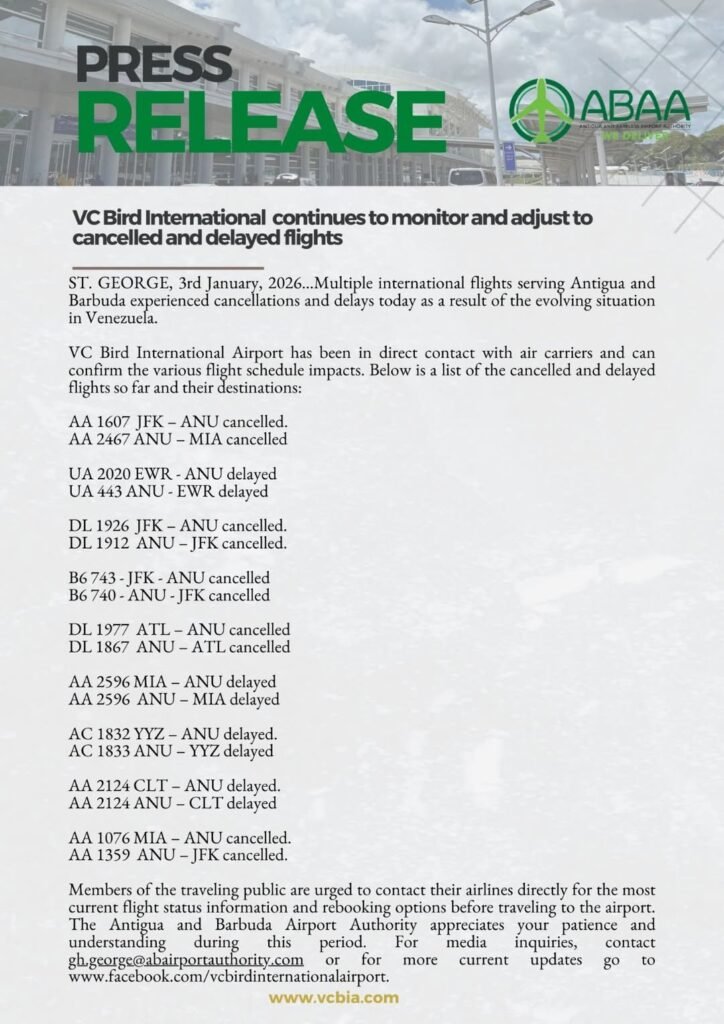
The cancellations triggered a cascading breakdown across Antigua’s tourism and transportation network. Hundreds of visitors who were scheduled to arrive never landed, while thousands of departing passengers were stranded on the island. Hotels lost scheduled check-ins, taxis and tour operators lost bookings, and restaurants and villas saw holiday-week revenue vanish in real time. Airline crews and aircraft were displaced, and regional connecting passengers were left without onward travel options.
At the same time, large numbers of Antiguans and Barbudans were stranded in the United States and elsewhere, unable to return home as planned. For residents abroad, the disruption meant missed workdays, delayed school reopenings and rising personal costs from extended hotel stays, food, transport and rebooked flights. Employers in Antigua were also affected as workers scheduled to return for the new year remained overseas, reducing productivity across several sectors.
Education is expected to be among the hardest hit. Teachers, students, and tertiary-level staff delayed by the shutdown were unable to return at the start of the academic term, creating staffing gaps and scheduling challenges that could ripple into the coming weeks.
The timing of the shutdown compounded the damage. Early January is one of Antigua and Barbuda’s strongest tourism periods, when winter visitors from North America arrive in large numbers.. With JFK, Miami, and Atlanta flights wiped out for an entire day, the twin islands’ largest visitor pipeline was effectively closed at the height of the holiday travel season.
Based on Antigua’s tourism performance, the financial impact is substantial. During the peak winter season, the island typically handles between 2,500 and 3,000 international passengers per day, each generating an estimated US$250 to US$350 in hotel stays, food, transport, and activities. A single day of collapsed US arrivals, therefore, likely erased between US$500,000 and US$800,000 in direct visitor spending, even before factoring in airline revenue losses, hotel refunds, rebooking costs, and missed tours and dining.
For nationals stranded overseas, the cost was personal and immediate. Unplanned hotel nights, meals, childcare, transport, and ticket changes placed sudden financial pressure on families, while money that would have been spent in Antigua was instead diverted abroad.
While flights are now resuming, the episode leaves lingering uncertainty. Travelers may delay or rethink bookings, airlines may quietly adjust capacity to manage risk, and insurance and operating costs are rising. For small tourism-dependent economies like Antigua and Barbuda, the weekend shutdown was a stark reminder that even distant geopolitical conflicts can abruptly close the country’s most crucial economic gateway, with consequences that stretch from hotel rooms and classrooms to household budgets and national productivity.