
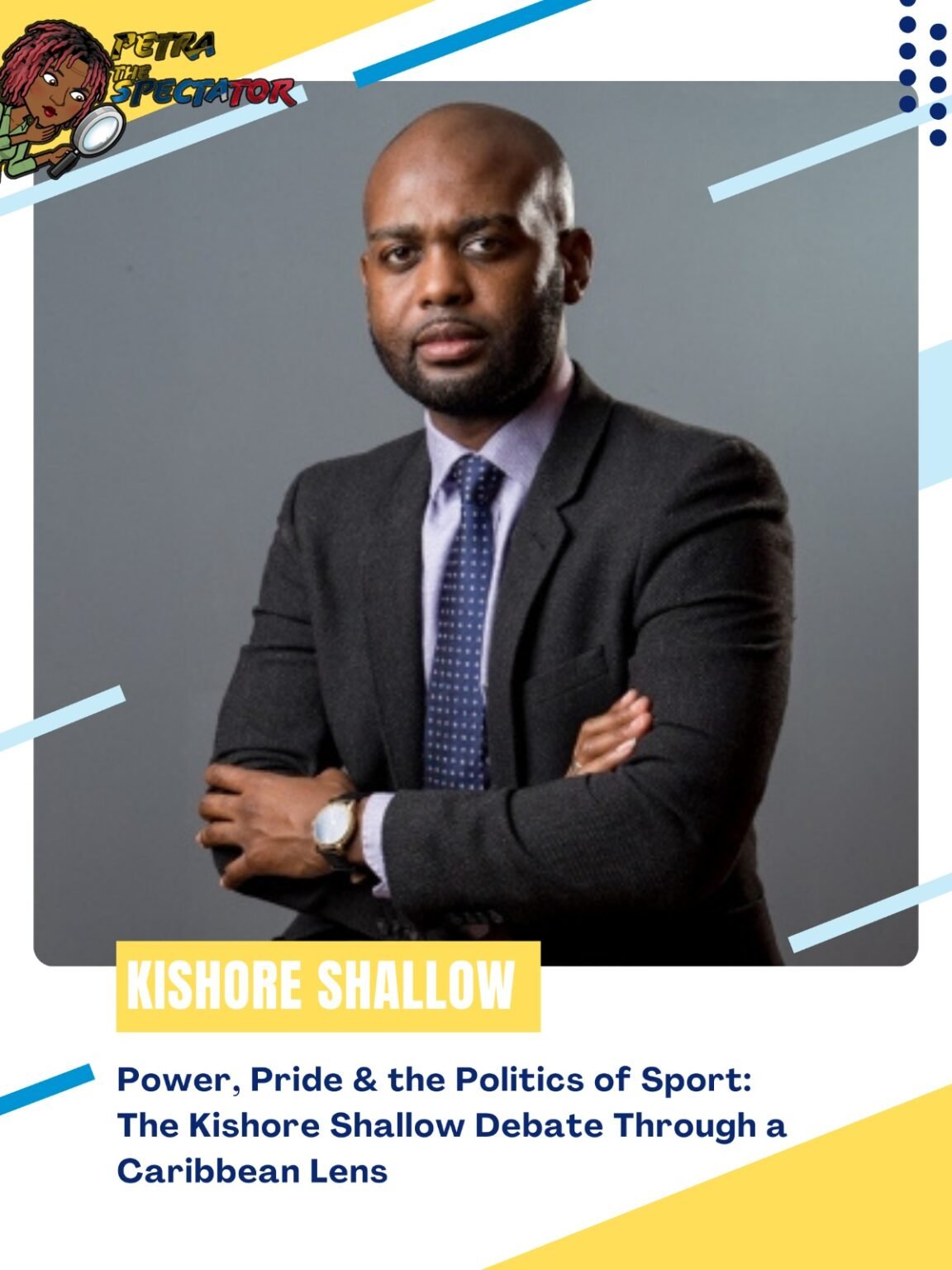
In the Caribbean, every public debate becomes a deeper reflection on who we are as a people and how we handle leadership in small, interconnected communities. The controversy surrounding Dr. Kishore Shallow’s simultaneous roles as President of Cricket West Indies (CWI) and Minister of Tourism in St. Vincent & the Grenadines is no different. What some see as a straightforward question of governance or a potential conflict of interest is an invitation to face our longstanding Caribbean habit of overlapping leadership roles and the cultural tendency to both elevate and scrutinize our rising stars.
To fully understand the debate, we first need to recognise a truth common to every Caribbean island: Kishore Shallow’s dual appointment is typical in Caribbean governance. Throughout the region, politicians often hold roles in sports and culture. Antigua & Barbuda provides a clear example with Chet Greene, a sitting MP and Cabinet Minister who has long been President of the Antigua & Barbuda Olympic Association, even while serving as Minister of Sports. Trinidad & Tobago also has a history of political figures leading sports organisations, from Brent Sancho’s simultaneous roles in professional football and government to former ministers who remain active in sports governance.
Barbados has traditionally incorporated sports leadership into its political class, with former ministers such as Stephen Lashley and Santia Bradshaw serving as leaders of youth and sports organizations. In Dominica, Grenada, St. Lucia, and Guyana, MPs and senators often oversee festival boards, Carnival committees, boxing federations, and football associations. These overlaps are so prevalent that they are almost regarded as a normal part of the political culture in small states.
What makes the Shallow situation unique isn’t just the duality but its scale. CWI isn’t a national federation; it’s a complex, multi-territory organization with significant symbolic and cultural importance throughout the English-speaking Caribbean. It bears the emotional weight of past glory, ongoing frustration, and future uncertainty. When the President of CWI is also a sitting minister of one of the member territories, the stakes become much higher.
Those who support Shallow’s leadership describe his rise as a genuinely proud moment for the nation. For Vincentians, having someone from their own community, a driven son of the land, leading a major regional institution while serving in the Cabinet, must feel like a significant achievement worth celebrating. His tenure does not breach any CWI regulations. Since tourism naturally intersects with cricket, a sport that is also a key hospitality asset across the Caribbean, his dual role may create opportunities for new partnerships in sports tourism, training camps, event hosting, and regional branding. At the very least, it offers clear benefits for St. Vincent.
For many, this is also the moment to pause the typical Caribbean impulse to tear down promising leaders before they get the chance to grow, perform, and show their abilities.
Others argue that even if there is no conflict, the optics are concerning. In the Caribbean, perception often holds as much sway as facts, and the idea that political interests could influence cricket administration can undermine public trust. There’s also the issue of workload: both the CWI presidency and the Tourism ministry are demanding, high-pressure roles. Cricket is entering a long period of reform and rebuilding, and the sport cannot sustain divided leadership. Some editorials have even called for Shallow’s resignation, stating that West Indies cricket needs neutral, committed leadership free from the insular political ties that come with being a Cabinet Member of a single territory.
A political minister leading CWI naturally raises suspicion from other territories, rival political groups, and supporters concerned about fairness. And Shallow’s announcement that he will not seek re-election in 2028 has only heightened doubts about whether holding both roles is already becoming unsustainable.
But ultimately, this debate is not just about Kishore Shallow. It’s about the Caribbean. It’s about our small-island dynamics, our limited talent pools, and our tendency to rely on the same people across multiple institutions. It’s about our desire for independent public bodies, even though we often fill them with politically aligned figures. It’s about the tension between national pride when one of our own succeeds and the need to protect important institutions like CWI from perceived political interference. These contradictions show who we are: close-knit societies where leadership is both rare and highly scrutinized.
The Dr Shallow debate offers an opportunity for the Caribbean to ask overdue questions. Should we establish clearer boundaries between politics and sports? As CWI modernizes its governance structure, is this the moment to align with modern expectations of transparency and institutional integrity? And should small-island states rethink how we distribute leadership roles to avoid over-concentration and potential conflicts?
Shallow is simply the most recent visible example of a deeper structural problem that has shadowed our region for decades. Whether he excels in both roles or eventually steps back from one, his situation prompts us to examine our norms, biases, and aspirations for better governance. We are reminded of a persistent Caribbean reality: overlapping leadership is often unavoidable. What matters most is not whether roles overlap, but whether they are carried out with integrity, transparency, and respect for public trust – our most fragile and valuable resource.
Our Caribbean history also reminds us that even when non-politically aligned individuals are appointed or elected, and even when the optics seem fair, there is no guarantee that concerns about integrity, openness, insularity, or political interference will disappear. These issues have shadowed West Indies cricket for generations. With or without Dr. Shallow, we still face “a long walk to freedom” before the administration of our beloved cricket feels like a fair and transparent “rally” in the minds of Caribbean people.
In the end, this is more than a conversation about cricket or politics. It reflects what it means to lead and be led in the Caribbean, where sport is never just sport, and politics is never just politics. Both serve as mirrors of our collective identity and our ongoing journey toward stronger, more resilient institutions.