
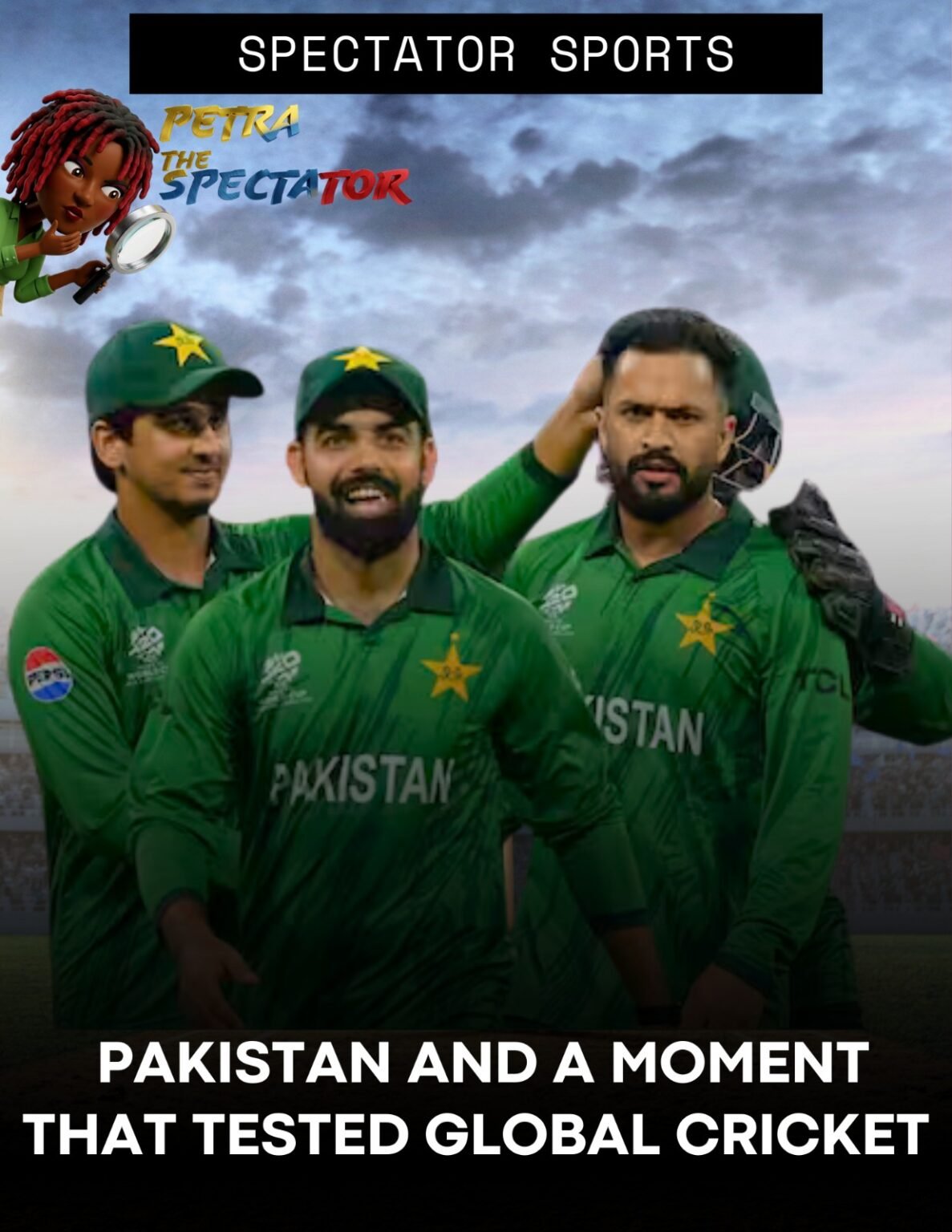
The International Cricket Council has confirmed that Pakistan will take the field as scheduled in the ICC Men’s T20 World Cup 2026, ending days of uncertainty over its participation in the tournament’s most anticipated fixture.
The February 15 clash in Colombo between the India national cricket team and the Pakistan national cricket team is more than a group-stage encounter. It is cricket’s most combustible rivalry, a fixture that draws hundreds of millions of viewers, anchors broadcast agreements and underwrites a significant share of tournament revenue. Its removal would have shaken the event’s commercial and competitive foundations.
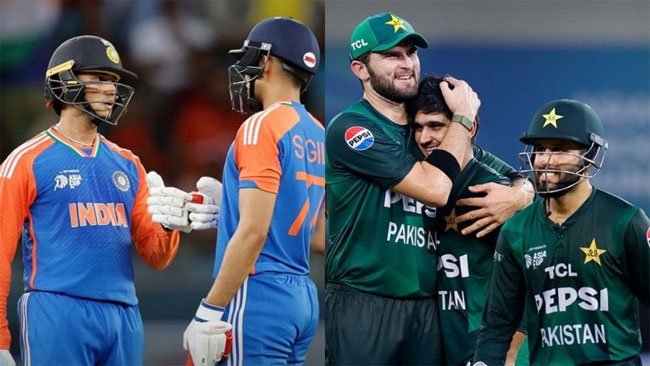
That the match will now proceed offers relief to fans, broadcasters, host nations, and the ICC alike. But the brief standoff matters because it revealed how vulnerable the architecture of global sport can be when politics presses too closely against the boundary rope.
During the impasse, ICC officials signalled that any boycott would likely be viewed as an attempt to weaponise sport for political ends. Sanctions, suspension, or exclusion were active options. For the Pakistan Cricket Board, such consequences would have extended far beyond a single match, affecting funding streams, development pathways, and Pakistan’s standing within the global cricket ecosystem.
World Cups operate on a basic premise: qualification earns entry, and entry carries the obligation to honour the fixture list as drawn. Once participation becomes conditional, competitive integrity becomes negotiable.
Pakistan ultimately chose participation, and the tournament remains intact. But the episode leaves behind important questions about how often global sport can withstand such pressure before its foundations begin to shift.
Why the Government Stepped In
The intervention was explicitly political rather than sporting.
Shehbaz Sharif confirmed that the proposed boycott of the India fixture was intended as a show of solidarity with Bangladesh, telling his cabinet that the decision followed “careful deliberation” and reflected Pakistan’s commitment to stand with Bangladesh.
By framing the move as a matter of solidarity, the government elevated the issue beyond a bilateral cricket dispute. In South Asia, matches involving India are rarely treated as neutral sporting events. They are frequently interpreted as symbolic encounters carrying political meaning beyond the scoreboard.
In such an environment, sport becomes a vehicle for policy signalling. A World Cup fixture, watched globally, provides visibility that few diplomatic platforms can rival. The initial decision not to play projected regional alignment without escalating into direct confrontation.
Domestic pressures also shaped the frame. Cricket occupies a uniquely emotional and cultural space in Pakistan. Decisions involving India can trigger strong reactions from political rivals and segments of the public. Symbolic gestures can carry immediate political weight, even when the longer-term institutional costs are significant.
The limited autonomy of the PCB reinforced this dynamic. Historically operating in close proximity to state influence, the board’s room for manoeuvre under political instruction is structurally constrained.
The reversal suggests those broader costs were ultimately recognised. ICC sanctions, potential loss of tournament points, commercial fallout, and reputational damage would have exacted a heavy toll. Participation preserves Pakistan’s standing within the global game, even as the political tensions that sparked the episode remain unresolved.
The Bangladesh Dimension
One stakeholder that may now be quietly repositioning is Bangladesh.
Pakistan’s initial stance signalled public alignment with Bangladesh during a sensitive period. The subsequent reversal, however, leaves Dhaka more visibly alone in its original posture.
In diplomatic terms, solidarity that shifts under pressure can feel less like an alliance and more like exposure. Bangladesh is now perceived as the primary actor in the dispute rather than as part of a coordinated regional bloc.
The long-term implications are subtle but significant. From a regional point of view, Bangladesh may be viewed as having taken a stand without sustained backing. Within the sporting community, the episode highlights the limited leverage of mid-tier cricketing nations relative to that of larger boards. Of equal significance is the concern whether ICC tournaments can remain insulated from geopolitical tension
In its favour, Bangladesh avoids the regulatory risks that Pakistan briefly faced. It did not defy a drawn fixture in this instance and therefore does not confront potential sanctions. The cost may be more diplomatic than disciplinary.
The broader lesson is structural. In a cricket economy where commercial power is concentrated, political gestures carry asymmetric risk. The centre of power does not shift easily, and those outside it must weigh symbolism against strategic longevity.
A Wider Pattern Across Global Sport
Bangladesh’s position reflects a wider reality seen across international sport.
In football, national associations governed by FIFA have periodically faced government pressure to boycott or protest matches. Smaller football nations, lacking economic leverage, often face a stark choice: comply with political directives and risk suspension, or uphold tournament obligations and face domestic criticism.
Within the Olympic movement, the International Olympic Committee has repeatedly warned national committees against state interference. Political directives can lead to exclusion from the Games, and it is often smaller or less economically powerful nations that are most vulnerable when tensions rise.
Where commercial and decision-making power are concentrated among dominant actors, mid-tier and smaller boards navigate narrower corridors. Geopolitical tensions may be shared, but the consequences are not evenly distributed.
The Spectator’s Perspective: What This Moment Reveals
That the match will now be played is the right outcome for cricket. But the fact that it’s staging ever came into doubt is the real story.
Modern cricket has become heavily dependent on a handful of marquee fixtures. India versus Pakistan is not simply a rivalry; it is a financial pillar. Broadcast valuations, sponsorship structures, and host-nation expectations are built around its certainty. That concentration grants political decisions disproportionate leverage.
The danger lies not in this single episode, but in what repeated episodes could normalise. If participation is frequently threatened, even when ultimately honoured, the precedent begins to harden. The pitch risks becoming a bargaining table.
For cricket, already navigating uneven power dynamics, this is a precarious slope. Smaller boards depend on fully contested tournaments. Disruption at the top cascades downward, squeezing grassroots programmes, women’s cricket, and youth development far from the spotlight.
The burden of these moments rarely falls on policymakers. It falls on players asked to perform amid uncertainty, fans caught between allegiance and access, and institutions tasked with defending the idea that sport still operates on shared rules.
Pakistan has stepped back from the edge. The tournament moves forward intact.
But this episode serves as a reminder: global sport survives on trust. Trust that qualification means participation. Trust that competition is not conditional. Trust that fans are not collateral in diplomatic manoeuvring.
Cricket has avoided fracture this time. Whether it can avoid standing at that edge again will depend on how firmly the boundary between politics and play is defended when next tested.