
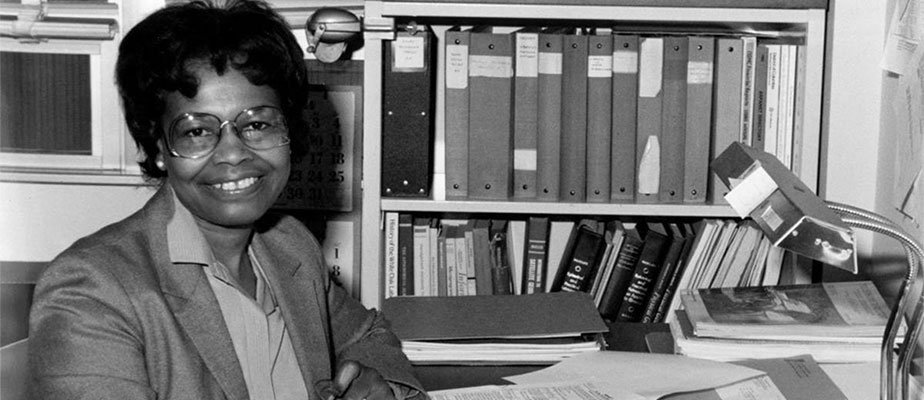
She Built the World’s Navigation System. Most of Us Never Knew Her Name.
Billions of people use her work today.
We followed it to school drop-offs and hospital wards, to delivery points and fetes, across oceans and airspace. Her work tells us where we are and how to get where we are going. The quiet blue dot on a phone screen, the aircraft landing precisely on a distant runway, the emergency vehicle navigating traffic in time to save a life. All of it depends on systems shaped by her mathematics. Yet very few of us know her name.
Dr. Gladys West was a mathematician whose work underpins global positioning technology (GPS), the invisible infrastructure guiding modern life.
From a Virginia Tobacco Farm to the Architecture of Earth
Born on October 27, 1930, on a tobacco farm in rural Virginia during the era of Jim Crow segregation, Gladys Mae Brown was told her future lay in fieldwork. Education was her refusal.
As a child, she walked miles through woods and streams to reach school, understanding early that mathematics was both her escape and her calling. She graduated as valedictorian, earned a full scholarship, and by the mid-1950s had completed bachelor’s and master’s degrees in mathematics, making her one of the very few Black women in the United States with advanced training in the field at the time.
In 1956, she was hired by the Naval Surface Warfare Center in Dahlgren, Virginia, becoming only the second Black woman employed there and one of just four Black staff members overall. It was a place of cutting-edge research and rigid hierarchies. Recognition did not come easily; while white colleagues were sent to conferences and publicly credited, West’s work was recorded quietly in technical reports rather than headlines.
She remained essential, present, and largely unseen, and she continued to calculate.
Programming the Shape of the Earth
During the 1970s and 1980s, Dr. West worked on the IBM 7030 Stretch supercomputer, then the fastest computer in the world. West developed complex mathematical models that accounted for the earth’s distortions, producing the most accurate geodetic representation of the planet ever calculated. Her 1986 technical report became foundational, allowing satellites to triangulate positions with unprecedented accuracy.
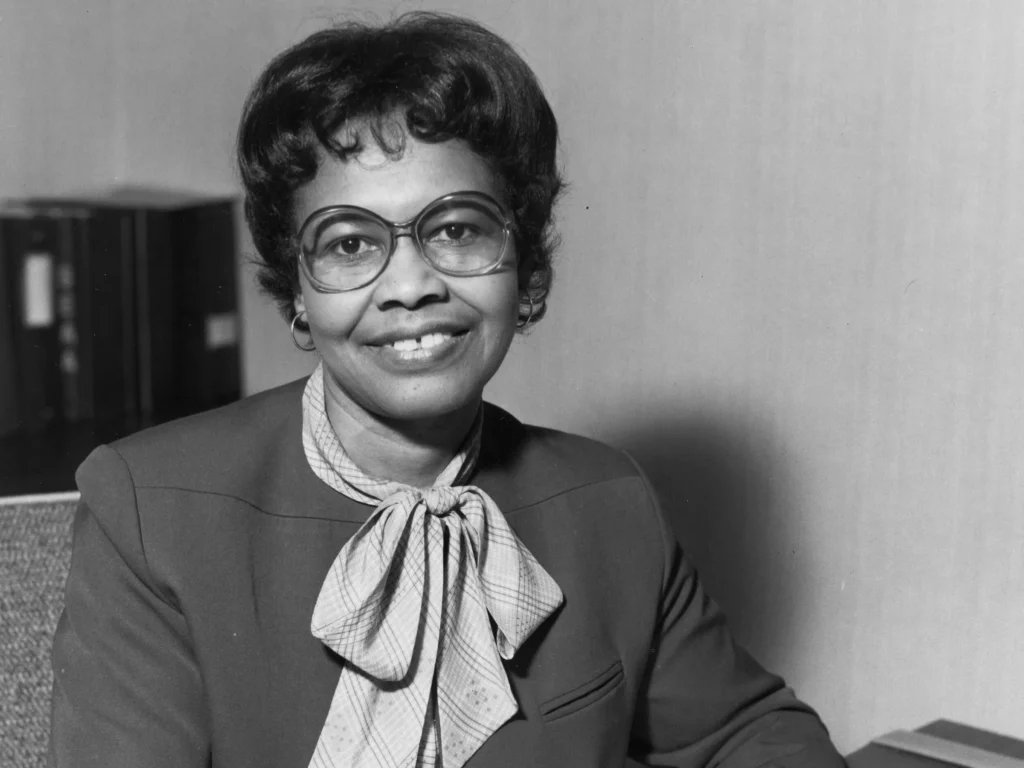
Her work is why our phone knows your location within metres. It is why planes land safely, ships navigate vast oceans, emergency services respond with speed, and global logistics systems function at scale. GPS is not abstract. It is operational, commercial, military, and civilian, and is used daily by billions of people worldwide.
The global GPS economy is now valued in the hundreds of billions of dollars. For decades, almost no one outside specialised scientific circles knew the name Gladys West.
Recognition, Later Than It Should Have Been
Despite her foundational impact, Dr. Gladys West’s work remained largely unknown to the public for decades, hidden in technical reports and absorbed quietly into the architecture of modern life. It was not until a short biography she submitted for a sorority alumni event in 2018 sparked renewed interest that the scale of her contribution came into clearer view, revealing just how much of the world’s navigation infrastructure rested on her calculations.
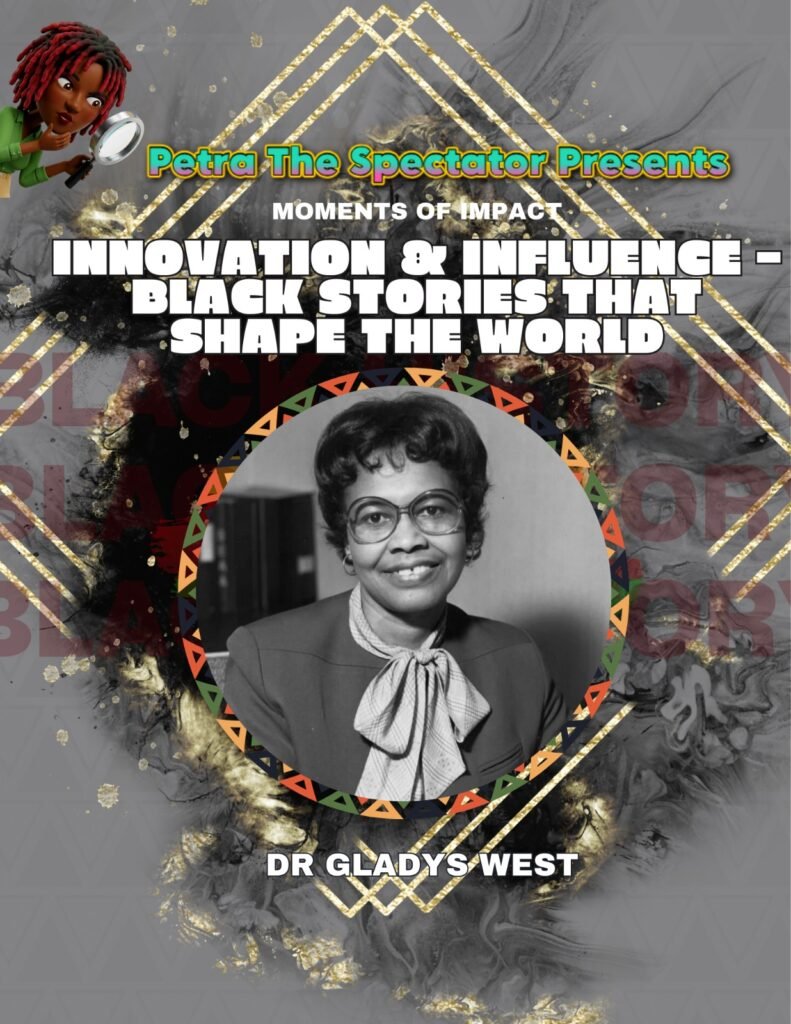
In 2018, recognition finally caught up. West was inducted into the United States Air Force Hall of Fame, one of the highest honours for contributions to military science and technology. She received the Webby Lifetime Achievement Award for her role in developing satellite geodesy models that underpin GPS. That same year, she was named among the BBC’s 100 Women, a global acknowledgment of influence that had long gone uncredited.
Her drive did not fade with retirement. After completing a distinguished 42-year career at the Naval Surface Warfare Center in Dahlgren, West retired in 1998. Two years later, at age 70 while recovering from a stroke, she earned a PhD in Public Administration and Policy Affairs from Virginia Tech, underscoring a lifelong commitment to learning, service, and contribution.
Further honours followed, including the Prince Philip Medal from the Royal Academy of Engineering and the naming of an elementary school in Fredericksburg, Virginia, in her honour. Each recognition arrived late, but together they affirmed what had always been true: her work did not merely support progress; it made modern life possible.
Dr. Gladys West passed away on January 17, 2026, at the age of 95.
Why This Story Still Matters
Dr West’s story sits squarely at the intersection of science, technology, and mathematics, and speaks directly to how contemporary life is powered by Black innovation. The core question it raises is simple but unsettling: who built the systems we rely on every day, and why do so few of us know their names?
Dr. West is the architect of a living system. GPS is operational and in daily use. That reality places her firmly within Innovation & Influence, where Black excellence quietly sustains the modern world.
Her story reminds us that innovation is not always loud, branded, or celebrated in real time. Some of the most consequential Black contributions live inside systems so vast we forget they were invented at all. Her life forces a reckoning with how recognition is distributed and how easily Black brilliance is absorbed into the background of “progress” without attribution.
Yet her story is not only about remembrance. It is a call forward.
For the Caribbean, and especially for Black women across the region, Gladys West’s life stands as proof that mathematical rigour, scientific discipline, and persistence can shape global systems, even when they emerge from places marked by constraint rather than abundance. The technologies that will drive Caribbean economic development, from climate resilience and maritime navigation to logistics, health systems, fintech, energy, and smart infrastructure, will be built by people who understand both data and lived experience.
Every map you open. Every ride you track. Every emergency response that arrives in time bears her fingerprints.
She was hidden for decades. Honouring and preserving her legacy requires that we create pathways for the next generation of innovators to be visible, supported, and scaled. For the Caribbean, her story stands as both validation and invitation: to step into innovation, to build solutions rooted in our region, and to help shape systems that serve the world.
Join the Project
This is Moments of Impact | Black Stories That Shape the World. Throughout February, we invite readers to share the names of innovators, builders, thinkers, and pioneers whose work changed lives without recognition. Who else built the world we live in? Tell us who you want to know more about.