
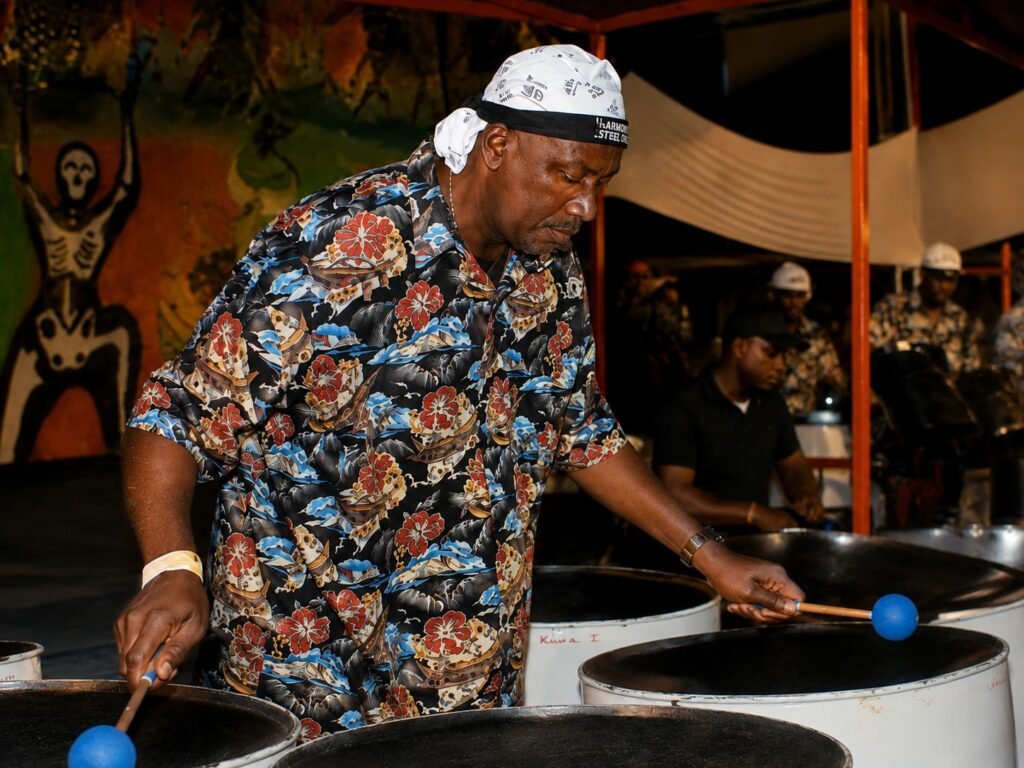
On October 3, 1957, Simon Toulon was born to Theresa Sylvain, whose family roots are in Dominica. His mother migrated to Antigua with her own mother in the 1940s, and together, mother and grandmother raised Toulon in the Ottos community, ensuring he was surrounded by positive values, discipline, and a strong spiritual foundation. The church played an important role in his upbringing through regular attendance at Holy Family Cathedral, an institution to which, many decades later, his steelpan journey would eventually return.
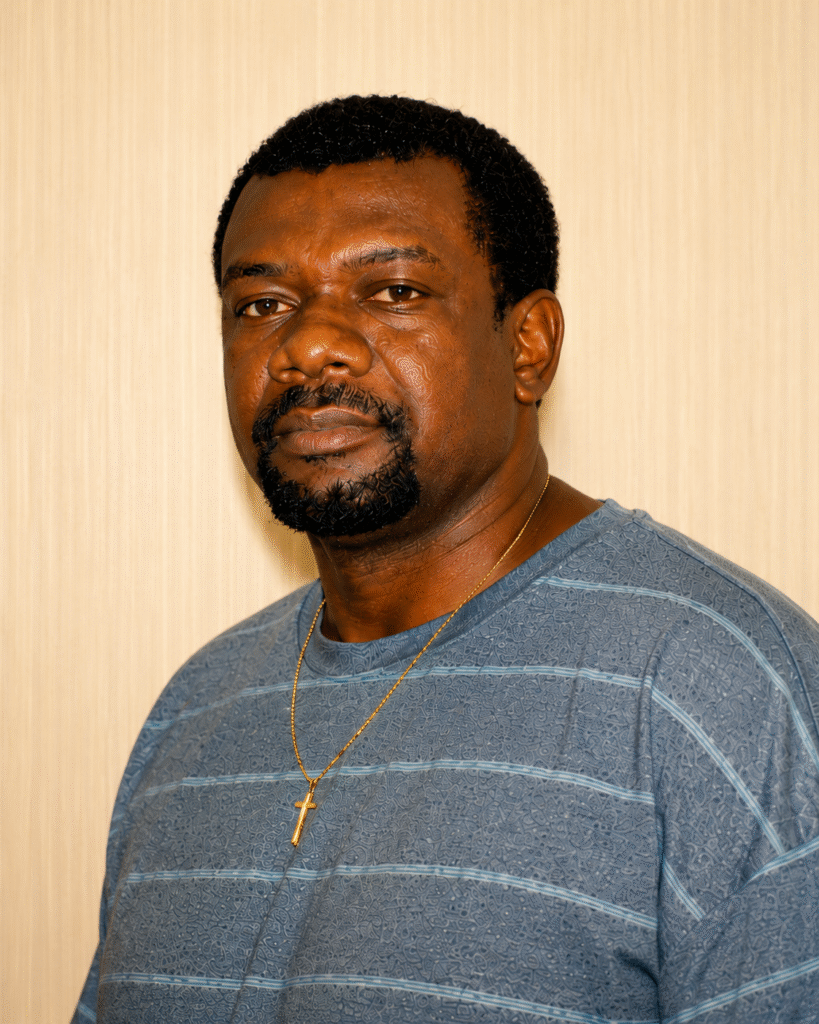 He began his early education at Holy Family School, now known as St John’s Catholic Primary School, before moving on to St Joseph’s Academy (SJA). He later attended the Antigua State College, where he completed a programme in Mechanical and Electrical Engineering. That training prepared him for a professional career that would prove almost as enduring as his relationship with steelpan.
Professional Life at APUA
In 1979, Toulon joined the Antigua Public Utilities Authority (APUA), working as an electrician in the Water Department. His responsibilities included installing pumps and undertaking important electrical work at treatment plants. Over the years, APUA invested in his professional development through various training opportunities, including a course in hydrology at the Caribbean Institute for Meteorology and Hydrology in Barbados. On his return to Antigua, he was placed in charge of the groundwater section, adding another level of responsibility to a career that would ultimately span four decades.
Toulon officially retired in 2017, but APUA was not quite finished with him. He continued working with the authority for another two years on successive one-year contracts before deciding it was finally time to fully retire. Even then, he didn’t pack away his electrical skills. He continues to take on occasional private residential jobs, only now he has the luxury of choosing when and how much he wants to work.
The Call of the Panyard
His relationship with steelpan began while he was a student at St Joseph’s Academy in 1972, when he selected pan during the school’s activity period. The spark, however, had really been lit before he ever picked up a pair of sticks. Harmonites Steel Orchestra had developed connections with the school, with figures such as Rupert “Teela” Parker visiting SJA to recruit young players. Several students had answered the call the previous year and played with Harmonites during Carnival.
Toulon remembers walking alongside the band on the road, helping to push the trolleys while listening to the music. Watching fellow students playing with Harmonites left an impression. When he returned to school for the new academic year, he joined the school’s steel orchestra and started on tenor bass. So, when Harmonites returned looking for young players, Toulon was ready. Thus, rather than walking alongside the band the following year, he became part of it.
His enthusiasm for pan was not initially shared at home. The steelpan still carried the negative social stigma attached to the art form, and Toulon remembers sometimes telling his guardians that he was going to night study when his actual destination was the panyard. He got caught a few times, but as his playing developed and opportunities opened up, his family gradually realized that his involvement with pan might not be so bad after all.
Within a year, his progress was already evident. In 1973, Toulon travelled with Harmonites to St Thomas and joined the orchestra on the National Panorama stage. The teenager who had once needed an excuse just to get into the panyard was now travelling abroad because of the instrument.
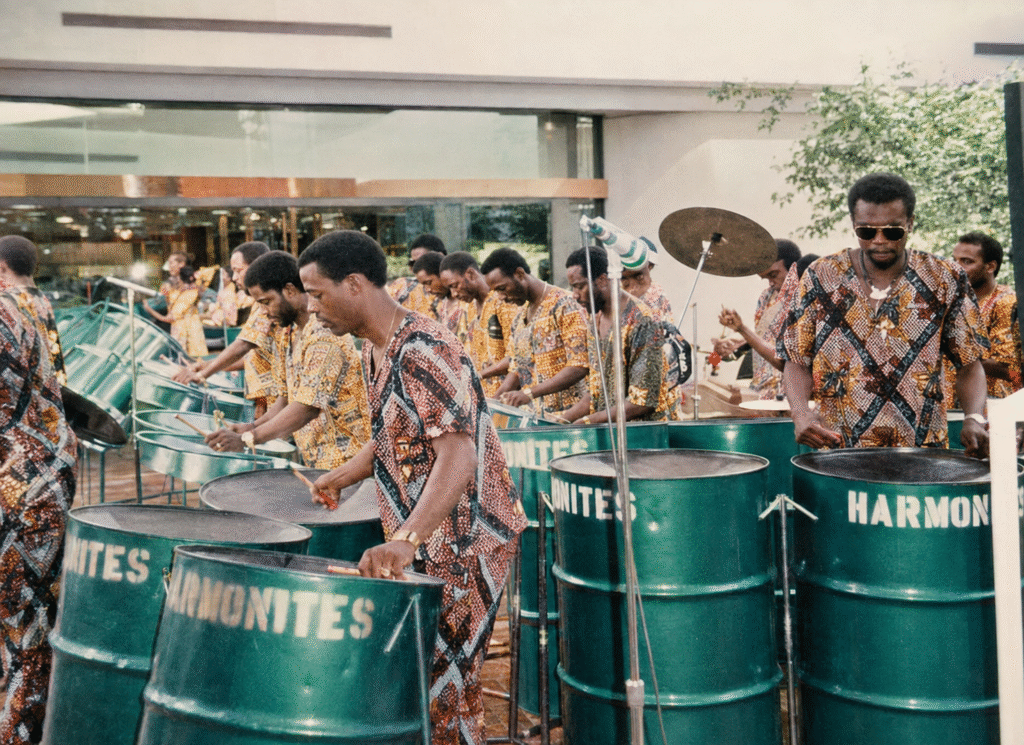
In the late 1970s, the “Men of Harmonites,” influenced by the global Black Power Movement, adopted names that reflected their African consciousness. Toulon took the name Kamau and, like his band of brothers, that name was immortalised on the band’s 1981 vinyl LP album.
Over the years, Toulon developed into an accomplished bassist, expanding his skills across the various bass pans within the orchestra. Pan would eventually take him considerably farther than St Thomas. His international experiences included an appearance at the Super Bowl 13 Halftime show in 1979 in the United States, as well as performances in Bahrain in the Middle East in 1997. He also developed a close relationship with Exodus Steel Orchestra of Trinidad and Tobago, playing with the band on at least one occasion and establishing a connection that continues today.
His contribution to Harmonites, however, would extend far beyond playing bass.
Leading Harmonites
In 1984, Toulon was elected Captain of Harmonites Steel Orchestra, beginning an extraordinary period of leadership that would continue until around 2014. More than three decades in the position earned him recognition as the longest-serving captain of a local steelband. The significance is heightened by the fact that captaincy was elected. For more than 30 years, successive generations of band members placed their confidence in him.
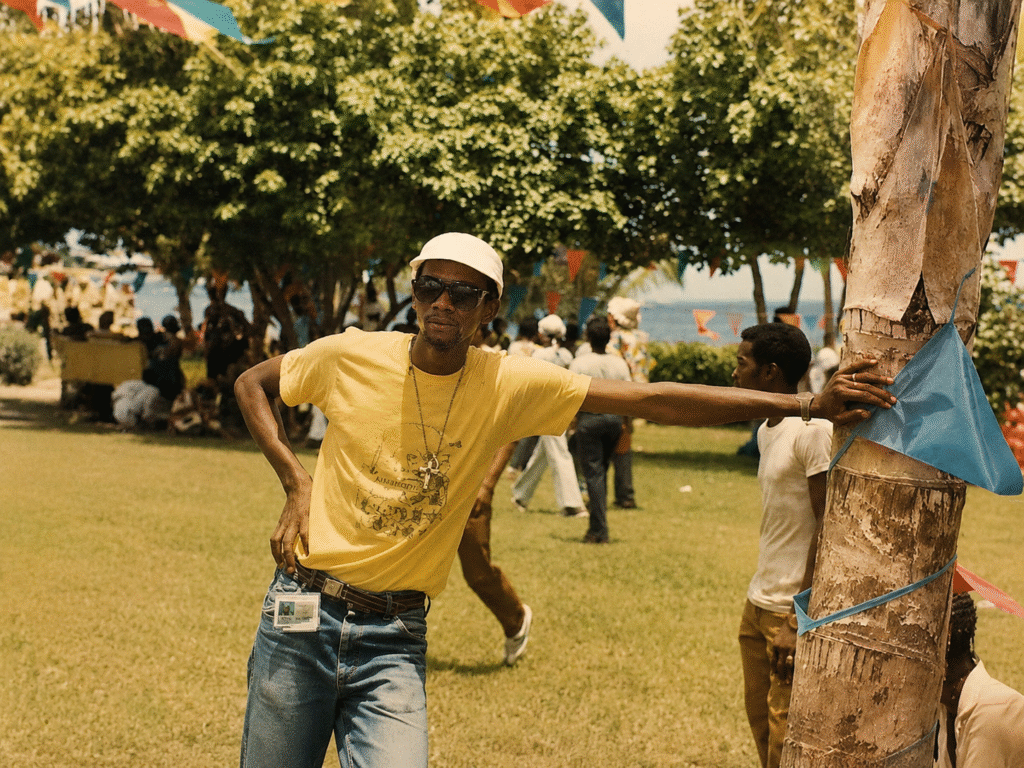
For Toulon, captaincy was never simply about standing at the front of the orchestra or leading the band into competition. As generations of young pannists entered the panyard, his responsibilities increasingly included mentoring and guiding young players, helping them find their place within the band and understand the discipline and commitment required to become part of an orchestra. Over the decades, the faces changed, but the captain remained a constant, helping younger members navigate Harmonites.
There was also considerable work away from the instruments. Toulon worked alongside the band’s management team on sponsorship, administrative matters and the many organisational responsibilities required to keep a steel orchestra functioning. His tenure therefore spanned both sides of steelband leadership: the music and performances the public saw, and the quieter behind-the-scenes work that kept the orchestra operating.
His leadership also extended into training and youth development. Under his captaincy, the Harmonites School of Pan opened in 1998, with Toulon serving as one of the trainers. Although the school temporarily closed, it reopened in 2000, and he remained involved as the programme continued to nurture younger players and strengthen the orchestra’s future.
Reflecting on his leadership style, Toulon believes listening was important. He tried to ensure that members felt heard and describes himself as straightforward without being unnecessarily aggressive. In the sometimes-intense environment of a steel orchestra, where generations, personalities, competition and creative differences coexist, his ability to work across those differences may help explain his remarkable longevity. Arthur ‘Jerry’ Edmund, a Harmonites band member for over 30 years, remembers Toulon’s leadership in much the same way.
“Simon Toulon was a very good captain, good leader, people person, good organiser, very dependable, could always reach out to him in any situation and he wasn’t that cattle prod kind of captain, not very forceful but very stern in which he ran the band and overall, he was a very good friend.”
— Arthur Edmund, Harmonites Past Member.
Harmonites also carried Antigua and Barbuda’s steelpan sound onto major international stages during Toulon’s captaincy. Notable tours included Expo 2000 in Hanover, Germany, and the first Caribbean Steelband Festival, sponsored by Caripan, in Grenada in 2001.
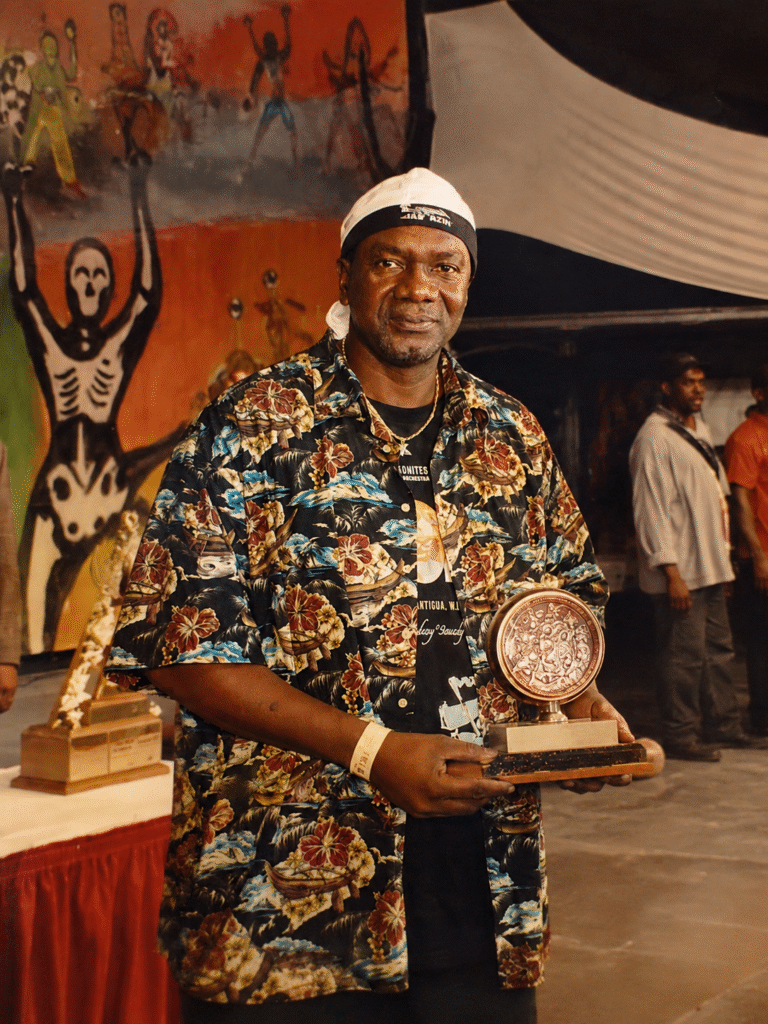 Toulon remembers the orchestra as a consistent National Panorama contender, regularly finishing among the leading bands. Two years stand tallest: 2001 and 2004, when the band captured the National Panorama championship. The second victory came towards the end of Toulon’s long tenure as captain, providing a fitting punctuation mark to more than three decades of leadership.
After relinquishing the captaincy, he played another year before deciding it was time to step away. For decades, the Pan had claimed countless hours through rehearsals, performances, meetings, Carnival, Panorama and overseas appearances. Toulon wanted to slow down and devote more time to family life.
Beyond Pan: Sport, Work and Representation
Walking completely away from pan, however, was another matter. As he puts it, “pan was his life.” Instead, his journey circled back to one of the institutions that shaped his childhood. He continues to play with the Holy Family Cathedral Steelband, which performs about once a month at Mass and at other church activities. The pace may be different, but the relationship with the instrument remains.
Steelpan was not Toulon’s only sporting talent. From his school days, he was also a skilled basketball player, competing for various teams and eventually representing Antigua and Barbuda at the national level as a forward. During those years, he earned the nickname “Too Long.” Some people apparently heard his surname, Toulon, as “too long,” and given his tall, slim build and basketball prowess, the nickname fitted rather neatly and stayed.
Eventually, basketball and steelpan began competing for the same precious commodity: time. One had to give; pan won.
Cricket, however, never had to compete in quite the same way. Toulon remains an ardent fan and recalls never missing an international match staged at the Antigua Recreation Ground. He planned for cricket with the same discipline he brought to much of his life, deliberately keeping vacation days in reserve so that when international cricket came to Antigua, he could take the necessary time away from work.
Balancing employment with steelpan was particularly important when Harmonites travelled overseas. As captain, Toulon recalls dialogue with the Tourism Department to secure letters that band members could present to their employers when overseas engagements required time away from work. Those letters recognised an important distinction: the musicians were not travelling merely on behalf of a steelband; they were representing Antigua and Barbuda.
Lessons from the Movement
Looking back, Toulon believes steelpan gave him far more than travel, competition, and trophies. Decades of involvement required him to interact with people from diverse backgrounds, generations, temperaments, and personalities. It taught him tolerance and helped him understand that different people sometimes require different approaches. Those lessons followed him into his professional life, strengthening his interpersonal and supervisory skills at APUA. In that sense, the panyard was another classroom. Toulon readily acknowledges that steelpan helped make him a better person.
The steelband movement he observes today is very different from the one he entered in 1972. Toulon is particularly encouraged by the number of parents and relatives who now follow young pannists into the panyard and out to performances. Their presence, he believes, has broadened the support base for an artform whose events still do not always receive the audiences they deserve.
He considers steelpan to be in a relatively good place but believes the Pan Association can do considerably more to support its continued growth and development.
While retirement has allowed him to slow the tempo, Toulon does not rule out contributing occasionally where his experience might be useful.
Retirement and a Continuing Rhythm
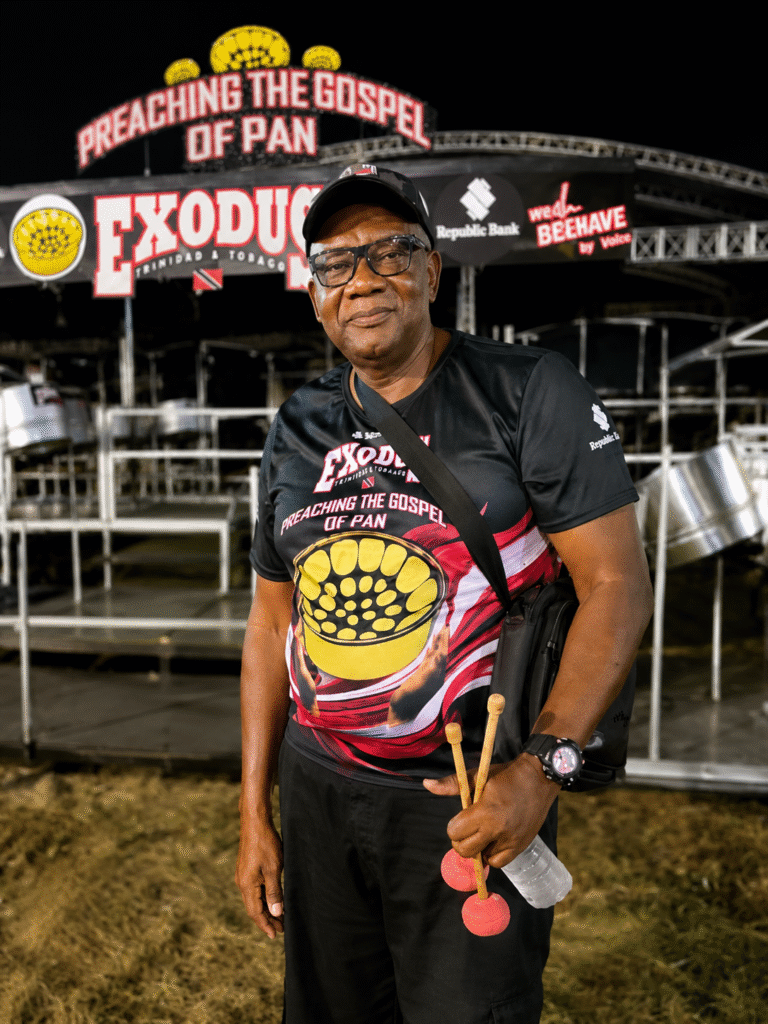 Retirement has also given him the opportunity to enjoy steelpan simply as a fan again. He continues to take in Panorama and Carnival at home, but his affection for the wider Caribbean steelpan movement also keeps his passport active. After decades carrying the responsibilities of captaincy, there is now a different pleasure in being able to stand on the other side, absorb the music and enjoy the spectacle.
These days, he also takes early-morning trips to the beach, relaxes at home in front of the television, does occasional electrical work, and enjoys the freedom to set his own schedule.
Retirement has also brought some unexpected adjustments. After four decades in one workplace, regular conversations with former colleagues naturally became less frequent, so he had to build new social connections. Toulon has found companionship among fellow retirees discovering the same freedom and embracing a different rhythm of life.
Time Capsule Reflection
The most telling measure of Simon “Too Long” Toulon’s leadership was not simply the length of time he served as captain. It was the trust that kept returning to him, year after year, from generations of Harmonites members who looked to him for steadiness, guidance and organisation.
He entered the steelband movement at a time when playing pan could still cause tension at home, yet he remained long enough to help make the panyard a place of discipline, mentorship and opportunity for younger pannists.
For decades, Toulon stood at the meeting point between generations. Young players entered Harmonites and found a captain who could guide them. He helped secure sponsorship and led the administrative work required to sustain the orchestra. Musicians needed to be heard, disagreements navigated, and a band kept together through the pressures of Panorama, Carnival and ordinary panyard life: he stood in the gap.
Those same lessons travelled with him to APUA, where tolerance, patience and the ability to work with different personalities strengthened his own leadership in the workplace. In both spaces, Toulon’s example was built less on force than on consistency, dependability and the ability to bring people along.
Today, the responsibilities have eased. There is pan at Holy Family Cathedral, Panorama and Carnival at home and abroad, and the quieter pleasures of retirement. After a lifetime of helping keep time for an orchestra, a workplace and generations of young pannists, Simon “Too Long” Toulon finally has the freedom to set the tempo himself.