

From Cassada Gardens to steelband leadership, Potter is helping shape a new generation in Antigua and Barbuda’s national instrument.
Born on March 7, 1992, Maurisha Potter is the only daughter and youngest child of Maurice and Sharon Potter.
Raised in Cassada Gardens, she remembers a childhood surrounded by love but equally grounded in strong values.
Her parents ensured their children were cared for while emphasising morality, responsibility and character.
Health challenges during Potter’s early years would also test her resilience sooner than expected. She fought through them.
Looking back, those experiences helped cultivate the determination that would later become a recurring feature of her life.
Her education began at St John’s Catholic Primary School before she moved on to Christ the King High School.
After secondary school, Potter turned toward the field she hoped would become her professional home: tourism.
A Dream Deferred, Not Abandoned
Potter enrolled at the Antigua and Barbuda Hospitality Training Institute (ABHTI) to study Hospitality Management.
The decision came with some personal unease. She knew her parents would once again have to carry the financial cost of her education and initially felt guilty about placing another burden on them.
Maurice and Sharon Potter saw it differently. Their daughter’s education was an investment worth making.
After completing her program, Potter applied for employment within the tourism department, hoping to begin building the career for which she had trained. There were no vacancies. Instead, she accepted a position in the civil service at the Establishment Department, where she remains employed fifteen years later.
But the tourism dreams never disappeared. Still in pursuit of a career in the industry, Maurisha graduated with First Class Honours with a Bachelor’s degree in Tourism and Hospitality Management in 2025, strengthening the qualifications she hopes will eventually take her into the sector she has long wanted to serve.
The destination may be delayed, but the preparation continues.
Then There Was Pan
Long before that degree, however, another path had already opened. While attending Christ the King High School, Potter went looking for an extracurricular activity that would expand her horizons beyond sports and choir. Steelpan offered something different, and she chose it.
Under the guidance of Stafford Joseph, whom she credits with teaching her what she knows about the instrument, Potter began discovering an ability that would eventually become one of the defining features of her life. She spent several years playing with Hell’s Gate Steel Orchestra, encountering and learning from accomplished figures within the movement, including Khan Cordice.
What began as something to fill her spare time became a passion.
Then came an unexpected conversation.
Robin’s Invitation
Following a solo performance at a function, Potter was approached by Robert “Robin” Margetson, one of the founding members of Panache Steel Orchestra. Margetson told the young pannist that she possessed precisely the kind of talent Panache needed.
Potter was skeptical. But the invitation also arrived at a moment when her own thinking about the steelband movement was beginning to change.
She had come to understand that talent did not necessarily have to remain concentrated within the largest or most established orchestras. Other bands needed skilled players if they too were going to grow.
Perhaps she could help. She accepted the invitation to join Panache, a move that would prove transformative.
The Only Woman in the Yard
When Potter joined Panache, she was the only female member. Her parents were understandably uneasy. Their daughter would be spending considerable time surrounded by men, many of whom were significantly older.
What happened instead became one of Potter’s treasured parts of the experience. The men made a deliberate effort to ensure she felt safe and comfortable. Several became mentors; others became what she describes as some of the greatest father figures she has known.
The young woman who entered the panyard as its lone female member gradually grew within it. In time, she was no longer simply another player; she became a leader.
From Player to Leader
Margetson, the Panache founding member who first invited Potter to join the orchestra, has had a front-row seat to that transformation.
“By the time I met Maurisha, she was already a decent soloist and confident, but a bit timid, as the majority of the band were senior to her,” Margetson recalls. “With much encouragement and the passing of time, more opportunities presented themselves to her, first as a soloist and then as an arranger.”
As Panache developed, more young people joined, and its core increasingly featured players under age 21. It was in that changing environment, Margetson recalls, that another side of Potter emerged.
“Her confidence and leadership skills sprang to life. Her organisational and communication skills were amazing, and she took on the responsibility of leadership from around 2019 to the present.”
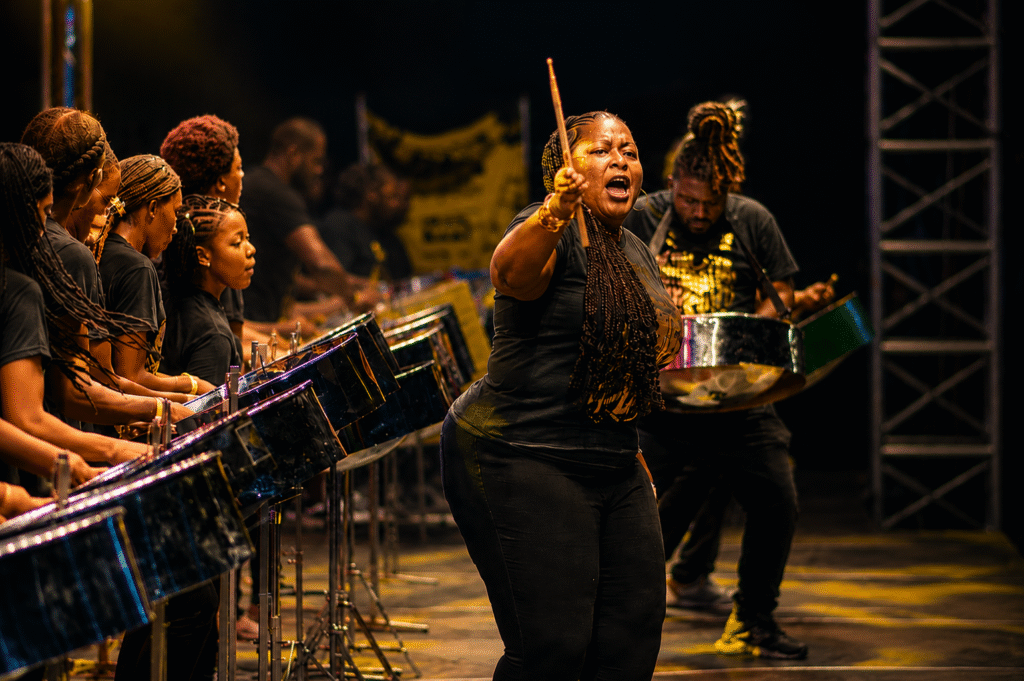 Potter’s role expanded beyond playing and arranging. She became actively involved in the Panache School of Pan, helping introduce young people to the instrument that had transformed her own life.
And as her responsibilities grew, so too did her willingness to modernise the way the orchestra operated.
“She has blossomed into an outspoken but respectful leader, filled with fresh ideas and prepared to embrace technology to simplify procedures and policies,” Margetson says. “Maurisha may look like a simple, humble young lady, but her passion for the pan art form becomes even more pronounced when facing challenges or injustice.”
It is perhaps one of the clearest measures of Potter’s journey: the man who once spotted potential in a young soloist can now step back and watch her lead.
“I Love It Here”
Among Potter’s many performances, one stands out.
For National Panorama 2024 Panache performed “I Love It Here,” the song by the late Ricardo Drue, arranged for the orchestra by its Vice-Captain Malik Smith.
For Potter, the performance connected with something deeper. The joy with which she speaks about the instrument leaves little room for doubt. Asked what pan means to her; the answer comes without hesitation: “It means everything to me.”
Perhaps I Love It Here was an especially appropriate Panorama selection. Because when it comes to pan, Maurisha Potter does, quite clearly.
Recognition of a Growing Contribution
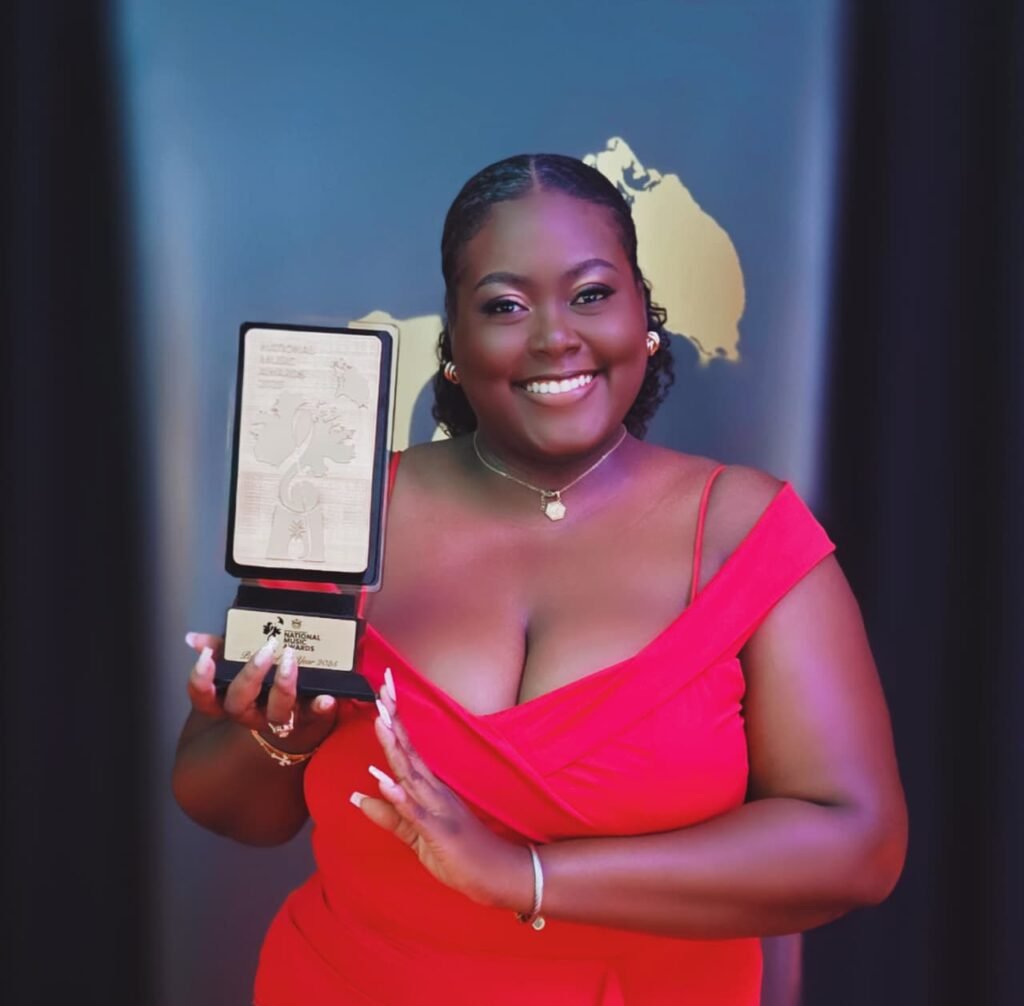 Her development has increasingly attracted recognition. In 2025, Potter was recognised as Pannist of the Year and received a Youth Award in Culture and Performing Arts. That same year, she helped secure victory for the Christ the King High School Steel Orchestra in the School Panorama competition.
She had previously received the JCI Musical Maestro Award.
Yet awards tell only part of the story. Behind them are long hours: a full-time job, Panache rehearsals, solo performances, teaching, leadership, and the ordinary demands of life squeezed in between. Potter readily admits it is exhausting sometimes.
What keeps her going is community.
Someone Is Watching
Potter understands that her place in the panyard now carries a different responsibility. Young pannists are watching, and an orchestra depends on her. Students expect her to show up. That knowledge provides motivation on the days when balancing everything seems almost impossible.
Her role is no longer simply about playing notes correctly. It is about nurturing talent, serving her band and community, and creating opportunities for those coming behind her.
That responsibility carries meaning for Potter as a woman. Steelpan in Antigua and Barbuda was once overwhelmingly male-dominated, both on the instruments and in leadership. That landscape is changing. Potter welcomes the growing visibility and participation of women at leadership levels across all spheres of the pan and intends to help keep the doors open.
Her own journey shows how far things have already traveled: from entering Panache as its only female player to eventually assuming responsibility for leading the orchestra.
Pan as Tourism Ambassador
There is another dimension to Potter’s steelpan story. It leads directly back to her other dream: tourism.
Pan has allowed her to travel, meet people from different cultures, and introduce them to Antigua and Barbuda.
One encounter in Barbados remains particularly memorable. While waiting for a visa interview, Potter struck up a conversation with a stranger who asked where she was from. That was all the invitation she needed. She enthusiastically began selling Antigua and Barbuda: the country, the experience, the destination. A year later, that individual travelled to Antigua to experience for themselves the destination Potter had described so passionately. For Potter, it was a small but revealing example of what cultural ambassadors can accomplish.
A pannist travelling abroad does not only carry an instrument. They carry a country. That is why Potter sees enormous potential in strengthening the relationship between steelpan, culture and tourism. The music can sell the destination. The destination can create new platforms for the music.
For someone passionate about both, the connection seems natural.
Still Waiting for That Door
Despite everything she has accomplished, one ambition remains unfinished.
Potter still wants the opportunity to work within Antigua and Barbuda’s tourism industry.
She continues to strengthen her skillset while waiting for that opportunity. Her First-Class Honours degree now sits alongside her earlier hospitality training and years of professional experience.
She remains hopeful that the door will eventually open.
If her steelpan journey has taught her anything, perhaps it is that the unexpected door sometimes turns out to be the important one.
Time Capsule Reflection
Maurisha Potter entered a panyard because she needed something different to do after school. Years later, young pannists enter the yard and find her waiting to teach them.
There is something wonderfully circular about that.
She entered Panache as its only woman and grew into its leadership. She learned from those who came before her and now deliberately pours that knowledge into those coming behind.
 And while her professional dream of working in tourism remains unfinished, she has arguably already spent years doing something fundamental to tourism: representing Antigua and Barbuda and making other people curious enough to come and experience it.
For Potter, her two passions are not nearly as different as they may first appear. Both are ultimately about sharing Antigua and Barbuda with the world.
Her story is therefore still being written. There are ambitions yet to be realised, more music to play and arrange, younger pannists to teach, and perhaps another professional chapter still waiting somewhere beyond the panyard.
And, borrowing from the Panorama performance she remembers above all others: She loves it here.