
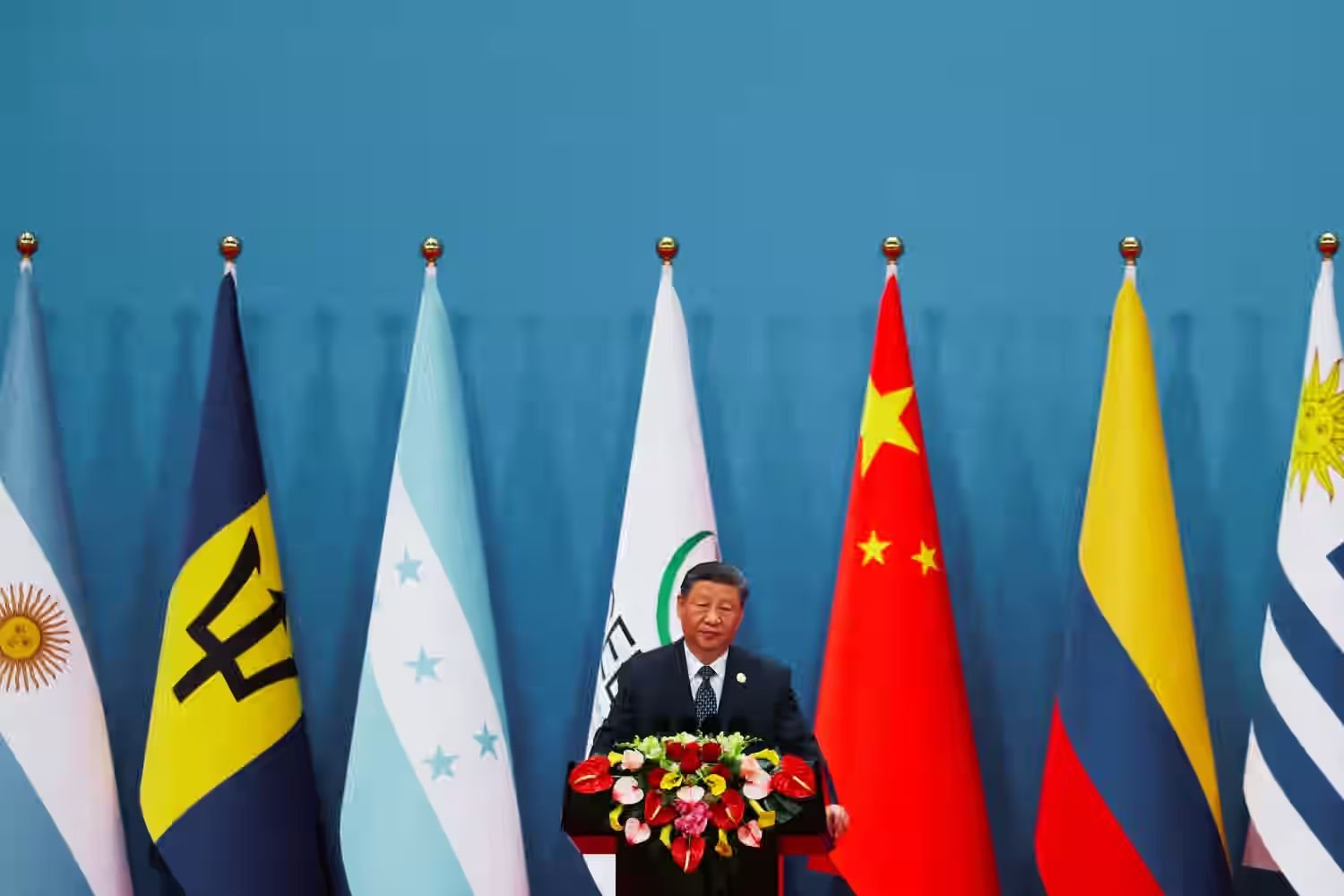
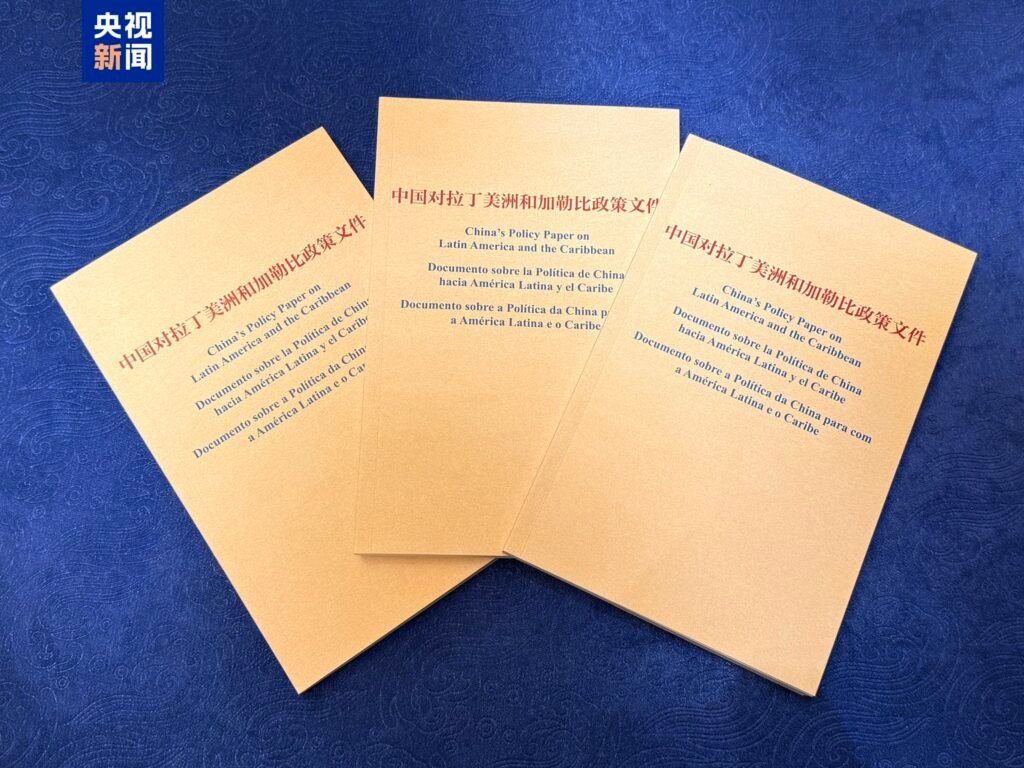
December 11, 2025 – China released an updated Policy Paper on Latin America and the Caribbean yesterday (Wednesday), the third in less than two decades. The paper outlines a comprehensive plan for strengthening cooperation across political, economic, technological, cultural, and environmental areas. Organized around five guiding pillars: solidarity, development, civilization, peace, and people-to-people connectivity, the paper positions the Latin American and Caribbean region as a strategic partner in China’s long-term vision of a “community with a shared future.” It highlights more than 40 areas of cooperation, reflecting both China’s growing global influence and the region’s increasing importance in South–South collaboration.
For the Caribbean, this document is particularly significant: it signals not just continuity in diplomatic engagement, but an elevation of the region within China’s foreign policy architecture.
The Caribbean Lens: Why This Paper Matters
China’s framing of a shared future is not just rhetoric. It indicates that the Caribbean’s engagement with China is comprehensive, stable, and long-lasting. For small island developing states, this represents a shift from isolated projects to a more structured partnership that ties together political respect, economic prospects, and cultural exchange.
Political Respect and Sovereignty Front and Centre
One of the strongest messages for the Caribbean is China’s focus on sovereignty, non-interference, and mutual respect. Caribbean governments, protective of their independence and used to geopolitical pressure from bigger powers, will see the importance of this stance. China emphasizes that cooperation is based on mutual benefits and clearly rejects the idea that its engagement is driven by geopolitical rivalry. Respect for the one-China principle remains key, but China also highlights that it does not aim to export its political system or influence domestic decisions.

This sentiment was powerfully expressed by Dominica’s Ambassador to China, Martin Charles, speaking on behalf of the region’s diplomatic corps. He stated: “We emphasize that China’s presence in Latin America and the Caribbean does not constitute a threat, but an opportunity to diversify partners, broaden horizons and cooperation, and strengthen the region’s autonomy in making strategic decisions… This great country does not seek to impose models or condition political decisions… with each action supports Latin America and the Caribbean in being a zone of peace.”
For Caribbean states navigating a world of growing global rivalry, this reassurance on sovereignty and peaceful development is a central pillar of China’s pitch.
Deepened Economic Cooperation Tailored to SIDS Needs
The policy paper’s economic agenda closely aligns with many long-standing Caribbean priorities. China commits to strengthening trade and investment, enhancing reciprocal market access, and expanding high-quality cooperation under the Belt and Road Initiative. Infrastructure, energy security, transport connectivity, agriculture, and tourism linkages all feature prominently, areas where Caribbean countries often face significant financing and capacity challenges.
Financial integration through mechanisms like local-currency settlement, RMB clearing, and Panda bonds creates new opportunities for Caribbean states to diversify their economic partnerships and decrease vulnerabilities related to foreign exchange risk.
Technology Partnerships to Leapfrog Development
China’s focus on science, technology, and innovation offers great potential for the Caribbean, providing a chance to leap over traditional development challenges. The policy paper details plans for cooperation in artificial intelligence, satellite technology, biotechnology, digital government, and resilient infrastructure. These focus areas match new priorities across the region. By establishing joint laboratories, shared research platforms, vocational training centers, and increasing academic exchanges, China positions itself as a partner able to help Caribbean nations modernize vital sectors and boost local skills. For Caribbean universities, young professionals, and innovators, this opens up access to technical resources and learning opportunities that have often been limited or uneven through traditional Western partnerships.
Climate Resilience: Direct Relevance to Caribbean Realities
Climate resilience, another key theme of the policy paper, resonates even more deeply with the Caribbean’s real-world experiences. As some of the most climate-vulnerable nations worldwide, Caribbean states face rising costs from hurricanes, droughts, coastal erosion, and the loss of marine ecosystems. China positions itself as a development partner ready to assist with disaster risk reduction, coastal defense, sustainable fisheries, food security projects, and renewable energy shifts—all vital for the region’s survival. The policy’s alignment with the UN 2030 Sustainable Development Goals highlights that China considers green development a global necessity, not just an option. For Caribbean governments managing immediate climate challenges alongside long-term resilience strategies, this creates opportunities for new funding, innovative technologies, and potentially transformative partnerships.
People-to-People Exchanges: Cultural Diplomacy with Practical Value
People-to-people and cultural ties are a crucial part of China’s engagement with the Caribbean. The policy paper’s focus on cultural, educational, artistic, sports, and media exchanges provides Caribbean societies with more than just symbolic friendship; it offers practical ways to diversify tourism, develop creative industries, access scholarships, promote youth mobility, and tell stories collaboratively. For a region with an identity deeply rooted in culture and performance traditions, China’s willingness to invest in cultural diplomacy naturally aligns with Caribbean strengths and goals.
The Caribbean Bottom Line
China’s new policy document does more than reaffirm diplomatic goodwill. It positions the Caribbean directly within China’s global development strategy. It views Caribbean nations as sovereign partners capable of shaping shared priorities, accessing key development tools, and expanding their strategic options in a changing world.
For Caribbean policymakers, the current opportunity is to identify areas of alignment and negotiate partnerships that enhance national resilience, modernize vital sectors, and amplify the region’s voice within global governance systems.